The complete Niseko guide: everything a Canadian skier should know

If you ski Whistler and you are thinking about Niseko, what is the same and what is different? Snow quality, prices, the two-tier lift ticket system, the backcountry rules, and even who Niseko is not for. We lay it all out honestly.
Contents
- What Niseko actually is: get the geography right first
- Why the whole world comes here: the snow, explained, and how it compares to Whistler
- Best season, and how the mountain changes by month
- Getting there from Canada: there are no direct flights
- Comparing your options from New Chitose Airport to Niseko
- What lift tickets really cost, and the two-tier pricing question
- Choosing where to stay: the area decides what kind of trip you have
- Rental gear: bring it or rent it?
- Backcountry and the Niseko Rules. Read this part seriously.
- What to do on days you do not ski
- On food, we will say it up front: eating out in Niseko is expensive
- Will English work? Yes. Whether that is a good thing is a separate question
- A 7-day budget model from Canada, per person
- A 7-day model itinerary
- The alternatives, if Niseko is not your mountain
- Packing and clothing: is your Canadian kit enough?
- The booking order, and how to reach us
- Frequently asked questions
What Niseko actually is: get the geography right first
Niseko is the collective name for a ski area in southwestern Hokkaido, about 110 km from New Chitose Airport. Administratively it straddles the town of Kutchan and the town of Niseko. There is no municipality called “Niseko City”. That is why you will see two different address formats on accommodation listings.
The mountain you ski is Mt. Niseko Annupuri (1,308 m), a single freestanding peak. This is not a Whistler Blackcomb setup where you move between separate mountains. The accurate picture is one mid-sized mountain shared by four ski resorts, each operating its own set of slopes. What divides them is ownership, not terrain, and the boundaries connect near the top. With a combined pass you can ski all four areas in a single day. That pass is the Niseko All Mountain Pass.
| Area | Character | Best for |
|---|---|---|
| Grand Hirafu | Biggest and busiest. Restaurants, bars and rental shops packed along Hirafu-zaka street. The largest night-skiing terrain | First-timers, people who want nightlife too |
| Hanazono | North-facing, so the snow holds up well. Newer facilities. Pricier | Tree-run hunters, people happy to pay for comfort |
| Niseko Village | Hotel-integrated resort. A gondola takes you straight up. Wide intermediate slopes | Ski-in ski-out stays, intermediates |
| Annupuri | Quietest, with the most gentle terrain. Also the cheapest | Families, beginners, anyone who hates crowds |
The four areas combined give you about 2,200 acres of terrain and roughly 900 m of vertical. Whistler Blackcomb has about 8,100 acres and 1,609 m of vertical. Niseko is only a little over a quarter of Whistler in size. Let us say it up front: size is not the reason to go to Niseko.
What defines the scenery is Mt. Yotei (1,898 m), standing directly across the valley. It is an almost perfect cone, nicknamed “Ezo Fuji”. But in midwinter it is clearly visible only a handful of days per month. Assume cloud and snow as the default.
Why the whole world comes here: the snow, explained, and how it compares to Whistler
The snow is light for a reason you can see on a map
In winter, a powerful high-pressure system builds over Siberia. The frigid northwest wind that pours off it is bone-dry when it reaches the Sea of Japan. Thanks to a warm current, the sea stays relatively warm even in winter, and that cold, dry air soaks up moisture as it crosses several hundred kilometres of warm water. When it slams into the mountains along the west coast of Hokkaido it gets forced upward and falls as snow. Annupuri stands in the very front row.
The result: fresh snow with a water content of roughly 5–8%, numbers close to the interior Rockies. What differs is the volume: cumulative annual snowfall of 14–15 m. In practical terms, from January through February there are nights every week that drop 20–40 cm. You do not need to chase powder days. Go, and it is usually snowing.
The price you pay is visibility. Snowing means you cannot see. A typical January day in Niseko: the top lifts are on wind hold, the mid-mountain is a whiteout, and the trees are the only place you can really ski. If you arrive expecting bluebird alpine days, your expectations are pointed the wrong way.
Side by side with Whistler
| Item | Niseko | Whistler Blackcomb |
|---|---|---|
| Skiable terrain | About 2,200 acres | About 8,100 acres |
| Max vertical | About 900 m | About 1,609 m |
| Annual snowfall | About 14–15 m | About 11–12 m |
| January temperatures (base) | High -3°C / low -10°C | High -1°C / low -6°C |
| Alpine terrain | Limited. The trees are the main arena | Vast. Enormous bowls and a glacier |
| 1-day lift ticket | ¥10,000–12,000 (about C$95–110) | C$180–260 |
| After skiing | Real onsen within walking distance, several of them | Spas exist, but they are not the same thing |
If you ski 20-plus days a season at Whistler, by day three in Niseko you will feel you have the mountain memorized. That is true. But on day four, the mountain you memorized has 30 cm of fresh snow on it again, as it has had every night. The value of Niseko is not acreage. It is frequency.
Best season, and how the mountain changes by month
The season runs roughly early December to early April. But “skiable” and “good” are different things.
| Period | Snow and weather | Crowds and prices | Verdict |
|---|---|---|---|
| Early–mid December | Shallow base. Some years the lower mountain is thin | Quiet and close to the cheapest | A gamble |
| Late December–January 5 | Plenty of snow, but hit or miss | The most expensive week of the year | Questionable value for the price |
| Mid January–early February | Peak powder. Coldest and most stable temperatures | Peak crowds too. Book six months out | If snow is all you want, this is it |
| Mid–late February | Still plenty. More sunny days | Calms down a little | Best overall balance |
| March | Deepest base of the year. Some days soften by afternoon | Quiet and cheap. Lodging can drop 30–40% | Best value, full stop |
| Early April | Upper mountain only. Spring snow | Practically empty | Not a time to come for the skiing |
What we recommend most often to Canadian clients is mid-February to early March. There is still plenty of snow, the New Year and January-peak pricing has fallen off, and the longer daylight cuts the odds of losing a whole day to a whiteout. For those whose position is “depth is everything, price and visibility be damned”, we suggest mid-January to early February. In some years the upper mountain stays open until around Golden Week in early May, but those are exceptional years. Do not build a plan around them.
Getting there from Canada: there are no direct flights
There is no year-round direct flight from Canada to Hokkaido. The standard routing is a connection in Tokyo (Narita or Haneda). Winter charters are set up in some years, but they are not an every-year thing.
| Leg | Flight time | Notes |
|---|---|---|
| Vancouver → Narita/Haneda | About 10 hours | Daily service. The most options |
| Calgary → Narita/Haneda | About 10 hours 30 minutes | Reduced by season and day of week |
| Toronto → Narita/Haneda | About 13 hours | Direct flights available |
| Tokyo → New Chitose (CTS) | About 1 hour 40 minutes | More than 60 flights a day |
- Avoid arriving at Narita and departing from Haneda. The two airports are about 80 km apart and transferring takes 2–3 hours.
- Leave at least 3 hours for the connection. Immigration, baggage claim and re-check-in all sit in between. With long ski gear, 2 hours is skating on thin ice.
- Book an early-afternoon arrival into New Chitose. Niseko is at least 2.5 hours away. Arrive in the evening and you lose the chance to do your first-day grocery run.
If you are spending a night in Tokyo before heading north, consider shipping your gear ahead to your lodge. Almost every Niseko property accepts takkyubin (luggage delivery) sent in advance. See luggage forwarding and luggage support.
Comparing your options from New Chitose Airport to Niseko
Everyone passes through here, so we will compare carefully. All figures are as of August 2026; winter timetables and fares change every year.
| Option | Time | One-way per person | Best for / caveats |
|---|---|---|---|
| Direct resort bus | 2 hours 30 minutes–3 hours | ¥5,000–7,000 | The default answer. Some services stop right at your lodge and take your gear. Winter only, all seats reserved. A one-hour delay in bad weather is entirely normal |
| Shared shuttle (van) | Around 2 hours 30 minutes | ¥8,000–12,000 | More flexible timing |
| Private transfer (whole vehicle) | 2 hours 15 minutes–2 hours 45 minutes | ¥40,000–70,000 per vehicle | Realistic split 4–6 ways. Declare your gear when booking |
| Rental car | 2 hours 30 minutes–3 hours 30 minutes | ¥8,000–15,000 per day plus tolls | Winter-driving experience is mandatory. Packed snow, black ice and ground blizzards are another dimension entirely |
| JR (change at Otaru, alight at Kutchan) | 3 hours 30 minutes–4 hours 30 minutes | ¥3,500–4,500 | Two transfers, plus a taxi from the station to your lodge. Honestly, changing trains with ski gear is rough |
For most people the direct resort bus is the right call. Details are on our airport shuttle and airport access pages.
An honest word about rental cars: not many people actually need a car for the whole stay. Hirafu has a free village shuttle, and connector buses link the four areas. A car earns its keep only for day trips to Yoichi or Otaru and for runs to a big supermarket. Renting for a single day in Kutchan is worth considering (rental cars). Note also that the JR “Yamasen” line through Kutchan (Otaru–Oshamambe) is slated for conversion to buses as the shinkansen extension advances, so in a few years the rail option may simply no longer exist.
What lift tickets really cost, and the two-tier pricing question
One disclaimer first: lift ticket prices are revised every season. The figures below are estimates as of August 2026. Always confirm on the official sites before you travel.
| Ticket | Adult, approx. | In Canadian dollars | Notes |
|---|---|---|---|
| All Mountain 1-day | ¥10,000–12,000 | About C$90–110 | All four areas. Single days are the worst value |
| All Mountain 3-day | ¥29,000–34,000 | About C$265–310 | Roughly 10% off per day |
| All Mountain 5-day | ¥45,000–54,000 | About C$410–490 | The standard answer for a 7-day stay |
| All Mountain 7-day | ¥60,000–72,000 | About C$545–655 | For people skiing seven straight days |
| Season pass | ¥180,000–240,000 | About C$1,640–2,180 | Worth a look if you will ski 18+ days |
| Single-area 1-day | ¥7,500–9,500 | About C$68–86 | Annupuri only, etc. Good for families |
| Night skiing | ¥4,000–5,500 | About C$36–50 | Hirafu night skiing is among the largest in Japan |
Two-tier (non-resident) pricing
We cannot skip this topic, so here it is plainly: Niseko has introduced a system that charges residents of Japan and visitors from elsewhere different prices for lift tickets and some services. It began phasing in from the 2025–26 season, with non-resident prices set higher. The gap is roughly 10–20%, but treatment varies by ticket type.
The operators explain it as a response to a weak yen and international demand driving prices to where local residents could no longer afford to ski. It is natural for some visitors to feel uneasy about it. Our position is not to argue the merits but to make sure you are not surprised when you get there. Three things to keep straight:
- The test is residency, not nationality. A Japanese-Canadian who lives in Canada is treated as a visitor.
- Which tickets are covered, the size of the gap, and how you prove residency all change every season.
- Similar moves are happening beyond Niseko. This is not a Niseko-only issue.
No excuses: use the early-bird discounts
Major Japanese resorts customarily sell pre-season early-purchase discounts, generally from September to November, at 10–20% off regular prices. On a 5-day pass that is ¥6,000–10,000 per person, or around ¥30,000 for a family of four. They usually come with no refunds and restrictions on date changes, so the correct order is to lock in flights and lodging first, then buy (ticket arrangements).
Choosing where to stay: the area decides what kind of trip you have
Nothing produces more regret in Niseko than the lodging choice. Change the area and your entire daily life changes with it.
| Area | Feel | Per room per night (high season) | Best for |
|---|---|---|---|
| Around Hirafu-zaka | Liveliest. 50+ restaurants, bars and convenience stores in walking distance | ¥40,000–120,000 | First-timers, people without a car |
| Hanazono | Concentration of new luxury properties. Quiet and polished. Dining mostly in-house | ¥100,000–400,000+ | People investing in comfort |
| Niseko Village | Self-contained resort, ski-in ski-out | ¥50,000–200,000 | Minimizing transit, families |
| Annupuri | Quietest. Small lodges and onsen. Pitch dark at night | ¥25,000–60,000 | Families, beginners |
| Kutchan town | An ordinary regional Japanese town. Supermarkets, a hospital, local restaurants | ¥15,000–40,000 | Budget-first travellers. Confirm shuttle access before booking |
The most common form of lodging in Niseko is not a hotel but a condominium with a kitchen and washing machine, a legacy of the Australian-led development years and clearly different from other Japanese ski resorts. Four advantages:
- Food costs drop by more than half. Self-catering just breakfast and lunch saves around ¥30,000 per person over 7 days.
- A washing machine cuts your luggage by a third.
- It is your insurance for nights when no restaurant has a table. The popular places book out months ahead, and a night when you cannot get in anywhere will come.
- You get space to dry your gear. Check for a boot dryer before booking.
The flip side: many units get no daily housekeeping and include no breakfast. If your idea of a holiday is doing nothing at all, a hotel suits you better. On timing, honestly: the good properties for January–early February fill up in March–May of the previous year. New Year is a full year out. March gives you more slack, but six months ahead is still the guideline.
Rental gear: bring it or rent it?
Rental in Niseko is in a different league from the rest of Japan. English service is the default, and wide powder skis and current-year models are routinely in stock.
| Item | Per day, approx. | 5 days, approx. | Notes |
|---|---|---|---|
| Skis/board + boots (standard) | ¥5,000–7,000 | ¥20,000–28,000 | Multi-day rates run 20–30% cheaper per day |
| Same (powder/high-end) | ¥8,000–12,000 | ¥32,000–50,000 | This tier for anything over 100 mm underfoot |
| Outerwear (jacket and pants) | ¥4,000–6,000 | ¥16,000–24,000 | You will be more comfortable in your own from Canada |
| Helmet | ¥1,000–1,500 | ¥4,000–6,000 | Better to bring your own |
| Full avalanche kit | ¥4,000–6,000 | ¥16,000–25,000 | Only for people going out the gates. If you do not know how to use it, renting it is pointless |
A warning for larger skiers
Japanese rental inventory is built around the average Japanese physique. In practice, stock thins out fast above boot size 29.0 cm (US 11), and 30.5 cm and up is essentially unfindable without an advance reservation. Same story for long skis for people over 185 cm, and for L/XL outerwear and helmets. Sleeve and inseam lengths on Japanese-spec outerwear will feel distinctly short.
The fix is simple: bring your own boots and outerwear. Boots fit in a carry-on-sized bag. Rent only the skis locally and your luggage shrinks dramatically. You also get to ride a ski matched to the local snow. When reserving, give height, weight and foot size in centimetres. “30 cm” lands more reliably than “US 12”.
Backcountry and the Niseko Rules. Read this part seriously.
We are changing tone for this one section, because people have died here.
Niseko has its own management system called the Niseko Rules: you may leave the patrolled area, but only through designated gates. It is an arrangement that is rare anywhere in the world.
- There are numbered gates around the mountain. The count varies by season, roughly 10 or so.
- Whether they open or close is decided daily by the local Niseko Avalanche Research group based on snowpack, weather and avalanche conditions, announced every morning. They can change during the day.
- An open gate does not mean it is safe. It means “not dangerous enough to prohibit entry”. The judgment and the responsibility are yours.
- Ducking a rope anywhere other than a gate is prohibited, and a confirmed violation gets your lift pass confiscated.
Do not duck the ropes
Even if you can see perfect powder on the other side of a rope, if it is not a gate, do not go in. Ever. Three reasons. First, that slope was likely judged to carry high avalanche danger. Second, the terrain outside the patrolled area is full of creek gullies and cliffs, and if you drop into one you cannot climb back out on your own. Third, if you go missing, the search falls to the local fire brigade and mountaineering club, and you put them in danger.
Every season in Niseko there are searches for skiers who ducked ropes. Search costs are billed to you. If a helicopter launches, the bill runs from several hundred thousand yen into the millions. Most standard travel insurance policies exclude skiing outside patrolled areas. If you plan to go out the gates, check the coverage on your travel insurance before you leave home.
When you should hire a guide
- It is your first time in Niseko and you want to go out the gates. Out-of-gate terrain you do not know is dangerous regardless of your experience level in Canada.
- You plan to climb Mt. Yotei or the surrounding peaks. That is full-on mountain terrain.
- You have never taken an avalanche course, or have not practised beacon searches in over a year.
- You are alone. We do not recommend solo travel outside the patrolled area.
Guide rates run around ¥60,000–100,000 per group per day (up to 4–6 people). That is roughly ¥15,000 per person for someone who knows the terrain and that morning’s snow inside out. We consider it cheap insurance.
One more thing. Because Niseko snow is so light, tree wells (the hollows around tree trunks) run deep. Fall in head-first and you cannot get out on your own. Even inside the patrolled area, ski the trees in pairs at minimum, always within sight of each other. In some years, Niseko’s fatalities from tree-well suffocation outnumber those from avalanches.
What to do on days you do not ski
On a 7-day stay, plan one or two non-skiing days, because the weather will force at least one on you anyway. Niseko’s greatest asset may not actually be the snow but the hot springs. There are more than 10 source springs around Annupuri, each with different water.
| Onsen | Character | Day-use price, approx. |
|---|---|---|
| Niseko Goshiki Onsen | Milky-white sulphur spring. A lone inn deep in the mountains with arguably the best water of all. Winter access is limited | ¥800–1,000 |
| Konbu Onsen area | On the Niseko town side. Several inns accept day visitors | ¥800–1,500 |
| Around Hirafu | Mostly attached to lodgings. Straight into the bath after skiing | ¥1,000–2,000 |
| Niseko Yumeguri Pass | A multi-visit pass good for three baths at member facilities | Around ¥1,800 |
If you have tattoos, check ahead. Niseko is tolerant by Japanese standards, but policies vary by facility (tattoos and onsen).
- Fukidashi Park, Kyogoku (about 40 minutes by car). Snow that fell on Mt. Yotei percolates underground for decades and gushes out at about 80,000 tons a day. In winter it is a strange sight: running water alone amid the snow. It is free to fill up, so bring a bottle.
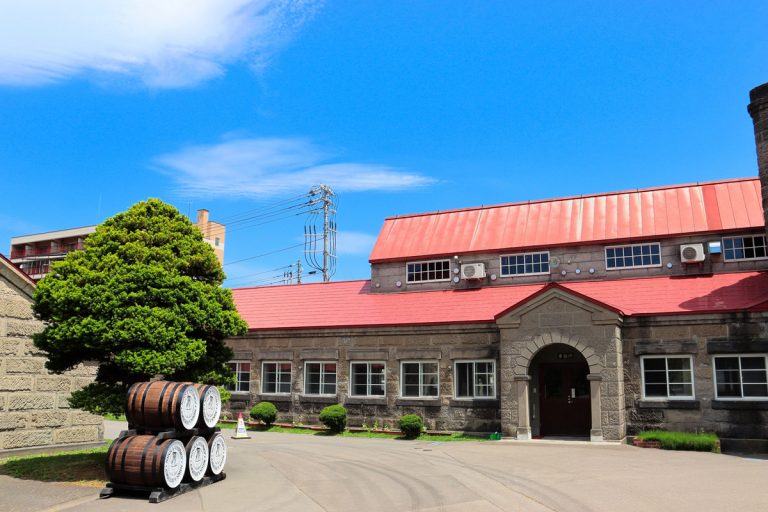
- Nikka Whisky Yoichi Distillery (about 50 minutes by car). Founded 1934, still using coal-fired direct-heat distillation, a method that survives almost nowhere else on earth. Visits are by reservation, with a free guided tour and paid tastings.
- Otaru (about 1 hour 20 minutes by car). A town of canals and stone warehouses. In February it hosts the Otaru Snow Light Path festival. Touristy, yes, and still worth it in winter.
- Sapporo (about 2 hours by car). The Sapporo Snow Festival runs about a week in early February. A day trip is possible, but with 4 hours of round-trip driving, an overnight in Sapporo is the more realistic plan.
If you want to see more of Hokkaido, have a look at our Hokkaido tours and multi-day tours.
On food, we will say it up front: eating out in Niseko is expensive
Most guides blur this part, so we will be blunt. Restaurant prices in Niseko run about double those of other regional Japanese cities, and plenty of places charge more than the Tokyo average.
| Situation | Per person, approx. | Notes |
|---|---|---|
| On-mountain cafeteria (lunch) | ¥1,200–2,000 | Actually reasonable |
| Izakaya in Hirafu (dinner) | ¥3,000–5,000 | Including drinks. Often impossible to get in without a reservation |
| Ramen shop | ¥1,200–1,800 | Expect a line. Miso is the Hokkaido standard |
| Sushi and seafood | ¥6,000–15,000 | Reservation required. Winter means scallops, crab and cod |
| High-end dining | ¥20,000–40,000 | Books out months ahead |
| Self-catering from a Kutchan supermarket | ¥800–1,500 | This is where you win. Meat and fish are astonishingly cheap |
| Convenience store | ¥600–1,200 | Quality is high |
The split we recommend: self-cater or convenience store for breakfast and lunch, and one good restaurant night out of every three. That keeps food to around ¥45,000 per person for 7 days. Eat out for every meal and you will clear ¥100,000. Do your shopping at the supermarkets in Kutchan (Max Valu and others), 10 minutes from Hirafu by bus or car. One big shop on arrival day is the established move. And drop into Seicomart, the Hokkaido-only convenience chain: bento cooked in-store for around ¥500, and locals swear by it in complete earnest.
What to eat: jingisukan (a local dish of lamb grilled on a domed cast-iron pan; about ¥3,000 per person at a specialist), miso ramen, and winter scallops, hairy crab and cod. Uni peaks in summer, so there is no need to pay winter prices for it. The Kutchan area is one of Japan’s great potato-growing regions, and the supermarket milk and cheese are worth buying on their own merits (food and culture tours).
Will English work? Yes. Whether that is a good thing is a separate question
Niseko is one of the most English-friendly places in Japan, probably more so than Tokyo. In the early 2000s Australian skiers discovered this snow, built lodges, opened restaurants and brought staff over. As a result, native English speakers are always on duty in Hirafu’s restaurants, accommodations and rental shops. The language worries we describe in first trip to Japan mostly do not apply here.
One honest caveat, though: if you come to Niseko looking for “real Japan”, you may feel short-changed. There are hours of the day when more than half the language you hear on Hirafu-zaka is English. The particular atmosphere of a rural Japanese ski hill is diluted here too: the locals-only diner, the broken-phrase exchanges, the fun of not being able to read the signs.
That is not a flaw. Skiing world-class snow with zero language stress is an overwhelming advantage. But if the point of your trip is contact with Japanese culture, Niseko on its own may leave you wanting. Two fixes: take the 10-minute bus down into Kutchan town, and pair the trip with Tokyo or Kyoto. Note that flying is cheaper and faster than rail between Hokkaido and Honshu, so the nationwide JR Pass almost never pays for itself on this trip (regional passes).
A 7-day budget model from Canada, per person
Two people sharing a room, converted at roughly ¥110 to the Canadian dollar (as of August 2026). Exchange rates and lift prices move, so read these as ranges.
| Item | Economy | Standard | Luxury |
|---|---|---|---|
| Return airfare (from Vancouver) | ¥143,000 | ¥190,000 | ¥600,000 |
| Lodging, 6 nights (per person) | ¥84,000 | ¥165,000 | ¥540,000 |
| Lift tickets | ¥45,000 (5 days) | ¥58,000 (6 days) | ¥58,000 (6 days) |
| Rental gear | ¥30,000 | ¥42,000 | ¥60,000 |
| Guides and lessons | ¥0 | ¥15,000 | ¥150,000 |
| Food, 7 days | ¥45,000 | ¥90,000 | ¥180,000 |
| Airport transfers, return | ¥11,000 | ¥18,000 | ¥40,000 |
| Onsen, insurance, connectivity, sundries | ¥15,000 | ¥25,000 | ¥40,000 |
| Total (yen) | About ¥373,000 | About ¥603,000 | About ¥1,668,000 |
| Total (Canadian dollars) | About C$3,400 | About C$5,500 | About C$15,200 |
The thing to take from this table: almost all of the difference comes from airfare and lodging. Triple your lift and food spending and it moves the total by only a few tens of thousands of yen. To compress the budget, shift your dates first; drop your lodging grade second. The economy column translates to “mid-March, a condo in Annupuri, mostly self-catering, travel by bus”. For beginner-to-intermediate skiers, the March economy plan often delivers more satisfaction than the January standard plan.
Not included in the table: overseas travel insurance (insurance), local connectivity (eSIM), and any Tokyo overnights your connections force on you before or after.
A 7-day model itinerary
The standard shape for 7 days on the ground (5 ski days + 1 off day + travel). Departure and return days in Canada are not counted.
| Day | Plan | Point |
|---|---|---|
| Day 1 | Land at New Chitose → resort bus to Hirafu (about 2 hours 45 minutes) → pick up rental gear → grocery run in Kutchan | Design day one as a no-ski day. Between jet lag and the journey, your body is done |
| Day 2 | Warm up at Grand Hirafu. Groomers in the morning, the edge of the trees in the afternoon. One hour of night skiing | The day you load the mountain map into your head |
| Day 3 | Over to Hanazono. North-facing tree runs. Back to Hirafu in the afternoon | If it snowed overnight, this is the day to aim for |
| Day 4 | Off day. Onsen in the morning, Nikka distillery in Yoichi in the afternoon | Assign your worst-weather day here. Build the plan expecting to swap days around |
| Day 5 | Traverse Niseko Village → Annupuri. If it is clear, head for the summit area | Complete the four-area set. Check the connector bus times in the morning |
| Day 6 | Half-day guided backcountry, or one last big ski day. Dinner at the restaurant you reserved | Book the guide by the day before; book the restaurant before you leave Canada |
| Day 7 | Half day in the morning → check out at noon → bus to New Chitose → fly home | Be at the airport 3 hours early. Budget for winter road delays |
Two things here are deliberate: not skiing on day one, and putting the off day in the middle. Out of any 7 days, one or two will be storm-wrecked. Build in a movable day and the whole trip stays intact. If you want Sapporo, the natural version is to turn Day 7 into a Sapporo overnight and head to New Chitose the next morning. In early February that lines up with the Snow Festival.
The alternatives, if Niseko is not your mountain
There are cases where we do not recommend Niseko. You want long vertical and big alpine terrain / you want to ski surrounded by traditional Japan / you need to keep the budget tight / you prioritize sunny days. If any of those describes you strongly, another resort will make you happier.
| Resort | Location | Character | Versus Niseko |
|---|---|---|---|
| Rusutsu | Hokkaido, about 50 minutes by car | Three peaks, some of the best tree skiing in Japan | Nearly identical snow at lower prices. Combines easily with Niseko |
| Kiroro | Hokkaido, about 1 hour 15 minutes by car | Among the deepest snowfall in Hokkaido. Small footprint | Far fewer crowds |
| Furano | Hokkaido, about 3 hours 30 minutes by car | Immaculate groomers and a real town | Less powder but many more clear days. Good for families |
| Hakuba (Nagano) | About 3–4 hours from Tokyo | A giant valley of 10 resorts | Vertical and alpine scenery far beyond Niseko. Slightly heavier snow |
| Nozawa Onsen (Nagano) | About 2 hours 30 minutes from Tokyo | A ski hill fused with an Edo-era hot spring town. 13 public baths | If you want "real Japan", this is it. The snow is quite good too |
| Zao (Yamagata) | About 3 hours from Tokyo | Famous for its frost-covered "snow monster" trees. Onsen town attached | Scenery like nowhere else. Less varied terrain |
One fact worth knowing: multiple industry tallies now report the Hakuba valley overtaking Niseko in inbound ski-trip booking share. That is not Niseko declining; it is Hakuba growing faster. The reasons: proximity to Tokyo (one connection instead of two), the vertical, and Niseko’s rising prices. Hakuba is cheaper than Niseko for both lodging and lift tickets, and it out-verticals it anyway.
Our read: Niseko for snow quality above all, Hakuba for mountain scale and easy access, Nozawa Onsen if you want the Japan factor too. On a trip that takes 10-plus hours from Canada, snow quality is not necessarily the only axis of judgment.
Packing and clothing: is your Canadian kit enough?
Short answer: yes. Gear that gets you through a Rockies winter works as-is, and if anything it is overkill. But there is room to tune.
- Breathability over waterproofing. Niseko snow is dry and does not soak into your shell. Heavy kit built for wet coastal snow just steams you up while you work the trees.
- Run two goggles. This is the most important item on the list. In the trees on a snowfall day, your goggles will fog. Guaranteed. Carry the spare in your backpack, not back at the lodge. One low-light yellow-tint lens turns a whiteout day into a different sport.
- A face mask is non-negotiable. Riding a fast lift into the wind at -10°C, your face will not last.
- Go wide on skis. If renting, ask for around 100 mm underfoot. If you ride 105s in Canada, the same is fine here.
- Powder cords (leashes). In snow this light, a released ski sinks and disappears. It genuinely happens all the time.
Some Japan-specific practicalities. Power outlets are Type A (two flat pins), same as Canada, at 100V. No adapter needed; your chargers just work. Do carry about ¥30,000 in cash per person, because small diners, onsen entry fees and some buses are cash-only. Parts of the mountain have no cell signal, so make sure everyone in your group is connected (eSIM). You will be taking your shoes off at lodges and restaurants, so pack extra thick socks. Bring your regular medications too, as some are hard to obtain in Japan.
What you do not need to bring: piles of snacks (the convenience stores are cheaper and better stocked), towels (onsen rent them), and an oversized suitcase. Plenty of Niseko rooms are small.
The booking order, and how to reach us
A Niseko trip has a lot of moving parts, and doing them in the wrong order gets expensive. Our recommended order:
- Pick your dates. This decision sets half your budget.
- Lock in lodging. It fills up before everything else. Six months out as a guideline.
- Buy flights. After the lodging dates are fixed.
- Buy early-bird lift tickets. September–November, once the itinerary is set.
- Reserve the airport transfer. Winter buses sell out.
- Reserve rentals, guides and restaurants. Large-size gear and the popular tables are gone if you leave this late.
Send us your dates and preferences and we will build the plan back to you in exactly this order, including honest opinions like “March would suit you better” or “that area is not the right fit”. We consider that our job.
Browse Hokkaido tours Free consultation
Frequently asked questions
If I can ski Whistler, can I handle Niseko?
Technically, no problem at all. The slopes are gentler than Whistler with less vertical, so physically it is actually easier. What may feel foreign is the sensation of float in deep fresh snow, and the poor visibility. On day one, run a few groomers on a wide ski to calibrate before heading into the trees.
Should I bring my skis as checked baggage?
What we most often recommend is “bring boots and outerwear, rent skis locally”. Flying skis means oversize baggage fees (roughly C$100–200 each way depending on the airline) and extra connection risk. Boots, on the other hand, will make you miserable from day one if they do not fit, and large sizes are thin on the ground in local rental stock.
Is Niseko OK with kids?
Niseko is one of the most family-ready resorts in Japan, with English-speaking kids schools, childcare and childrens rental gear. Annupuri or Niseko Village are the areas to choose. The Hirafu-zaka area gets lively at night, and some families with small children find it unsettled.
Does the two-tier lift pricing apply to Japanese-Canadians?
The test is residency, not nationality. If you live in Canada, you are generally treated as a non-resident even if you hold Japanese citizenship. The details of the system change every season, so check the official information before purchasing.
Are there situations in Niseko where English does not work?
On the mountain and in restaurants you will have almost no trouble. Where it gets harder: local shops in Kutchan town, route buses, the hospital and taxis. One translation app on your phone covers all of it.
Do I need a licence or registration to go out the gates?
There is no formal registration system. The framework is that you agree to what is posted at the gate and exit at your own risk. The stated premise is that you carry avalanche equipment (beacon, probe, shovel) and are trained in its use. If you are not confident using that equipment, do not go out the gates.
Is there still snow in March?
Still there? March is when the base hits its annual maximum, reaching 3–4 m. What changes is the snow quality: on days when temperatures climb, it turns moist. Ski the first hours of the morning and the north-facing slopes (the Hanazono side) and you can still find light snow in March.
Can I combine Niseko with Tokyo or Kyoto?
Yes, and coming from Canada, we would actively encourage it. New Chitose to Haneda is about 1 hour 40 minutes by air, and Kyoto is just over 2 hours from Tokyo by shinkansen. But do not take the train between Hokkaido and Honshu; it takes far too long. Fly that leg. In this case the nationwide JR Pass almost never pays for itself.
Do I need ski insurance for Niseko?
Yes. Out-of-pocket medical costs in Japan are high, and helicopter rescue runs from several hundred thousand yen into the millions. What matters is the coverage: most standard travel policies exclude skiing outside patrolled areas. If you plan to go out the gates, choose a policy that explicitly covers it.
How far ahead should I start booking?
For a January–early February trip, start looking at lodging in March–May of the previous year. For New Year, a full year ahead. For March, six months ahead is usually enough, which is one more reason we recommend it. Reach us via contact us, and see the FAQ as well.

Plan this trip with IACE
Everything in this article is knowledge we use in real bookings every day. Tell us your dates, group size and interests, and we will turn it directly into your own itinerary.