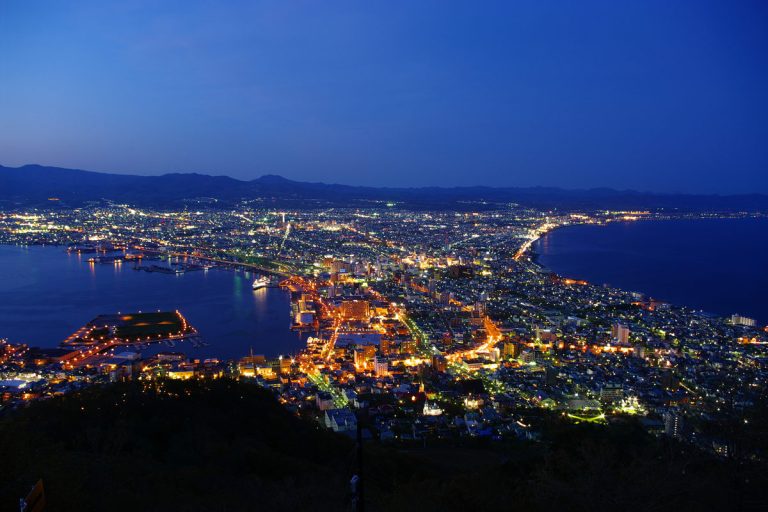
Is the JR Pass still worth it in 2026? Honest answers, route by route
The JR Pass went up by about 70% in October 2023. Here is who should still buy it and who should not, calculated route by route.
Contents
- What changed
- There is only one way to do the math
- Answers for common routes
- The Nozomi/Mizuho supplement
- Regional passes are the real contenders now
- The main regional pass lineup (as of August 2026)
- Buying no pass at all is a perfectly good option
- From purchase to boarding
- Common miscalculations
- From real client cases
- What the pass covers, and what it does not
- The bottom line
- FAQ
What changed
In October 2023, the Japan Rail Pass price rose by roughly 70%. The 7-day ordinary pass went from ¥29,650 to ¥50,000; 14 days is now ¥80,000 and 21 days ¥100,000. At the same time, riding the fastest Nozomi and Mizuho trains started requiring a separate supplement ticket.
Much of the English-language travel advice out there was written before this increase and never updated. “Going to Japan? Just get a JR Pass” is now half wrong.
There is only one way to do the math
Add up the individual fares for the long-distance legs you will actually ride, and compare the total with the price of the pass. That is all. City subways barely move the needle, so do not count them.
Answers for common routes
| Route | Verdict |
|---|---|
| Tokyo → Kyoto → Tokyo | Skip it. Two one-way tickets are far cheaper. |
| Tokyo, Hakone, Kyoto (7 days) | Skip it. A Hakone Free Pass plus two one-way tickets wins. |
| Tokyo → Kyoto → Hiroshima → Tokyo | Close call. Worth pricing both ways. |
| Tokyo → Kyoto → Hiroshima → Hakata → Tokyo | Buy it. The pass is priced for exactly this shape of trip. |
| Kansai only | Skip it. The JR West Kansai Area Pass costs a fraction of the price. |
The Nozomi/Mizuho supplement
Since October 2023, riding a Nozomi or Mizuho on the nationwide pass requires an extra supplement ticket (about ¥4,960 for Tokyo–Kyoto, for example). Hikari and Sakura trains cost nothing extra, and the time difference is only 20–40 minutes. On a holiday trip, the Hikari is almost always good enough.
Regional passes are the real contenders now
For a trip of around two weeks, a regional pass is now often the cheaper option. One caveat: stacking two regional passes can cost more than the nationwide pass, so be careful when your route crosses two JR companies.
The main regional pass lineup (as of August 2026)
When the nationwide pass does not fit, the regional passes from the individual JR companies pick up the slack. There are more than 20 aimed at overseas visitors, but these are the ones that actually get used.
| Pass | Price / duration | Best for |
|---|---|---|
| JR EAST PASS (Tohoku) | ¥30,000 / 5 days | Tokyo–Tohoku round trips. One return to Shin-Aomori almost pays for it on its own |
| JR EAST PASS (Nagano, Niigata) | ¥27,000 / 5 days | Karuizawa, Nagano and Niigata |
| Kansai Area Pass | From ¥2,800 / 1–4 days | Day trips from Osaka to Kyoto, Nara, Kobe and Himeji. The best-value pass in the country |
| Kansai Wide Area Pass | ¥12,000 / 5 days | Kansai plus Kinosaki, Amanohashidate and Okayama |
| Sanyo-San’in Area Pass | ¥23,000 / 7 days | Osaka to Hiroshima and the San’in coast. Includes the Sanyo shinkansen |
| JR Kyushu Rail Pass (All Kyushu) | ¥25,000 / 5 days | A loop of Kyushu from Fukuoka. Hakata–Kagoshima return alone is ¥21,000 |
| Hokkaido Rail Pass | ¥21,000 / 5 days | Combinations of Sapporo, Otaru, Furano and Hakodate |
One warning. Stacking two regional passes can end up costing more than the nationwide pass. If your route crosses two JR companies, always price all three options: nationwide, regional, and individual tickets.
Buying no pass at all is a perfectly good option
These days, the honest answer is sometimes “buy nothing.” The Tokaido shinkansen can be booked from your phone, so you pay only for the trains you ride. Tokyo–Kyoto one way is around ¥13,850. Even a round trip plus some day-trip travel comes to roughly ¥30,000, well under the ¥50,000 7-day pass.
The advantage is not just the money. Individual tickets free you from the pass’s consecutive-days constraint, so you can spend the first half of the trip in Tokyo and save all the moving around for the second half.
From purchase to boarding
- Buy in Canada before you leave. We issue an Exchange Order and mail it to your address.
- Swap it for the actual pass after arriving in Japan. Exchange counters at airports and major stations issue the pass after checking the temporary-visitor stamp in your passport.
- Choose your start date. You can pick any date within one month of the exchange, but once set, it cannot be changed.
- Reserve your seats. With the pass, seat reservations are free and unlimited. Lock in your main legs as soon as you arrive.
One practical note. The Exchange Order must be swapped within 3 months of purchase. If your departure slips, double-check that deadline.
Common miscalculations
- Assuming the Nozomi is included. The nationwide pass requires a separate supplement. Hikari and Kodama cost nothing extra.
- Assuming you can use the automatic gates. Some pass formats are staffed-gate only. Leave extra time for transfers.
- Assuming city subways are covered. Tokyo Metro, Toei and Osaka Metro are not JR, so they are not included.
- Choosing the pass length by trip length. What matters is the number of days you travel long distances. On a 14-day trip where all the moving happens in the first 6 days, a 7-day pass is enough.
From real client cases
Case 1: a Toronto couple, 5 nights in Tokyo + 4 in Kyoto. They asked us for two JR Passes, but the math showed their only long-distance travel was the Tokyo–Kyoto round trip. Individual tickets (¥27,700 per person) came out more than ¥22,000 per person cheaper than the 7-day pass. The savings went into a nicer ryokan in Kyoto.
Case 2: a Vancouver family of four, two weeks, Tokyo → Kanazawa → Kyoto → Hiroshima → Tokyo. This is exactly the shape the nationwide pass is made for. With 14-day passes for two adults and two children, they came out about ¥60,000 ahead of individual tickets as a family. Free seat reservations also let them rebook flexibly to keep four seats together.
Two “two-week trips to Japan,” two completely different answers. The most efficient moment to ask us is right after your route is settled.
What the pass covers, and what it does not
- Covered: all JR shinkansen (except Nozomi and Mizuho), limited express, rapid and local trains. The JR Miyajima ferry. The Tokyo Monorail. Some JR bus routes.
- Not covered: Nozomi and Mizuho (separate supplement), sleeper trains, subways (Tokyo Metro, Toei, Osaka Metro, etc.), private railways (Kintetsu, Nankai, Fujikyu, Hakone Tozan, etc.), local buses, streetcars.
City travel is where the misunderstandings pile up. The Tokyo and Osaka subways are not covered, and neither are the private lines to Hakone or Koyasan. The rule of thumb: only lines with “JR” in the name are included. In the cities, just pay with an IC card (Suica and the like).
The bottom line
Fix your route first. Price it three ways: nationwide pass, regional pass, individual tickets. Then buy the cheapest. If that sounds tedious, just send us the route. This is a calculation we run every single day, and if the answer is “buy nothing and book individual tickets,” that is exactly what we will tell you.
FAQ
Is there a child fare?
Children aged 6 to 11 pay half the adult price. Children under 6 ride free if they do not occupy a reserved seat.
Is the Green Car pass worth it?
At ¥70,000 for 7 days, it costs 1.4 times the ordinary pass. In peak season, Green Cars often have seats when ordinary reserved cars are full, so it is worth considering if you travel long distances at busy times. For a holiday trip, ordinary cars are perfectly fine.
Can I exchange the pass at any station?
No. Exchanges happen only at designated offices: Narita, Haneda and Kansai airports, plus ticket offices at major stations. Exchanging at your arrival airport is the most reliable option.
What if my plans change after I buy?
An unused Exchange Order can be refunded within a set period after purchase, minus a fee. No refunds once you start using the pass. We recommend buying only after your itinerary is settled.

Plan this trip with IACE
Everything in this article is knowledge we use in real bookings every day. Tell us your dates, group size and interests, and we will turn it directly into your own itinerary.