Getting to Hagi & Tsuwano: airports, trains, and local transport
Routes and travel times to Hagi & Tsuwano, how to get around once you arrive, and the passes worth buying.
Contents
The usual route to Hagi is a 1 hour 15 minute bus ride from Shin-Yamaguchi Station on the Sanyo Shinkansen. Rail access exists on the JR San’in Main Line, but services are very sparse. Tsuwano is served by the JR Yamaguchi Line.
How to get to Hagi & Tsuwano
| Route | Time | Cost and notes |
|---|---|---|
| Hiroshima → Shin-Yamaguchi | About 35 minutes | Sanyo Shinkansen, around ¥5,000. Covered by the JR Pass |
| Hakata → Shin-Yamaguchi | About 35 minutes | Sanyo Shinkansen, around ¥5,500 |
| Shin-Yamaguchi → Hagi | About 1 hour 15 minutes | Bocho Bus "Super Hagi" service, around ¥2,000 |
| Shin-Yamaguchi → Tsuwano | About 1 hour | JR Yamaguchi Line, around ¥1,200. The SL Yamaguchi also runs on select dates |
| Hagi → Tsuwano | About 1 hour 15 minutes | Bus. Services are limited |
| Hagi → Akiyoshido | About 1 hour 30 minutes | Bus. One of the largest limestone caves in Japan |
Getting around once you arrive
The Hagi castle town is flat, and a rental bicycle (around ¥1,000 a day) is the most efficient way to see it. The Hagi Junkan Ma-aru bus (¥100 per ride, ¥500 day pass) also links the main sights. You can walk it, but it is about 3 km from the Horiuchi district to Shoin Shrine. Tsuwano is small enough to cover on foot around Tonomachi street. Buses between Hagi and Tsuwano are infrequent, so a rental car is a sound alternative.
Tickets and passes worth knowing
The nationwide JR Pass covers the Sanyo Shinkansen and the JR Yamaguchi Line toward Tsuwano. The bus to Hagi is not JR and is not covered. You can reach Hagi by the JR San’in Main Line to Higashi-Hagi Station, but with only a few trains a day it is not a practical option. The bus is the realistic choice.
Frequently asked questions
Can I reach Hagi by train?
Higashi-Hagi Station is on the JR San’in Main Line, but with only a handful of trains a day and long journey times. The bus from Shin-Yamaguchi is effectively the only route.
Do I need a rental car?
For the Hagi castle town alone, a rental bicycle is enough. If you want to combine Hagi, Tsuwano, and Akiyoshido, a rental car is far more efficient.
Let us handle the arrangements
Send us your route and we will price it three ways: the nationwide JR Pass, regional passes, and individual tickets. Then we will tell you the cheapest way to buy. If the honest answer is that buying nothing at all is cheapest, we will tell you exactly that.
See the Yamaguchi & Iwakuni tour Free consultation
Planning essentials for Hagi & Tsuwano
Beyond the main topic of this article, here is a summary of everything you need to plan a trip to Hagi & Tsuwano, with links to the full article on each subject.
A one-day route at a glance
9:00 Hagi Castle ruins & Shizuki Park → 10:00 Horiuchi & Hiyako districts → 11:30 Kikuya-yokocho → 12:30 Lunch in Hagi → 14:00 Shokasonjuku & Shoin Shrine → 15:00 Hagi-yaki pottery kilns → 16:30 Walking the Hagi castle town → 18:00 To your Hagi inn
With half a day, do the Hagi castle town (the Horiuchi district and Kikuya-yokocho) and Shokasonjuku. Those two are the heart of Hagi.
Extending beyond day one
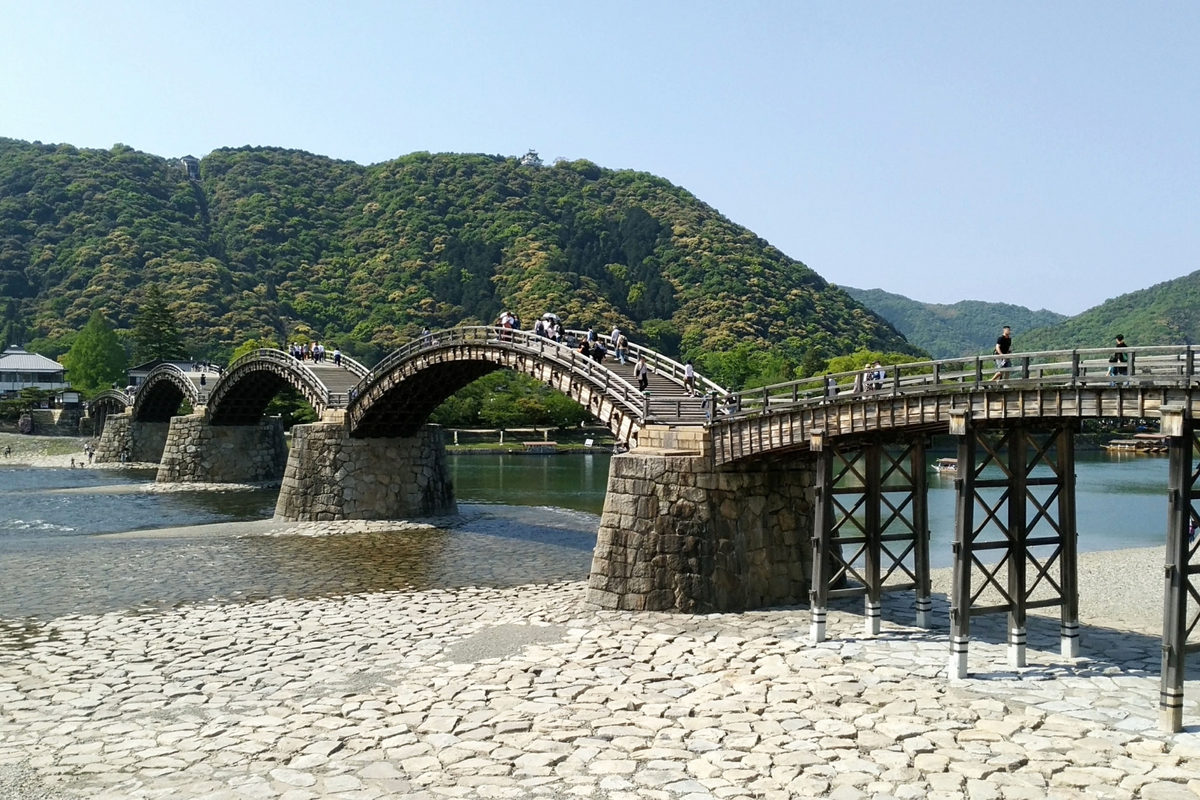
On day 2, go to Tsuwano (1 hour 15 minutes by car). It is known for the SL Yamaguchi steam train (Shin-Yamaguchi to Tsuwano), the carp swimming in the channels along Tonomachi street, and the thousand torii of Taikodani Inari Shrine. Alternatives are Akiyoshidai and Akiyoshido (one of the largest karst plateaus and limestone caves in Japan) or Shimonoseki (fugu and the Kanmon Strait). On day 3, head for Kintaikyo Bridge in Iwakuni, or on to Hiroshima. Yamaguchi Prefecture is the western tip of Honshu and the gateway to Kyushu. For the full timed itinerary, see the Hagi & Tsuwano itinerary.
Seasons and temperatures
| Season | Typical temperatures | Highlights and cautions |
|---|---|---|
| Spring (Mar–May) | 9–23°C | In April and May the natsumikan blossom, and their scent drifts along the white earthen walls |
| Summer (Jun–Aug) | 22–32°C | Hot and humid. The Hagi Summer Festival and fireworks fall on August 13 |
| Autumn (Oct–Nov) | 12–24°C | Autumn foliage in late November. Tsuwano is spectacular then |
| Winter (Dec–Feb) | 3–11°C | Overcast and snowy. The quietest season, and the best for walking undisturbed |
April–May for the natsumikan blossom, and October–November for the autumn colors. May in Hagi in particular, when the scent of citrus blossom drifts past white earthen walls, is a season that exists nowhere else. In winter there are few people, and you can feel the atmosphere of the late Edo period in the quiet. Clothing guidance and seasonal events are covered in the best time to visit Hagi & Tsuwano.
What to eat
- Setsuki-aji: Horse mackerel that stay on the reefs off Hagi. Because they do not migrate, they carry more fat. Superb as sashimi
- Kensaki squid: Translucent live squid sashimi. In season June–September
- Kenran beef: A cross between the Mishima cattle, a native breed and designated natural monument, and Holstein. Available only in Hagi
- Fugu: Shimonoseki is the center of the trade. Tessa (sashimi) and tecchiri (hot pot). In season October–March
- Natsumikan sweets: Whole-candied fruit and marmalade made from Hagi natsumikan
- Hagi-yaki: Not food, but four centuries of ceramics. You can tour the kilns
- Kawara soba: Green tea soba and toppings served on a heated roof tile. A Yamaguchi regional dish
Lunch ¥1,200–2,500; dinner ¥4,000–10,000 including meals at your inn. A night with two meals in Hagi runs ¥15,000–30,000, built around Sea of Japan fish. A full fugu meal comes to ¥15,000 and up. For where to find each dish, see what to eat in Hagi & Tsuwano.
Budget at a glance
For 2 days and 1 night, budget ¥28,000–40,000 per person (roughly CA$280–400): ¥18,000 for a night with two meals, ¥4,000 for the round trip from Shin-Yamaguchi, ¥2,000 for admissions, ¥2,000 for lunch, and ¥1,000 for a rental bicycle. The round trip from Hiroshima or Hakata (around ¥10,000 by shinkansen) is extra.
Hotel rates by class and the cuts that actually save money are detailed in the Hagi & Tsuwano budget guide.
Good to know before you go
- The samurai houses are homes: People live behind those earthen walls. Do not enter private property
- Do not pick the natsumikan: The fruit hanging over the walls is private property
- Bus frequency: Services on the Hagi–Tsuwano and Hagi–Akiyoshido routes are both limited
- Closing times: Almost everything closes around 8 PM
- Winter snow: Snow does accumulate on the Sea of Japan side
- The Hagi Castle stone walls: The mossy stonework is slippery. Observe the off-limits areas
- Bicycles and pedestrians: The castle town streets are narrow. Watch out for people on foot
Etiquette and emergency contacts are covered in what to know before visiting Hagi & Tsuwano.
More frequently asked questions about Hagi & Tsuwano
Why does Hagi matter?
In the late Edo period, Yoshida Shoin’s Shokasonjuku academy produced Takasugi Shinsaku, Ito Hirobumi, Yamagata Aritomo, and other central figures of the Meiji Restoration. The castle town escaped wartime bombing, so the original street plan survives. Parts of it are inscribed as World Heritage under the “Sites of Japan’s Meiji Industrial Revolution.”
Can I do Hagi and Tsuwano in one day?
They are 1 hour 15 minutes apart by car, so it is possible, but each deserves half a day. Both are castle towns, and staying a night and giving each a full day leaves a far stronger impression.
What is natsumikan?
A citrus fruit that Hagi’s samurai families planted to make a living after the Meiji Restoration. Grown inside the earthen walls, the trees are still part of the castle-town landscape. They flower white in April and May, and the scent carries through the town.
Can I ride the SL Yamaguchi?
It is a steam locomotive running between Shin-Yamaguchi and Tsuwano, mainly on weekends and holidays. Operating dates and rolling stock change from year to year, so check in advance. Reservations are required.
Can I eat fugu?
Shimonoseki is the center of the trade, and some restaurants in Hagi serve it too. The season is October–March. Only licensed chefs may prepare it, so it is safe. It is priced accordingly.
Is there anywhere to eat at night?
Hagi has few restaurants, and most close by 8 PM. We strongly recommend booking a plan that includes dinner at your inn.
Is Hagi hard to reach?
It is 1 hour 15 minutes by bus from the nearest shinkansen station, Shin-Yamaguchi. Convenient it is not, but that inconvenience is precisely why the castle town survived intact.
Should I combine it with Tsuwano?
They are 1 hour 15 minutes apart by car. Both are castle towns, but with different characters: Hagi is the late Edo period, Tsuwano the atmosphere of a “little Kyoto.” If you have the time, we recommend both.
Can I manage on my own?
Yes. The Hagi castle town takes about 3 hours by bicycle. It is not overrun with visitors, and it is a quiet town to walk. Just check departure times carefully, since buses are infrequent.
Is English spoken?
The tourist information office and the main facilities can help. Individually run shops are often Japanese-only. The Hagi Museum and Shoin Shrine have English signage.

Plan this trip with IACE
Everything in this article is knowledge we use in real bookings every day. Tell us your dates, group size and interests, and we will turn it directly into your own itinerary.