Getting to Kagoshima & Kirishima: airports, trains, and local transport
Routes and travel times to Kagoshima & Kirishima, how to get around once you arrive, and the passes worth buying.
Contents
Kagoshima is 1 hour 20 minutes from Hakata on the Kyushu Shinkansen, or 2 hours from Haneda by air. Sakurajima is 15 minutes by ferry from Kagoshima Port (24-hour service). This is also the gateway to Yakushima and Tanegashima.
How to get to Kagoshima & Kirishima
| Route | Time | Cost and notes |
|---|---|---|
| Hakata → Kagoshima-Chuo | About 1 hour 20 minutes | Kyushu Shinkansen, around ¥10,500. Covered by the JR Pass |
| Haneda → Kagoshima Airport | About 2 hours | Direct flights. Airport to Kagoshima-Chuo Station by bus, 40 minutes |
| Kagoshima Port → Sakurajima | About 15 minutes | Ferry, ¥250. Runs 24 hours a day |
| Kagoshima-Chuo → Ibusuki | About 50 minutes | JR Ibusuki-Makurazaki Line. The Ibusuki no Tamatebako sightseeing train also runs this route |
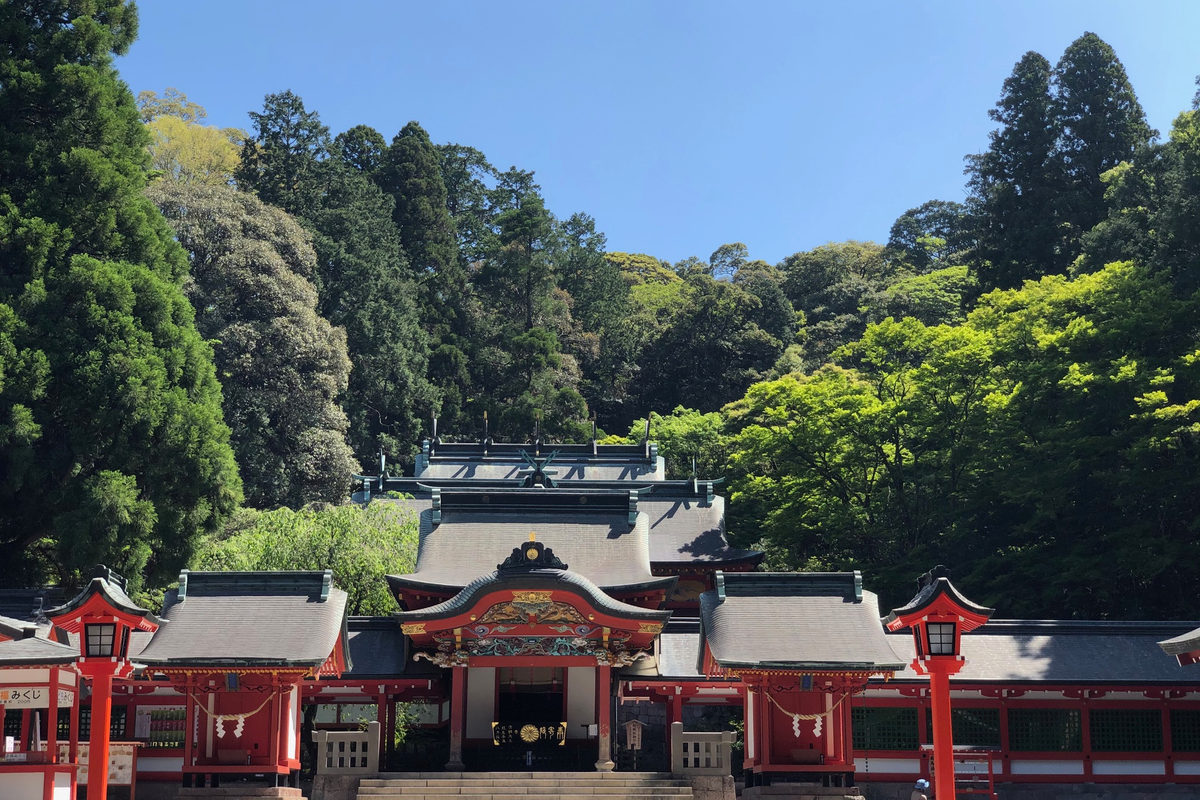
| Kagoshima-Chuo → Kirishima Shrine | About 50 minutes | JR Nippo Line + bus |
| Kagoshima → Yakushima | About 2 hours 30 minutes | Jetfoil (Toppy / Rocket), or 40 minutes by plane |
Getting around once you arrive
Kagoshima City runs on streetcars and buses. Streetcars cost ¥170 per ride, ¥600 for a day pass. The Kagoshima City View sightseeing loop bus (¥600 day pass) links Sengan-en, the Shiroyama lookout, and the aquarium. Sakurajima is 15 minutes by ferry (¥250, 24-hour service); on the island, the Sakurajima Island View loop bus runs but infrequently. For Kirishima and Ibusuki, use JR and buses, or rent a car.
Tickets and passes worth knowing
The nationwide JR Pass and the JR Kyushu Rail Pass (all-Kyushu version) cover the Kyushu Shinkansen and the JR Ibusuki-Makurazaki Line. The Ibusuki no Tamatebako sightseeing train is covered too (all reserved seating). The Sakurajima ferry and the streetcars are not JR and are not covered.
Frequently asked questions
How do I get to Yakushima?
From Kagoshima Port, the jetfoil (Toppy / Rocket) takes 2 hours 30 minutes, or the ferry 4 hours. Flying from Kagoshima Airport takes 40 minutes. Weather cancellations happen, so build slack into your schedule.
What is the Ibusuki no Tamatebako?
A sightseeing train between Kagoshima-Chuo and Ibusuki, painted half white and half black, themed on the Urashima Taro legend. Covered by the JR Pass, but all seats are reserved.
Let us handle the arrangements
Send us your route and we will price it three ways: the nationwide JR Pass, regional passes, and individual tickets. Then we will tell you the cheapest way to buy. If the honest answer is that buying nothing at all is cheapest, we will tell you exactly that.
See the Kirishima Shrine & Ebino Plateau tour Free consultation
Planning essentials for Kagoshima & Kirishima
Beyond the main topic of this article, here is a summary of everything you need to plan a trip to Kagoshima & Kirishima, with links to the full article on each subject.
A one-day route at a glance
9:00 Sengan-en (Iso Garden) → 10:30 Shoko Shuseikan → 12:00 Lunch in Tenmonkan → 13:30 Ferry to Sakurajima → 14:00 Yunohira Observatory → 15:30 Arimura Lava Observatory → 17:00 Back to the city → 18:30 Tenmonkan at night
With half a day, do Sengan-en and Sakurajima. The ferry takes 15 minutes, so even half a day gives you a proper look at the volcano.
Extending beyond day one
On day 2, head to Kirishima (1 hour by car): Kirishima Shrine (the mythical descent-to-earth of the gods), the Ebino Plateau crater lakes, and the Kirishima onsen villages. Or go south to Ibusuki (sand bath onsen, a natural sauna where you are buried in hot beach sand) and Chiran (the Peace Museum for Kamikaze Pilots and a samurai district designated an Important Preservation District). Day 3: Yakushima (2 hours 30 minutes by jetfoil), or on to Kumamoto or Miyazaki. Kagoshima is the southern tip of Kyushu and the gateway to the southwest islands. For the full timed itinerary, see the Kagoshima & Kirishima itinerary.
Seasons and temperatures
| Season | Typical temperatures | Highlights and cautions |
|---|---|---|
| Spring (Mar–May) | 12–26°C | Cherry blossoms in late March, the earliest in Kyushu |
| Summer (Jun–Aug) | 25–33°C | Very hot and humid. Among the heaviest rainy seasons in Japan, plus typhoons |
| Autumn (Oct–Nov) | 17–27°C | The most comfortable season, with falling typhoon risk |
| Winter (Dec–Feb) | 7–15°C | Mild, snow is rare. The Kirishima mountains do get snow |
October–November and March–May are the most comfortable months, with low typhoon risk. June–July brings some of the heaviest rainy-season rainfall in Japan, and August–September sits in the typhoon track, so itineraries can be disrupted then. Clothing guidance and seasonal events are covered in the best time to visit Kagoshima & Kirishima.
What to eat
- Kurobuta: Kagoshima black pork: shabu-shabu, tonkatsu, braised belly. Known for the sweetness of its fat
- Keihan: Chicken, shredded egg, and shiitake over rice, doused in chicken broth. An Amami island dish
- Satsuma-age: Fried fish cake, born in Kagoshima, where it is called tsukeage
- Kibinago: A small local silver fish, served as sashimi with vinegared miso, arranged on the plate like a flower
- Imo shochu: Sweet potato shochu. The top-producing region in Japan, with hundreds of labels to compare
- Shirokuma: Shaved ice with condensed milk and fruit. Born in Kagoshima; the original shop is in Tenmonkan
- Sakurajima daikon & komikan: A giant radish and the world’s smallest mandarin orange, both grown in Sakurajima’s volcanic soil
Lunch ¥1,000–2,500, dinner ¥3,000–7,000 (kurobuta shabu-shabu ¥4,000–6,000). Prices are moderate, and shochu is cheap at around ¥400 a glass. For where to find each dish, see what to eat in Kagoshima & Kirishima.
Budget at a glance
For 2 days and 1 night, budget ¥28,000–42,000 per person (roughly CA$280–420): hotel ¥14,000, round-trip transport ¥21,000 (free with a JR Pass), food ¥8,000, and ¥4,000 for admissions and city transport.
Hotel rates by class and the cuts that actually save money are detailed in the Kagoshima & Kirishima budget guide.
Good to know before you go
- Sakurajima exclusion zone: Entry within 2 km of the crater is prohibited. The lookouts sit at a safe distance
- Volcanic ash: Falls on the city depending on the wind. Umbrella, mask, and protect your camera
- Eruption alert levels: When the level rises, the restricted zone widens. Check the day’s information
- Eating on Sakurajima: Only a handful of restaurants. Safer to eat in the city
- Typhoons: August–September. Flights and ferries get cancelled
- Summer humidity: Among the worst in Japan. Guard against heatstroke
- The Chiran Peace Museum: A place of mourning for the war dead. Please be mindful in how you behave
Etiquette and emergency contacts are covered in what to know before visiting Kagoshima & Kirishima.
More frequently asked questions about Kagoshima & Kirishima
Is Sakurajima dangerous?
It is an active volcano with a constant plume, but monitoring is thorough, and the residential areas and lookouts sit at a safe distance. Entry within 2 km of the crater is prohibited. Falling ash is daily life here, and residents just put up umbrellas.
What is the Chiran Peace Museum?
In the final months of World War II, kamikaze pilots flew their last missions from Chiran. The museum displays their letters and belongings. A heavy place, but a meaningful one for understanding modern Japanese history.
Is the volcanic ash a problem?
It falls on the city when the wind blows the wrong way. An umbrella and a mask handle it. This is daily life for residents. It does affect camera equipment, so avoid changing lenses on ashfall days.
How bad are the typhoons?
August–September lies in the typhoon track, and flights and ferries get cancelled. If Yakushima is on your itinerary, you especially need slack in the schedule.
How do you drink shochu?
In Kagoshima, the standard is oyuwari, mixed with hot water. Pour the hot water first, then the shochu, and the flavor rounds out. There is also maewari: diluting it with water the day before.
What is shirokuma?
Shaved ice with condensed milk and fruit arranged so that, seen from above, it looks like a polar bear’s face, hence the name. The original shop is a Tenmonkan cafe, and it is the taste of a Kagoshima summer.
What is the Ibusuki sand bath?
On the beach, you are buried up to your neck in sand heated by geothermal springs. Ten minutes has you sweating profusely. You wear a yukata into the sand, so no swimsuit is needed. Around ¥1,100.
Is Kirishima worth staying in?
Yes. The Kirishima onsen villages have sulfur springs in quiet mountain settings, close to Kirishima Shrine and the Ebino Plateau, a very different experience from the city.
Is Sakurajima really erupting?
Yes. Several hundred explosive eruptions are recorded each year, with plumes sometimes rising thousands of meters. But monitoring is thorough, and the residential areas and lookouts are set at a safe distance.
Does the ash affect your health?
Health effects from a short stay are rare. On ashfall days wear a mask, and protect your eyes if you wear contact lenses. If you have asthma, avoid going out on heavy-ashfall days.

Plan this trip with IACE
Everything in this article is knowledge we use in real bookings every day. Tell us your dates, group size and interests, and we will turn it directly into your own itinerary.