Getting to Kamakura: airports, trains, and local transport
Routes and travel times to Kamakura, how to get around once you arrive, and the passes worth buying.
Contents
Kamakura is about 50 km southwest of Tokyo. The JR Yokosuka Line runs there direct from Tokyo Station, so there is almost nothing to work out. Once you arrive, getting around means the Enoden (Enoshima Electric Railway) and your feet.
How to get to Kamakura
| Route | Time | Cost and notes |
|---|---|---|
| Tokyo Station → Kamakura Station | About 55 min | Direct on the JR Yokosuka Line, ¥970. The same trains stop at Shinagawa and Shimbashi |
| Shinjuku Station → Kamakura Station | About 60 min | Direct on the JR Shonan-Shinjuku Line, ¥940. Crowded on weekends and holidays |
| Haneda Airport → Kamakura | About 80 min | Keikyu to Yokohama, then the JR Yokosuka Line. Around ¥1,200 |
| Kamakura Station → Hase (Great Buddha) | About 5 min | Three stops on the Enoden, ¥200. Queues to board form on weekends |
| Kamakura → Enoshima | About 25 min | Enoden, ¥260. The seaside stretch is one of the highlights of the trip |
| Kita-Kamakura → Kamakura | About 3 min | One stop on the JR Yokosuka Line. Walking south from Kita-Kamakura is the classic route |
Getting around once you arrive
Sightseeing in Kamakura is fundamentally on foot: 10 minutes from Kamakura Station to Tsurugaoka Hachimangu, and the Kita-Kamakura temples are minutes from that station. Use the Enoden only when heading toward Hase and Enoshima. On weekends the Enoden gets crowded enough that people are left behind on the platform, so allow extra time. Local buses exist, but their frequency and routes do not suit sightseeing and most visitors never use them. We generally do not recommend rental bicycles here, since there are many hills and limited bicycle parking at temples.
Tickets and passes worth knowing
The Kamakura–Enoshima Pass (JR East, around ¥1,200) gives a day of unlimited rides on JR between Ofuna and Kamakura, the whole Enoden line, and the Shonan Monorail. It works for anyone covering Kamakura and Enoshima in one day. For Kamakura alone, the Enoden Noriori-kun day pass (¥800) is enough, or paying per ride with an IC card is cheapest. If you hold a nationwide JR Pass, the JR section from Tokyo to Kamakura is covered, but the Enoden is not.
Frequently asked questions
Is the Green Car worth it?
The Green Cars on the Yokosuka and Shonan-Shinjuku lines are unreserved, at around ¥750 on weekdays and ¥550 on weekends when purchased in advance. Return trains on weekends are often standing-room only, so it is worth it if you want a guaranteed seat.
Are there coin lockers at the station?
Kamakura Station has them, but they fill by mid-morning on holidays. If you have large bags, leave them at your Tokyo hotel and travel light.
Let us handle the arrangements
Send us your route and we will price it three ways: the nationwide JR Pass, regional passes, and individual tickets. Then we will tell you the cheapest way to buy. If the honest answer is that buying nothing at all is cheapest, we will tell you exactly that.
See the Kamakura & Enoshima day tour Free consultation
Planning essentials for Kamakura
Beyond the main topic of this article, here is a summary of everything you need to plan a trip to Kamakura, with links to the full article on each subject.
A one-day route at a glance
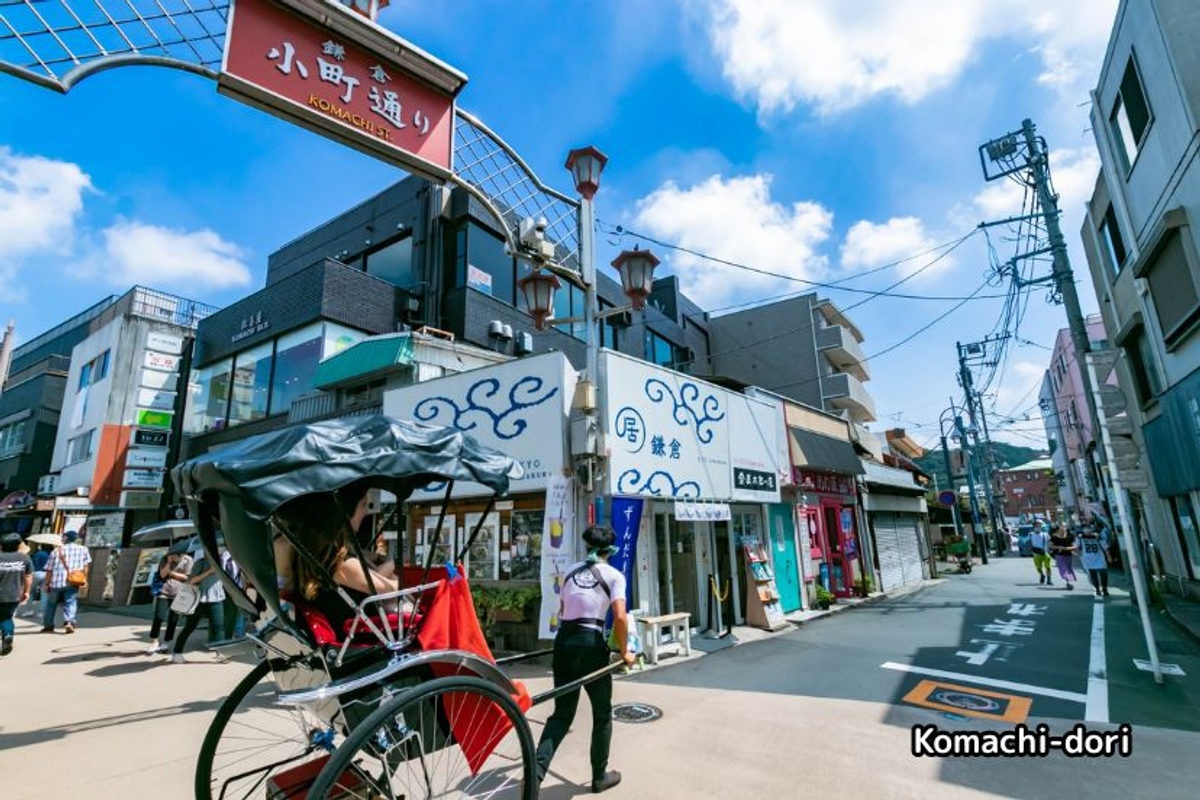
9:00 Kita-Kamakura Station & Engaku-ji → 10:00 Meigetsu-in → 11:00 Kencho-ji and the Tenen hiking trail → 12:30 Lunch on Komachi-dori → 14:00 Tsurugaoka Hachimangu → 15:00 Hase-dera & the Great Buddha (Kotoku-in) → 17:00 Yuigahama or Enoshima
With half a day, take the Enoden straight to Hase for the Great Buddha and Hase-dera, then double back to Kamakura Station for Tsurugaoka Hachimangu and Komachi-dori. Give up on the Zen temples of Kita-Kamakura entirely. Attempt both halves and the day is travel and queues.
Extending beyond day one
One day covers Kamakura, but if you have two, splitting them into temples on day one and walking on day two changes the trip entirely. The Tenen trail (Kencho-ji to Zuisen-ji, about two hours), the Gionyama trail, and the Daibutsu trail are all maintained low-mountain paths, and along them survive the kiritoshi, passes cut through the hills in medieval times. Alternatively, ride the Enoden through to Fujisawa for the Iwaya caves on Enoshima and a seafood lunch. Most people do this as a day trip from Tokyo, but staying a night in Kamakura buys you the temples at dawn and dusk with nobody in them. For the full timed itinerary, see the Kamakura itinerary.
Seasons and temperatures
| Season | Typical temperatures | Highlights and cautions |
|---|---|---|
| Spring (Mar–May) | 9–23°C | Cherry blossoms along the Dankazura and in Genjiyama Park. Late April into May is the easiest walking of the year |
| Rainy season (June) | 18–25°C | Hydrangeas at their peak. Waits at Meigetsu-in and Hase-dera can reach an hour, and a weekday at opening is the only real answer |
| Summer (Jul–Aug) | 24–31°C | Beach-hut season at Yuigahama. Too hot for temple walking, but the coast at dusk is lovely |
| Autumn (Oct–early Dec) | 10–22°C | Fall color late November to early December, which is later than Kyoto and far gentler on crowds |
| Winter (Dec–Feb) | 3–12°C | Clear days in sequence, crisp air, and many days when Mount Fuji is visible. The quietest season, with the fewest visitors |
Late October to early December is the most comfortable, followed by late March to mid-May. The June hydrangeas are genuinely magnificent, but weighing crowds and weather risk, we recommend autumn to first-time visitors. January and February are quiet, and on some days you will have a temple garden to yourself. Clothing guidance and seasonal events are covered in the best time to visit Kamakura.
What to eat
- Raw shirasu bowl: Available outside the closed season (January to mid-March), and only on days the boats actually went out. ¥1,500–2,500. Boiled shirasu is available year-round
- Kamakura vegetables: Small-batch, many-variety produce gathered at the local growers’ market. The Italian and French restaurants built around it are excellent
- Shojin ryori: Zen temple cuisine, entirely free of animal products and fully vegan. Most places require reservations
- Kenchin-jiru: A root-vegetable soup said to have originated at Kencho-ji. The most warming bowl in winter Kamakura
- Hato Sabure: The baked cookie from Toshimaya, founded in 1897. The standard Kamakura souvenir, and it keeps well
- Matcha and wagashi: A bowl of tea looking out over the bamboo at Hokoku-ji (around ¥600) is the quietest half hour in Kamakura
Lunch ¥1,500–2,500, cafes ¥800–1,500, dinner ¥3,000–6,000. A shirasu bowl or a Kamakura-vegetable lunch runs around ¥2,000, which is fair for a tourist town. At popular restaurants, expect a queue or book ahead. For where to find each dish, see what to eat in Kamakura.
Budget at a glance
As a day trip from Tokyo, ¥8,000–12,000 per person (roughly CA$80–120) is the standard figure: ¥2,000 round-trip transport, ¥2,000 admissions, ¥4,000 food, ¥800 for the Enoden, and ¥1,500 for souvenirs. Staying a night in Kamakura adds roughly ¥20,000 in lodging.
Hotel rates by class and the cuts that actually save money are detailed in the Kamakura budget guide.
Good to know before you go
- Remember you are in a residential area: Nearly everything around the temples is housing. Avoid loud voices early or late, and do not enter private lanes
- Photography at Enoden crossings: Stepping onto the tracks or into level crossings to shoot has become a real problem. Accidents have happened, and it is a source of friction with residents
- Hiking gear: These are low hills, but they are slippery after rain. Sandals or leather soles are dangerous
- Risks at the beach: Yuigahama and Shichirigahama have rip currents, and there are no lifeguards outside the swimming season
- Temples close early: Many stop admitting visitors at 4:00 or 4:30 PM. You cannot plan around late afternoon
- Watch for black kites: Carry food on the beach and kites will dive to take it. This happens regularly
Etiquette and emergency contacts are covered in what to know before visiting Kamakura.
More frequently asked questions about Kamakura
If I am going to Kyoto, can I skip Kamakura?
They are completely different in character. Kyoto is the culture of the aristocracy and the merchant townspeople; Kamakura is a warrior capital, with austere Zen temples and hills and sea close at hand. It is an hour from Tokyo, so even Kyoto-bound travelers get real value from a day here.
How much walking is involved?
This route runs about 15,000 steps, with plenty of slopes and steps. If you add a hiking trail, non-slip shoes become essential.
Should I avoid hydrangea season?
If seeing the hydrangeas is the point, arrive on a weekday around 8 AM. For any other purpose, June is more comfortable avoided. Even within June, Engaku-ji and Hokoku-ji (the bamboo garden) stay relatively calm.
Is it enjoyable in the rain?
Rain suits Kamakura. The moss and bamboo deepen in color, and the bamboo grove at Hokoku-ji and the garden at Meigetsu-in are better wet. The hiking trails get slippery, though, so on those days stick to temples and the coast.
Am I guaranteed raw shirasu?
No. January to mid-March is the closed season, and even outside it, rough seas mean no catch and no serving. Whether the “raw shirasu today” sign is up is the answer for that day.
Is it workable for vegetarians and vegans?
Kamakura is one of the easier places in Japan. Alongside the shojin ryori restaurants, there are several vegan cafes built around Kamakura vegetables. Tell us when you book and we will point you to places that can accommodate you.
Should I buy the Kamakura–Enoshima Pass?
JR East’s Kamakura–Enoshima Pass (around ¥1,200 as of August 2026) pays off on a day that covers both Kamakura and Enoshima with repeated Enoden rides. On a day confined to Kamakura itself, it does not.
Is it worth checking out of Tokyo and staying in Kamakura?
For two nights or more, taking your time over Kamakura, Enoshima, and Hayama, yes. For a single night, the hassle of moving luggage usually outweighs the gain, so we recommend a day trip from a Tokyo base.
Is it fine to go alone?
Completely. Solo travelers are extremely common here. Just make sure to be off the hiking trails an hour before sunset, because there are no lights.
Can I go inside the Great Buddha?
You can. On top of the ¥300 admission, ¥50 gets you inside. It is cramped and hot in there, so if you are uncomfortable in tight spaces, do not push it.

Plan this trip with IACE
Everything in this article is knowledge we use in real bookings every day. Tell us your dates, group size and interests, and we will turn it directly into your own itinerary.