Getting to Takamatsu & Naoshima: airports, trains, and local transport
Routes and travel times to Takamatsu & Naoshima, how to get around once you arrive, and the passes worth buying.
Contents
Takamatsu is an hour from Okayama across the Great Seto Bridge, on the direct JR Marine Liner rapid. By air, Takamatsu Airport is 1 hour 20 minutes from Haneda. Naoshima is reached by ferry from Takamatsu Port or Uno Port.
How to get to Takamatsu & Naoshima
| Route | Time | Cost and notes |
|---|---|---|
| Okayama → Takamatsu | About 1 hour | JR Marine Liner rapid, ¥1,660. Crosses the Great Seto Bridge. Covered by the JR Pass |
| Haneda → Takamatsu Airport | About 1 hour 20 minutes | Direct flights. 45 minutes by bus from the airport to Takamatsu Station |
| Osaka → Takamatsu | About 2 hours | Shinkansen to Okayama, then transfer to the Marine Liner |
| Takamatsu Port → Naoshima (Miyanoura) | About 50 minutes | Ferry, ¥520. 30 minutes by fast boat |
| Uno Port → Naoshima (Miyanoura) | About 20 minutes | Ferry, ¥300. Closer from the Okayama side |
| Takamatsu → Matsuyama | About 2 hours 30 minutes | JR Yosan Line limited express, around ¥6,000 |
Getting around once you arrive
Getting around Takamatsu means the Kotoden railway and buses. Ritsurin Garden is a few minutes away by Kotoden or JR. Because the udon shops are spread through the suburbs, the practical way to tour them is a rental car or an “udon taxi,” whose driver knows the shops and guides you around. On Naoshima, use the town bus and rental bicycles (electric-assist bikes run around ¥1,500). The island is hilly, so choose an electric one. The last ferries run early, so if you are visiting for the day, always check the times.
Tickets and passes worth knowing
The nationwide JR Pass covers the Marine Liner rapid (Okayama–Takamatsu) and the JR Yosan Line toward Matsuyama. The JR Shikoku All Shikoku Rail Pass (3–7 days, around ¥9,000–16,000) is worthwhile if you are covering a lot of ground within Shikoku. Ferries are not covered by the JR Pass.
Frequently asked questions
What is the view from the Great Seto Bridge like?
From the upper deck of the double-decker Marine Liner (the Green Car), you get the full sweep of the island-dotted Seto Inland Sea. The supplement is around ¥1,000, and for this stretch it is worth it.
Naoshima from Takamatsu or from Uno?
Uno Port, in Okayama Prefecture, is closer (20 minutes, around ¥300) and cheaper. From Takamatsu it is 50 minutes and ¥520. Use Uno if you are based in Okayama, Takamatsu if you are also touring Shikoku.
Let us handle the arrangements
Send us your route and we will price it three ways: the nationwide JR Pass, regional passes, and individual tickets. Then we will tell you the cheapest way to buy. If the honest answer is that buying nothing at all is cheapest, we will tell you exactly that.
See the private Naoshima tour Free consultation
Planning essentials for Takamatsu & Naoshima
Beyond the main topic of this article, here is a summary of everything you need to plan a trip to Takamatsu & Naoshima, with links to the full article on each subject.
A one-day route at a glance
8:00 Udon for breakfast → 9:30 Ritsurin Garden → 11:30 Ferry from Takamatsu Port → 12:30 Naoshima, Miyanoura Port → 13:30 Chichu Art Museum → 15:30 Art House Project (Honmura district) → 17:00 Benesse House & the Yellow Pumpkin → 18:30 Stay on Naoshima, or return to Takamatsu
With half a day, do Ritsurin Garden and udon, or the Chichu Art Museum and the Art House Project on Naoshima. Naoshima involves two hours on the boats alone, so half a day is tight.
Extending beyond day one
On day 2, head to Teshima (where the Teshima Art Museum is a work of architecture in itself) or Inujima (a museum built into the ruins of a copper refinery). Alternatively, go back to Takamatsu for Yashima (the battlefield of the Genpei War, with wide views) and Kotohira-gu, “Konpira-san,” with its 785 stone steps. On day 3, head west to Matsuyama and Dogo Onsen, or south to Tokushima and the Iya Valley. Travel within Shikoku eats time, so narrowing your trip to two or three places is realistic. For the full timed itinerary, see the Takamatsu & Naoshima itinerary.
Seasons and temperatures
| Season | Typical temperatures | Highlights and cautions |
|---|---|---|
| Spring (Mar–May) | 9–24°C | Cherry blossoms late March–early April. Blossoms and fresh green at Ritsurin Garden |
| Summer (Jun–Aug) | 23–33°C | Hot and humid. The summer session of the Setouchi Triennale falls here (once every three years) |
| Autumn (Oct–Nov) | 13–26°C | The most comfortable season. Autumn colors at Ritsurin Garden in late November |
| Winter (Dec–Feb) | 3–12°C | Mild and often clear. Snow is rare, though the islands get windy |
October–November and late March–May. Clear days are common, and the islands of the Seto Inland Sea look their best. In the years when the Setouchi Triennale is held (every three years, with spring, summer, and autumn sessions), the islands fill with artwork. Clothing guidance and seasonal events are covered in the best time to visit Takamatsu & Naoshima.
What to eat
- Sanuki udon: Thick noodles with a firm chew. Served kake, bukkake, kamaage, or kamatama. A bowl costs ¥300–600, startlingly cheap
- Honetsuki-dori: Bone-in chicken thigh, spiced and roasted. Born in Marugame, and a fixture of Kagawa evenings
- Olive beef & olive yellowtail: Cattle and fish fed on the pressed remains of Shodoshima olives
- Seto Inland Sea fish: Spanish mackerel, sea bream, conger eel, sand lance. The fish here have firm flesh
- Wasanbon: The traditional fine sugar of Kagawa and Tokushima. Delicately sweet, used in dry confections
- Shoyu-mame: Broad beans simmered in soy sauce. A Kagawa home dish
- Shodoshima somen & olives: Shodoshima is one of the three great somen regions of Japan and the birthplace of Japanese olive cultivation
Udon ¥300–600, lunch ¥800–1,500, dinner ¥3,000–6,000. Sanuki udon is one of the cheapest meals out in Japan. At a self-service shop, around ¥400 fills you up. For where to find each dish, see what to eat in Takamatsu & Naoshima.
Budget at a glance
One night in Takamatsu plus a day trip to Naoshima: ¥25,000–38,000 per person (roughly CA$250–380). That breaks down as ¥12,000 for the hotel, ¥6,000 for the Naoshima round trip and admissions, ¥8,000 for food, and ¥410 for Ritsurin Garden. The round trip from Okayama (¥3,320) is covered if you hold a nationwide JR Pass.
Hotel rates by class and the cuts that actually save money are detailed in the Takamatsu & Naoshima budget guide.
Good to know before you go
- The last ferry: On a day trip, missing the last boat means you cannot leave the island
- Museum closing days: Many close on Mondays, and some close for part of the winter
- The Chichu Art Museum is reservation-only: Same-day tickets are not always available. Book in advance
- The Art House Project is a residential area: Honmura is a village where people live. Do not enter private property
- Photographing the works: Photography is prohibited inside most of the museums
- Bicycles on Naoshima: The island is hilly. Choose an electric-assist bike
- Udon shop hours: Most close around 2 PM and do not open at night
Etiquette and emergency contacts are covered in what to know before visiting Takamatsu & Naoshima.
More frequently asked questions about Takamatsu & Naoshima
Can Naoshima be done as a day trip?
It is 50 minutes by ferry from Takamatsu, or 20 minutes from Uno Port. A day trip works, but the Chichu Art Museum is reservation-only with timed entry, so fix your plan in advance.
Do I need a reservation for the Chichu Art Museum?
Yes, entry is entirely by timed reservation. Same-day tickets are not always available, so book as soon as your itinerary is set. We are happy to help.
What is the Setouchi Triennale?
A contemporary art festival held once every three years across 12 islands and two ports of the Seto Inland Sea. It runs in three sessions across spring, summer, and autumn, and during those periods the islands are filled with installations. The next edition is scheduled for 2028.
Are the Naoshima museums open all year?
Many close on Mondays (or the following day when Monday is a holiday), and some close for part of the winter. Always check each venue’s opening days before you go.
I do not understand how udon shops work.
At a self-service shop you first say what size you want (small or large), then heat the noodles yourself, add broth, pick up tempura and other toppings, and pay at the end. The steps vary by shop, so the safest approach is to watch the person ahead of you.
Can I eat on Naoshima?
There are a few cafes and restaurants, but many close on Mondays and shut early. The museums also have cafes. Settle on a lunch plan before you go.
Is Benesse House worth staying at?
Guests can walk the museum wing after closing time. Having a museum to yourself is an experience you will not easily find elsewhere. The price matches, though.
Should I stay on Naoshima?
A day trip covers the major works. But you are tied to the last ferry, so an overnight helps if you want to take your time. Minshuku rooms are limited, so arrange them early.
Can I touch the artworks on Naoshima?
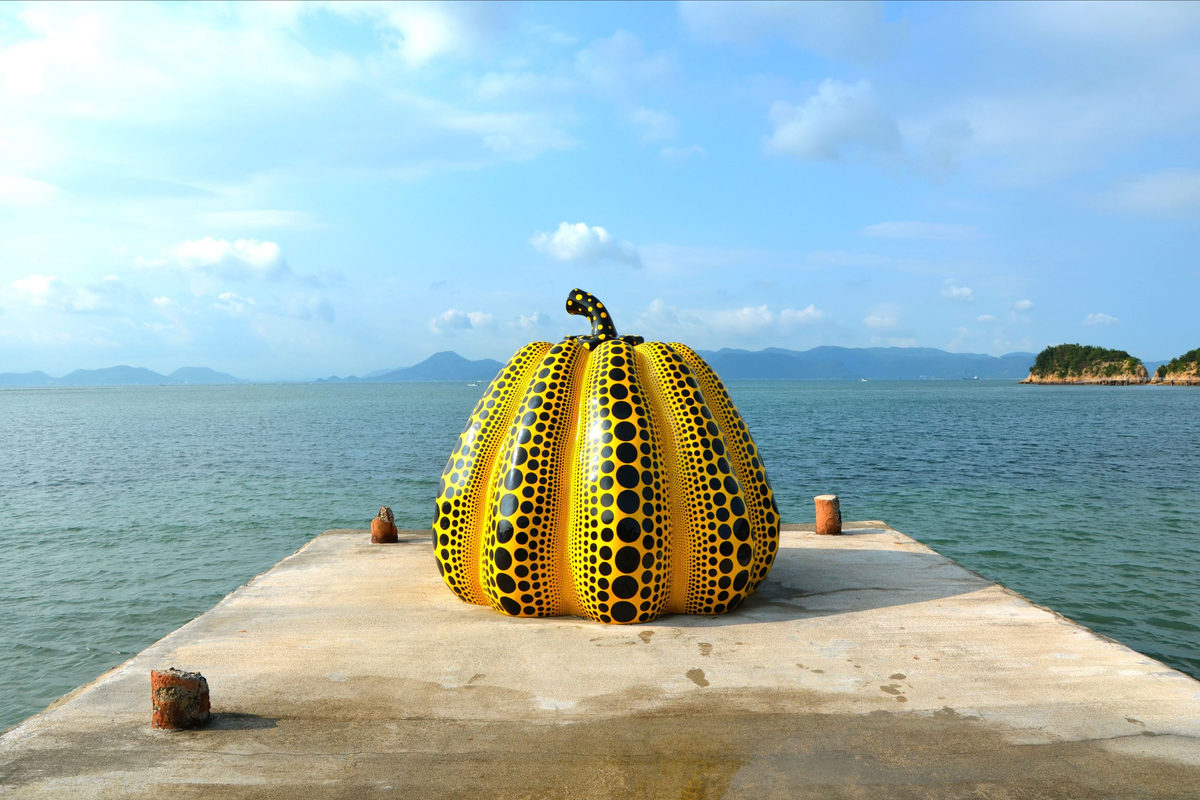
As a rule, no, and that includes the outdoor pieces. Yayoi Kusama’s Yellow Pumpkin was once washed away by a typhoon and had to be restored. The works are fragile.
Is it enjoyable with children?
The outdoor works and the Art House Project are. The Chichu Art Museum requires quiet, though, so no running around inside. There is no age restriction.

Plan this trip with IACE
Everything in this article is knowledge we use in real bookings every day. Tell us your dates, group size and interests, and we will turn it directly into your own itinerary.