What a trip to Kyoto costs in hotels, meals, and transport
Daily spending and hotel rates in Kyoto at real August 2026 levels. We also cover the cuts that actually work.
Contents
Kyoto has some of the highest room rates in Japan. During blossom season (late March to early April) and foliage season (mid November to early December) they run two to three times normal. Simply avoiding those two windows changes the cost of the trip dramatically.
Hotel rates (per person per night, two sharing a room)
| Class | Per night | What you get |
|---|---|---|
| Budget | ¥8,000–15,000 | Business hotels and guesthouses around Kyoto station |
| Mid-range | ¥20,000–38,000 | Hotels in Shijo and Kawaramachi, close to the centre of sightseeing |
| High-end | ¥50,000–200,000 | The old ryokan (Tawaraya, Hiiragiya) and international hotels |
| Machiya | ¥25,000–60,000 | A whole townhouse to yourself. Good value for three people or more |
Daily spending
| Category | Per day | Breakdown |
|---|---|---|
| Food | ¥6,000–12,000 | A set lunch, then obanzai or kaiseki at night |
| City transport | ¥800–1,500 | City bus ¥230 a ride, subway from ¥220. A bus day pass is around ¥700 |
| Temple admissions | ¥2,000–4,000 | ¥400–600 per temple, assuming five or six a day |
| Experiences | ¥3,000–10,000 | Tea ceremony, kimono rental, zazen and the like |
A sample budget
A three-night, four-day trip runs ¥100,000–150,000 per person (roughly CA$1,000–1,500): three nights ¥75,000, four days of food ¥35,000, and ¥15,000 for transport and admissions. In blossom and foliage season this becomes 1.5 to 2 times as much. A business hotel near Kyoto station brings it down to around ¥70,000.
Cuts that actually save money
- Avoid blossom and foliage season. The same room costs a third as much. May green maples, and June moss and hydrangeas, are beautiful and uncrowded.
- Take kaiseki at lunch: a ¥20,000 evening course is around ¥6,000 at midday, and the quality does not change much.
- Cut the number of temples you pay to enter. At ¥500 each, ten temples is ¥5,000. Narrow it to three or four famous ones and fill the rest with grounds you can walk for free (the Tofukuji precinct, the area around the Nanzenji Sanmon), and you keep both money and energy.
- Stay in Osaka and commute. Kyoto to Osaka is 30 minutes by rapid train, and Osaka rooms cost 60–70 percent of Kyoto rates.
Frequently asked questions
What about staying in Osaka instead of Kyoto?
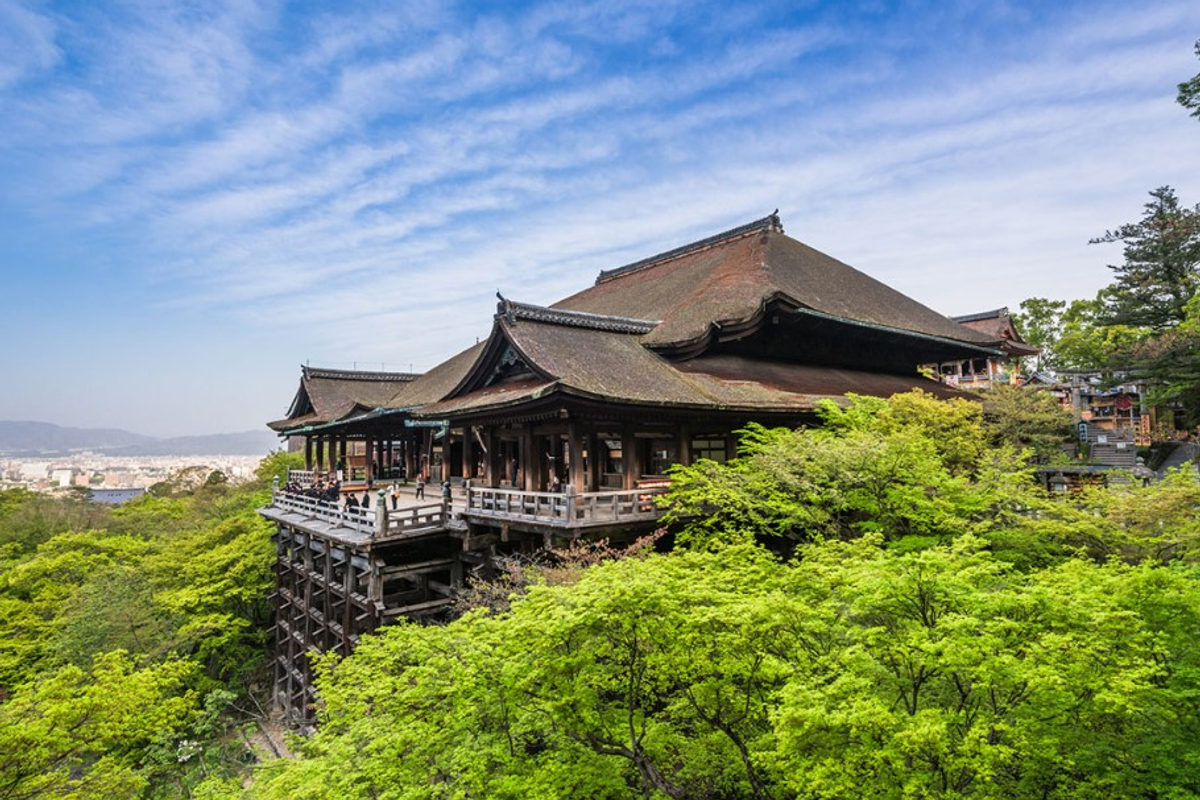
On cost, it wins (30 minutes by rapid train, ¥580). But the value of Kyoto lies in early morning and evening. Kiyomizu-dera at 7 AM and the illuminations after sunset are hard to reach if you are not staying in the city. It comes down to budget versus experience.
Do I need to rent a kimono?
It is not necessary, but it changes how your photographs in the Kyoto streets look. Half a day is ¥3,000–6,000. Note that your stride shortens, so plan a lighter route.
Let us handle the arrangements
All figures are estimates as of August 2026. For an actual quote, once your dates and hotel class are set, we put round-trip flights, hotels, and transport together into one single number.
See Kyoto & Kansai tours Free consultation
Planning essentials for Kyoto
Beyond the main topic of this article, here is a summary of everything you need to plan a trip to Kyoto, with links to the full article on each subject.
A one-day route at a glance
6:30 Fushimi Inari Taisha → 9:00 Kiyomizu-dera → 10:30 Sannenzaka, Ninenzaka, and the Yasaka Pagoda → 12:00 Lunch in Gion or on Hanamikoji → 13:30 Kenninji → 15:00 Nanzenji and the Suirokaku aqueduct → 16:30 Ginkakuji → 18:00 Dinner in Pontocho or Kiyamachi
With half a day, pick one: Higashiyama (Kiyomizu-dera, Sannenzaka, Yasaka Shrine, Gion) or Arashiyama (the bamboo grove, Tenryuji, Togetsukyo Bridge). Crossing the city east to west takes an hour on its own.
Extending beyond day one
Day 2 is Arashiyama (the bamboo grove, Tenryuji, Togetsukyo Bridge, the Sagano Romantic Train) and Kitayama (Kinkakuji, the rock garden at Ryoanji, Ninnaji). Both are on the west side of the city, the opposite direction from Higashiyama. Day 3: Uji (Byodoin and matcha), Ohara (Sanzenin), or a day trip to Nara. From day 4 you can pick a theme: Kurama and Kibune, the Fushimi sake breweries, Nishijin weaving. Kyoto is a city where no number of days is ever enough, so do not be greedy: narrow it to districts. For the full timed itinerary, see the Kyoto itinerary.
Seasons and temperatures
| Season | Typical temperatures | Highlights and cautions |
|---|---|---|
| Spring (Mar–May) | 8–25C | Blossoms late March to early April. The fresh green and the green maples of late April and May are superb too |
| Summer (Jun–Aug) | 23–34C | Rainy season, then fierce heat. Gion Matsuri runs through July. The temple garden moss is at its best |
| Autumn (Sep–Nov) | 12–28C | Foliage mid November to early December, the most crowded weeks of the Kyoto year |
| Winter (Dec–Feb) | 2–10C | A cold that comes up through the floor. Kinkakuji under snow happens a few days a year. The quietest season |
Mid November to early December (foliage) and late March to early April (blossoms) are the most beautiful and the most crowded. To avoid the crush: May (green maples), June (moss, hydrangeas, cheaper rooms), or January–February (fewest people). September still has lingering heat and typhoons, but October improves sharply. Clothing guidance and seasonal events are covered in the best time to visit Kyoto.
What to eat
- Kaiseki and Kyoto cuisine: Seasonal ingredients across many small courses. Lunch from ¥5,000, dinner from ¥15,000
- Obanzai: Kyoto home cooking, several small dishes at a time. Around ¥3,000 at izakaya-style places
- Yuba: Soy milk skin. Kyoto yuba is thin and delicate, a different thing from the thick Nikko version
- Shojin ryori: Zen temple cooking, using no animal products at all, so it is fully vegan. Served at subtemples of Myoshinji and Tenryuji
- Kyoto pickles: Senmaizuke, suguki, shibazuke. Sold throughout Nishiki Market and the souvenir shops
- Matcha and wagashi: Uji is the centre of Japanese matcha. Have a bowl whisked to order at an old tea house
- Saba-zushi: A survival of the Saba Kaido, the road that carried mackerel from Wakasa. It is pressed sushi
- Bread and coffee: Kyoto households buy more bread than any others in Japan, and the kissaten culture runs deep
Lunch ¥1,200–3,000 (kaiseki at lunch from ¥5,000), dinner ¥3,500–10,000. Kyoto is among the most expensive Japanese destinations for eating, but a set-meal shop or a udon and soba house runs around ¥1,000. If you want to experience kaiseki, the lunch course is by far the best value. For where to find each dish, see what to eat in Kyoto.
Getting there
Kyoto is a principal Tokaido Shinkansen station: 2 hours 10 minutes from Tokyo, 15 minutes from Osaka, and 75 minutes from Kansai International Airport on the Haruka limited express. Getting around the city itself means buses and subway, and that is the hardest part of visiting Kyoto.
| Route | Time | Notes |
|---|---|---|
| Tokyo → Kyoto | approx. 2 hr 10 min | Tokaido Shinkansen Nozomi, ¥13,850. The Hikari takes 2 hours 40 minutes and is covered by the JR Pass |
| Kansai Airport → Kyoto | approx. 75 min | Haruka limited express, ¥3,640. Covered by the JR Pass |
| Osaka → Kyoto | approx. 30 min | JR Special Rapid Service, ¥580. Every 15 minutes |
| Kyoto → Nara | approx. 45 min | JR Nara line Miyakoji Rapid, ¥720, or the Kintetsu limited express |
| Kyoto station → Kiyomizu-dera | approx. 25 min | City bus route 206, ¥230. Kyoto buses get crowded |
Local transport and the passes worth buying are covered in getting to Kyoto.
Good to know before you go
- No photography on Gion’s private lanes: The private lanes east of Hanamikoji are off limits to photography, and violations carry a ¥10,000 fine
- Photographing maiko and geiko without consent: Chasing them and blocking their path became enough of a problem that it is now regulated by ordinance
- Crowded buses: In tourist season they can be too full to board. Leave time
- Summer heat: Above 35C with high humidity. Temple-hopping at midday carries a heatstroke risk
- Temples close early: Many stop admissions at 4:30–5:00 PM. You cannot plan late-afternoon visits
- Stone steps and gravel: Kiyomizu-dera, Fushimi Inari and others involve a great deal of walking. Prepare your footwear
- Eating while walking at Nishiki Market: More shops now prohibit it. Eat in front of the shop you bought from
Etiquette and emergency contacts are covered in what to know before visiting Kyoto.
More frequently asked questions about Kyoto
How many days does Kyoto need?
A first visit needs three days minimum, four if you can. Two days means rushing Higashiyama and Arashiyama and little else. Three days spent carefully on three districts leaves a far stronger memory of Kyoto.
How do I avoid the crowds?
By shifting your hours. Kiyomizu-dera opens at 6 AM, Fushimi Inari is open around the clock, and the Arashiyama bamboo grove is empty early. Midday crowds cannot be avoided, so put the major sights before 7 AM and after 5 PM.
Should I avoid the foliage season?
Kyoto’s autumn colour is as good as it gets anywhere, but late-November weekends are crowded to the point of being hard to walk. If you go, go on a weekday, and go at 7 AM. Shifting to early November (the turn) or early December (fallen leaves) also works.
How hot does Kyoto get in summer?
Above 35C with high humidity, and in a basin the air does not move. If you visit in July or August, be active from 6 to 10 AM and after 5 PM, and retreat indoors to museums and machiya cafes through the middle of the day.
Is kaiseki not too expensive?
Evening courses run ¥15,000–30,000. But the same restaurant at lunch is ¥5,000–8,000. As a complete experience of the vessels, the setting, and the expression of the season, it is worth doing once. We can arrange a restaurant to fit your budget.
Can vegetarians manage?
Kyoto is the easiest city in Japan for vegetarians. There are several shojin ryori restaurants, and shojin ryori is fully vegan cooking. Subtemples of Myoshinji and Tenryuji serve it by reservation.
Are Kyoto buses really that crowded?
On the main tourist routes (toward Kiyomizu-dera and Kinkakuji) in season, crowded enough that you cannot board. Subway, walking, and a taxi where needed is faster and more comfortable in practice.
Can I ride the Nozomi?
With the nationwide JR Pass, the Nozomi requires a supplementary ticket (around ¥4,960 for Tokyo–Kyoto). The Hikari costs nothing extra and takes 30 minutes longer. On a holiday, the Hikari is perfectly adequate.
Am I not allowed to take photos in Gion?
The public street of Hanamikoji is fine, but the private lanes to its east, the stone-paved alleys, are closed to photography and carry a fine. Signs are posted, so check them. Also avoid photographing maiko and geiko without permission.
Is Kyoto too crowded now?
The major sights at midday certainly are. But early morning (before 7) and evening (after 5), and temples slightly off the centre such as Kenninji, Daitokuji, and the Tofukuji subtemples, are remarkably quiet. Shifting your times and your places is the single biggest trick to enjoying Kyoto.

Plan this trip with IACE
Everything in this article is knowledge we use in real bookings every day. Tell us your dates, group size and interests, and we will turn it directly into your own itinerary.