What a trip to Nagasaki costs in hotels, meals, and transport
Daily spending and hotel rates in Nagasaki at real August 2026 levels. We also cover the cuts that actually work.
Contents
Nagasaki is moderate for both hotels and food. It is a city of slopes, so staying along the streetcar lines makes getting around much easier.
Hotel rates (per person per night, two sharing a room)
| Class | Per night | What you get |
|---|---|---|
| Budget | ¥5,500–10,000 | Business hotels around Nagasaki Station and Hamamachi |
| Mid-range | ¥13,000–24,000 | Hotels with views of Mt. Inasa or the harbor |
| Luxury | ¥30,000–70,000 | Hotels with the Mt. Inasa night view, or onsen ryokan in Unzen |
| Lantern Festival period | 1.5–2x normal rates | Late January–mid-February |
Daily spending
| Category | Per day | Breakdown |
|---|---|---|
| Round trip from Hakata | Around ¥12,000 | Relay Kamome + Nishi Kyushu Shinkansen. 2 hours each way |
| Streetcar | ¥140–600 | ¥140 per ride, ¥600 for a day pass. Every major sight is on the network |
| Admissions | ¥1,500–3,000 | Atomic Bomb Museum ¥200, Glover Garden ¥620, Dejima ¥520 |
| Mt. Inasa ropeway | ¥1,250 | Round trip. For the night view |
A sample budget
For 2 days and 1 night, budget ¥25,000–38,000 per person (roughly CA$250–380): ¥12,000 for the hotel, ¥9,000 for two days of food, ¥4,000 for streetcars and admissions, and ¥1,250 for the ropeway. The round trip from Hakata (around ¥12,000) is covered if you hold a JR Kyushu Rail Pass or the nationwide JR Pass.
Cuts that actually save money
- The streetcar day pass: ¥600. Every major sight in Nagasaki sits along the streetcar lines.
- The Atomic Bomb Museum costs ¥200. The most important place in the city, for the price of a coffee.
- Mt. Inasa is reachable by bus too. Versus the ¥1,250 ropeway round trip, a free shuttle bus runs at certain times.
- Make champon your lunch: around ¥1,000, and one of the most Nagasaki experiences there is.
Frequently asked questions
How many days does Nagasaki need?
A day and a half for the city itself; 2–3 days if you add Gunkanjima or Unzen and Shimabara. It is 2 hours from Fukuoka by express, so a day trip is not impossible, but seeing the night view requires an overnight stay.
Is the Mt. Inasa night view worth it?
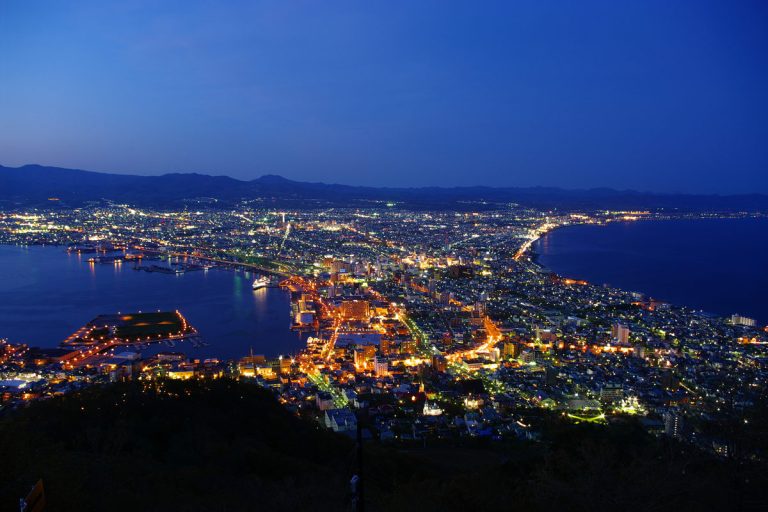
It is counted among the “new three great night views of the world.” Houses climbing the slopes around the harbor create an unusually three-dimensional nightscape. Just after sunset is the most beautiful time.
Let us handle the arrangements
All figures are estimates as of August 2026. For an actual quote, once your dates and hotel class are set, we put round-trip flights, hotels, and transport together into one single number.
See the 5-day Kyushu tour Free consultation
Planning essentials for Nagasaki
Beyond the main topic of this article, here is a summary of everything you need to plan a trip to Nagasaki, with links to the full article on each subject.
A one-day route at a glance
9:00 Peace Park & Atomic Bomb Hypocenter → 9:45 Nagasaki Atomic Bomb Museum → 11:30 Urakami Cathedral → 13:00 Lunch in Chinatown → 14:00 Dejima → 15:30 Glover Garden & Oura Cathedral → 17:00 Dutch Slope & Meganebashi → 19:30 Mt. Inasa
With half a day, choose either the Peace Park and Atomic Bomb Museum, or the southern cluster of Glover Garden, Oura Cathedral, and Dejima. The two areas sit at opposite ends of the city, so half a day covers only one.
Extending beyond day one
On day 2, take the Gunkanjima tour (Hashima, an abandoned undersea-coal-mining island; landing tours are reservation-only and weather can prevent landing), or visit Unzen Onsen and Shimabara (samurai residences and spring water). Day 3 options: Huis Ten Bosch (a theme park recreating a Dutch town) or the Goto Islands (churches of the hidden Christians). The Nagasaki region includes sites inscribed as the World Heritage “Hidden Christian Sites in the Nagasaki Region.” For the full timed itinerary, see the Nagasaki itinerary.
Seasons and temperatures
| Season | Typical temperatures | Highlights and cautions |
|---|---|---|
| Spring (Mar–May) | 11–24°C | Cherry blossoms late March–early April. The best season for walking |
| Summer (Jun–Aug) | 24–32°C | Hot and humid. August 9 is the anniversary of the bombing, with a memorial ceremony |
| Autumn (Oct–Nov) | 15–26°C | Comfortable. Nagasaki Kunchi in October is the biggest festival |
| Winter (Dec–Feb) | 6–13°C | Mild, snow is rare. The February Lantern Festival is the highlight |
October–November and late March–May. Nagasaki Kunchi (October 7–9, UNESCO Intangible Cultural Heritage) and the Lantern Festival in February (Lunar New Year) are each distinctly Nagasaki events. August 9, the anniversary of the bombing, is a day of special meaning but also crowds. Clothing guidance and seasonal events are covered in the best time to visit Nagasaki.
What to eat
- Champon: Pork, seafood, and vegetables stir-fried, then simmered with noodles in broth. Chinatown is the home of the dish. ¥900–1,500
- Sara-udon: Crispy fried thin noodles topped with a thick sauce. The other Nagasaki staple alongside champon
- Castella: A sponge cake of Portuguese origin, refined into its own thing in Nagasaki. Around ¥1,500 a loaf
- Shippoku cuisine: A course meal blending Japanese, Chinese, and Dutch influences, served on shared platters at a round table
- Toruko rice: Pilaf, spaghetti, and a pork cutlet on one plate. A Nagasaki original
- Kakuni manju: Braised pork belly in a steamed bun. The classic Chinatown street snack
- Goto udon: Thin udon from the Goto Islands, eaten with flying-fish (ago) broth
Lunch ¥1,000–2,000, dinner ¥3,000–6,000 (shippoku courses ¥6,000–15,000). Champon around ¥1,000. Prices are moderate, and even Chinatown does not charge tourist-trap rates. For where to find each dish, see what to eat in Nagasaki.
Getting there
To reach Nagasaki, take the Relay Kamome limited express from Hakata to Takeo-Onsen, then transfer to the Nishi Kyushu Shinkansen, about 2 hours in total. The Nishi Kyushu Shinkansen, opened in 2022, is a short line running only between Takeo-Onsen and Nagasaki.
| Route | Time | Notes |
|---|---|---|
| Hakata → Nagasaki | About 2 hours | Relay Kamome + Nishi Kyushu Shinkansen Kamome, around ¥6,000. Covered by the JR Pass |
| Haneda → Nagasaki Airport | About 2 hours | Direct flights. Airport to the city by bus, 45 minutes, around ¥1,200 |
| Nagasaki → Kumamoto | About 2 hours 30 minutes | Via Hakata, or by ferry from Shimabara to Kumamoto |
| Nagasaki Station → Glover Garden | About 15 minutes | Streetcar, ¥140 |
| Nagasaki → Mt. Inasa | About 20 minutes | Ropeway or bus |
Local transport and the passes worth buying are covered in getting to Nagasaki.
Good to know before you go
- The slopes: Hillside residential streets are very steep. Comfortable walking shoes are essential
- Cobblestones in the rain: The Dutch Slope and Glover Garden get slippery when wet
- The Atomic Bomb Museum exhibits: They present the reality of the bombing unflinchingly. Prepare yourself before entering
- Gunkanjima landing conditions: High waves prevent landing. Cruise-only days account for about two-thirds of the year
- Gunkanjima viewing area: Because of collapse risk, visitors must stay on the designated walkways
- Slopes in summer: You will be climbing in humid heat. Pace yourself
- Typhoons: August–October. Western Kyushu lies in the typhoon track
Etiquette and emergency contacts are covered in what to know before visiting Nagasaki.
More frequently asked questions about Nagasaki
Should I visit the Atomic Bomb Museum?
It is at the heart of why you come to Nagasaki. The museums in Hiroshima and Nagasaki differ somewhat in character: Nagasaki devotes more space to the path that led to the bomb and to the history of nuclear weapons since.
Can I land on Gunkanjima?
Landing tours exist, but on days with high waves boats can only circle the island (landings happen roughly 100 days a year, give or take). Reservations are required, and several operators run the route.
What is the Lantern Festival?
A celebration of the Chinese Lunar New Year, with 15,000 lanterns decorating the city for 15 days from late January to mid-February. It grew out of the history of Nagasaki’s Chinatown.
Can I see Nagasaki Kunchi?
It runs October 7–9. The dragon dance (ja-odori) and Dutch-ship performances are the famous ones. Paid grandstand seats sell out early, but the niwasaki-mawari performances around town can be watched for free.
Where should I eat champon?
Shinchi Chinatown is the home of the dish, including the restaurant said to have invented it. That said, nearly every shop in the city meets a solid standard, so there is no need to stand in line.
What is shippoku cuisine?
Nagasaki’s own course cuisine blending Japanese, Chinese, and Western cooking, shared from large platters at a round table. There is a set etiquette that begins with a soup called ohire. Most restaurants require reservations; expect ¥6,000–15,000.
What is the Nishi Kyushu Shinkansen?
A 66 km shinkansen line between Takeo-Onsen and Nagasaki, opened in 2022. From Hakata you ride a conventional limited express to Takeo-Onsen and change there, a cross-platform transfer on the same platform.
How do I get in from Nagasaki Airport?
The airport is in Omura City, 45 minutes from central Nagasaki by bus, around ¥1,200. Because the airport is far from the city, taking the train via Fukuoka is a realistic alternative.
Do Gunkanjima tours require reservations?
Yes, they are fully reservation-based. Several operators run tours, and whether you can land depends on the wave height that day. If landing is impossible the boat circles the island instead, and some operators refund part of the fare.
I am worried about all the slopes. Can I manage?
The streetcars reach the major sights, and Glover Garden has inclined elevators so you can get to the top without climbing. There is no need to force yourself to walk everything.

Plan this trip with IACE
Everything in this article is knowledge we use in real bookings every day. Tell us your dates, group size and interests, and we will turn it directly into your own itinerary.