Kanazawa itinerary: how to spend day one, and how to build from there
An efficient route through Kanazawa with times attached. First-time visitors can use it exactly as written.
Contents
Kanazawa was the castle town of the Kaga domain, and because it escaped wartime bombing, its Edo-period street plan survives intact. Kenrokuen, three teahouse districts, the samurai quarter, and the 21st Century Museum. At two and a half hours from Tokyo by Hokuriku Shinkansen, it has become the country’s second destination, after Kyoto, for a sense of old Japan.
A one-day itinerary for Kanazawa
| Time | Stop | What you do there |
|---|---|---|
| 8:00 | Omicho Market | A market 300 years old. Seafood-bowl breakfasts, and stalls of nodoguro and sweet shrimp |
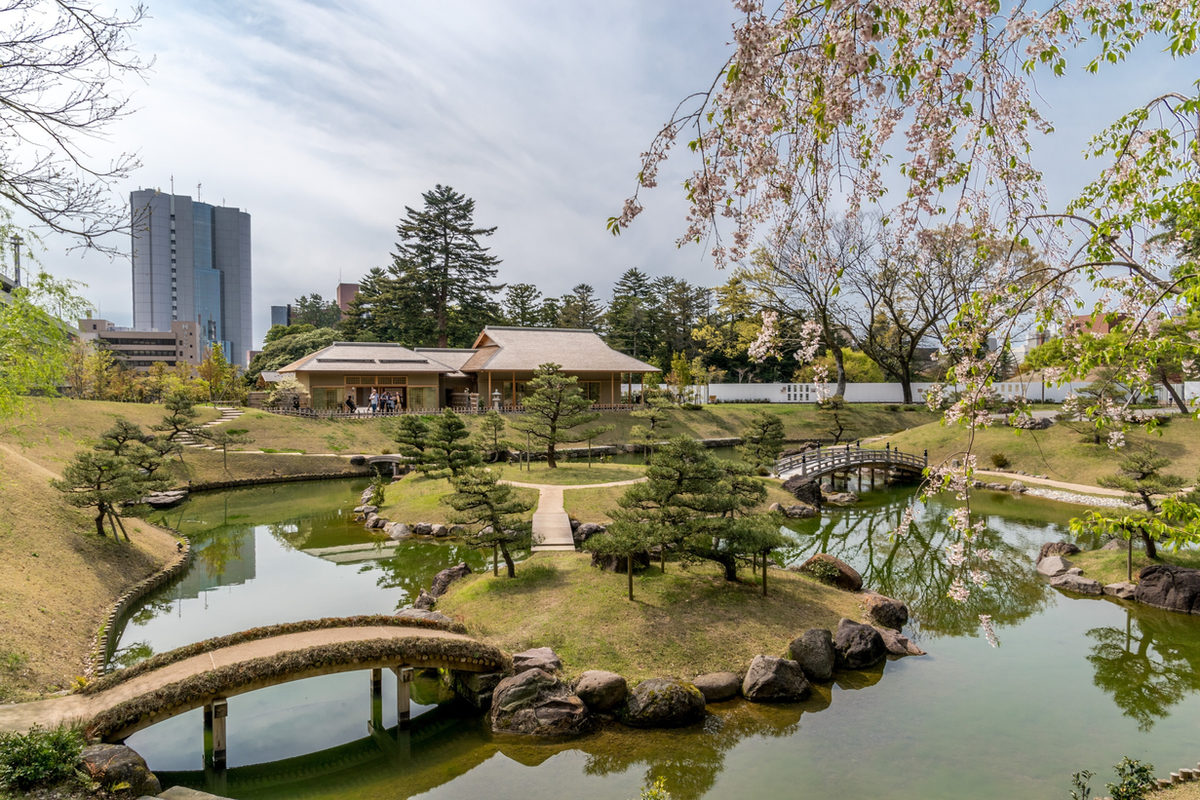
| 9:30 | Kenrokuen | One of the three great gardens of Japan. There is a free early-morning window before official opening |
| 11:00 | Kanazawa Castle Park | Next door to Kenrokuen. The reconstructed Hishi Yagura turret and Gojukken Nagaya storehouse. The variety of stonework is the thing to look for |
| 12:30 | 21st Century Museum of Contemporary Art | A circular glass building. Leandro’s Swimming Pool is the famous work. Some exhibits require reservations |
| 14:00 | Higashi Chaya district | Townhouses with red lattice fronts. Gold-leaf shops, and Shima, a teahouse open to visitors |
| 15:30 | Kazuemachi and the Asano River | A quiet riverside teahouse district, with fewer people than Higashi |
| 16:30 | Nagamachi samurai district | Earthen-walled lanes of former samurai residences. In winter the walls are wrapped in straw matting |
| 18:00 | Dinner in Katamachi or Korinbo | Kanazawa oden, Kaga cuisine, and fish from the Sea of Japan |
How to add day two and beyond
On day 2: the Nishi Chaya district, the Teramachi temple quarter (Myoryuji, the Ninja Temple, is reservation-only), and whatever you missed at the 21st Century Museum. Or take a day trip to Shirakawa-go (1 hour 15 minutes by bus), the Noto Peninsula (the Wajima morning market and the Senmaida rice terraces), or the Kaga Onsen villages (Yamanaka, Yamashiro, Katayamazu). On day 3, Eiheiji and Tojinbo in Fukui, or the Hokuriku Shinkansen toward Toyama and Tateyama. Kanazawa works well as the base for all of Hokuriku.
If you only have half a day
With half a day: Kenrokuen, then Kanazawa Castle, then the Higashi Chaya district. Those three are the core, and a bus links them.
Frequently asked questions
How many days does Kanazawa need?
A day and a half to two days for the city itself. Three if you add Shirakawa-go or Noto. The sights are more concentrated than in Kyoto, so it is an efficient city to cover.
How does it compare with Kyoto?
Kanazawa is smaller and the crowds are gentler. If Kyoto is a city of temples and shrines, Kanazawa is a city where the life of samurai and townspeople survives. Both are worth visiting.
Let us handle the arrangements
This route is based on the itineraries we actually hand to clients we book for Kanazawa. We will rearrange it around your dates, energy level, and interests. Just ask.
See Kanazawa half-day tours Free consultation
Planning essentials for Kanazawa
Beyond the main topic of this article, here is a summary of everything you need to plan a trip to Kanazawa, with links to the full article on each subject.
Seasons and temperatures
| Season | Typical temperatures | Highlights and cautions |
|---|---|---|
| Spring (Apr–May) | 6–22C | Cherry blossoms early April, with the blossoms of Kenrokuen set against the castle stonework. May greenery is lovely too |
| Summer (Jun–Aug) | 20–31C | Rainy season and humidity. June is wet, but the gardens are at their deepest green |
| Autumn (Oct–Nov) | 9–23C | Foliage mid to late November. The Kenrokuen yukitsuri work begins in November |
| Winter (Dec–Mar) | 0–9C | Snow and rain in turn. Snow settles only a few days a year, but Kenrokuen with yukitsuri under snow is extraordinary |
Early April (blossoms) and mid to late November (foliage and yukitsuri). Kenrokuen under snow is one of the finest sights in Japanese gardening, but snow falls on only a handful of days. June is rainy, yet the moss and greenery are at their best and rooms are cheaper. Clothing guidance and seasonal events are covered in the best time to visit Kanazawa.
What to eat
- Nodoguro: Blackthroat seaperch, sometimes called the toro of white fish. Salt-grilled or as sashimi. ¥3,000–6,000 a fish
- Sweet shrimp: Amaebi from the Sea of Japan. Omicho Market has them fresh and cheap
- Kobako crab: The female snow crab, in season for just two months from early November to the end of December. The roe, inside and out, is the point
- Jibuni: Duck dusted in potato starch and simmered. The Kaga home dish, defined by its thickened broth
- Kanazawa oden: Kurumafu wheat gluten, akamaki fish cake, and kanimen, a shell packed with kobako crab that exists nowhere else
- Sushi: Kanazawa sushi built on Sea of Japan fish, 20–30 percent cheaper than an equivalent Tokyo counter
- Gold leaf: Kanazawa produces 99 percent of Japan’s gold leaf. Gold-leaf soft serve is the standard tourist indulgence
Breakfast ¥2,000–3,500 (a seafood bowl), lunch ¥1,500–3,000, dinner ¥4,000–9,000. An omakase sushi course runs ¥6,000–12,000. Our honest impression is 20–30 percent below the equivalent Tokyo restaurant, at equal or better quality. For where to find each dish, see what to eat in Kanazawa.
Budget at a glance
A two-night, three-day trip runs ¥50,000–70,000 per person (roughly CA$500–700): two nights ¥36,000, three days of food ¥25,000, and ¥6,000 for city transport and admissions. The Tokyo shinkansen round trip (¥28,760) is free with a nationwide JR Pass.
Hotel rates by class and the cuts that actually save money are detailed in the Kanazawa budget guide.
Getting there
Kanazawa is one of the terminals of the Hokuriku Shinkansen, 2 hours 30 minutes from Tokyo. From Osaka and Kyoto, take the Thunderbird limited express and change at Tsuruga. Buses toward Shirakawa-go and Takayama also leave from Kanazawa.
| Route | Time | Notes |
|---|---|---|
| Tokyo → Kanazawa | approx. 2 hr 30 min | Hokuriku Shinkansen Kagayaki, ¥14,380. Covered by the JR Pass |
| Osaka → Kanazawa | approx. 2 hr 30 min | Thunderbird limited express to Tsuruga, transfer to the Hokuriku Shinkansen, around ¥9,000 |
| Kyoto → Kanazawa | approx. 2 hr 10 min | Same route, around ¥8,000 |
| Nagoya → Kanazawa | approx. 3 hr | Shirasagi limited express to Tsuruga, transfer to the Hokuriku Shinkansen |
| Kanazawa → Shirakawa-go | approx. 1 hr 15 min | Highway bus, around ¥2,000. Reservation required |
Local transport and the passes worth buying are covered in getting to Kanazawa.
Good to know before you go
- Rain and snow: A Sea of Japan climate means frequent rain. Winter snow is wet and underfoot it is slippery
- The teahouse districts are homes and working businesses: People live in the buildings of Higashi Chaya, and some teahouses are still trading
- Photographing geisha: Kanazawa has geisha too. Do not photograph them without permission
- 21st Century Museum reservations: Some works, including the interior of Leandro’s Swimming Pool, require booking
- Myoryuji (the Ninja Temple): Entirely reservation-based. You cannot walk in on the day
- Omicho Market crowds: Weekend middays are very busy. Mornings are far more comfortable
- Recovery status toward Noto: Effects of the 2024 earthquake continue in places. Check before visiting
Etiquette and emergency contacts are covered in what to know before visiting Kanazawa.
More frequently asked questions about Kanazawa
Can I see Kenrokuen in snow?
Kanazawa gets settled snow only a few days a year, and you cannot pick the day. Staying in January or February gives you a chance, but no guarantee. The yukitsuri itself is up from November to mid March.
What is Kanazawa like in the rainy season?
It rains a lot, but the moss and greenery of Kenrokuen peak in these weeks. Rooms are cheaper and there are no crowds. If you accept carrying an umbrella, it is actually a good season.
Should I eat nodoguro?
It is the fish Kanazawa is known for, and salt-grilling makes the case most clearly. But it is expensive at ¥3,000–6,000 a fish. Some diners in Omicho Market serve it as a set meal for around ¥3,000.
When is kobako crab in season?
Roughly two months, early November to the end of December. It is the female snow crab, and because it carries roe the fishing season is tightly restricted. If you are in Kanazawa then, do not miss it.
Is Kanazawa cheaper than Kyoto?
Our impression is 20–30 percent less on lodging and roughly the same margin on food. Sushi and seafood in particular are reliably cheaper and better. Crowds are gentler in Kanazawa too.
Is a machiya stay worth it?
For three or more people it also works out cheaper, and it lets you experience Kanazawa townhouse architecture from the inside. Since you take the whole house, it suits families and groups.
Can I combine Kanazawa with Kyoto?
Yes. The Thunderbird plus the Hokuriku Shinkansen takes 2 hours 10 minutes, and it is covered by the JR Pass. Both cities preserve castle-town culture, and seeing them against each other makes an interesting pairing.
Can I visit the Noto Peninsula?
Recovery from the 2024 earthquake is still continuing on some roads and at some facilities. Opening status has changed at places such as the Wajima morning market, so check current information before visiting. We can advise on the situation as well.
Is English spoken in Kanazawa?
At tourist facilities and the main hotels, yes. Some stalls in Omicho Market and owner-run restaurants are Japanese only. The loop bus has English announcements.
Is it good for solo travellers?
Very much so. The sights are concentrated and the loop bus connects them, and it is an easy city to sit down alone at a sushi counter.

Plan this trip with IACE
Everything in this article is knowledge we use in real bookings every day. Tell us your dates, group size and interests, and we will turn it directly into your own itinerary.