Naha & Okinawa Island itinerary: how to spend day one, and how to build from there
An efficient route through Naha & Okinawa Island with times attached. First-time visitors can use it exactly as written.
Contents
Until 1879 Okinawa was the independent Ryukyu Kingdom. It is part of Japan, yet its language, music, food, and architecture all differ from the mainland. On top of that: a quarter of the prefecture’s population died in the Battle of Okinawa in 1945, and US military bases still occupy 8% of its land.
A one-day itinerary for Naha & Okinawa Island
| Time | Stop | What you do there |
|---|---|---|
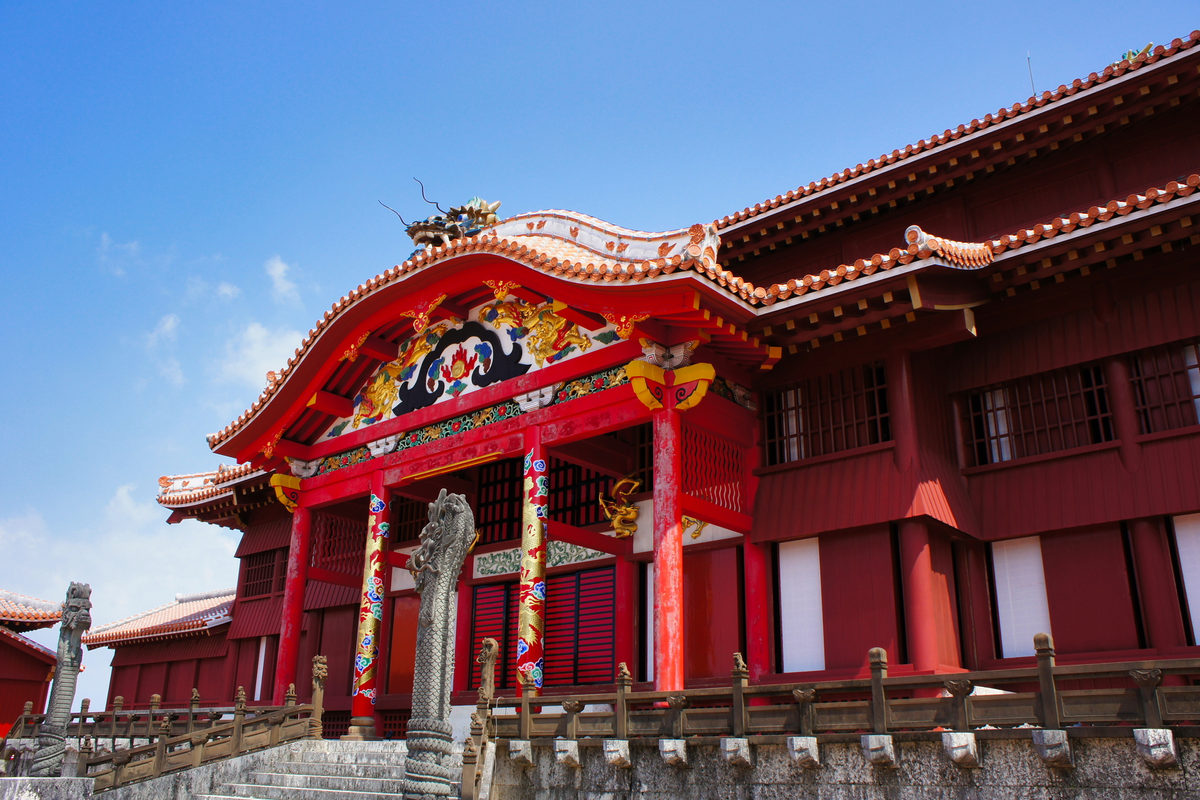
| 9:00 | Shuri Castle Park | The royal palace of the Ryukyu Kingdom. The main hall burned down in the 2019 fire and reconstruction is still under way as of 2026. The work itself is open to view |
| 11:00 | Tamaudun | The mausoleum of the Ryukyu kings. A World Heritage site and a masterpiece of stone architecture |
| 12:30 | Makishi Public Market & Kokusai-dori | The kitchen of Naha. Buy fish on the first floor and have it cooked for you on the second |
| 14:30 | Himeyuri Monument & Peace Memorial Park | The memory of the Battle of Okinawa, at the war sites in the south. 40 minutes by car from Naha |
| 16:30 | Sefa-utaki | The most sacred site in Ryukyuan belief, and a World Heritage site. A place of prayer, to be walked quietly |
| 18:00 | Back to Naha | Kokusai-dori, and the Sakaemachi and Sakurazaka districts behind it |
| 19:30 | Okinawan food and awamori | Many izakaya feature live folk music |
How to add day two and beyond
On day 2, head north: the Churaumi Aquarium (one of the largest tanks in the world, with whale sharks), Kouri Island (a bridge across emerald water), and the fukugi tree lanes of Bise. Alternatively, central Okinawa has the Zakimi Castle ruins and the Yachimun no Sato pottery village in Yomitan. On day 3, consider the Kerama Islands, whose water is among the clearest anywhere (50 minutes by ferry from Naha), or another outlying island. Okinawa Island runs 100 km north to south, so a rental car is close to essential.
If you only have half a day
With half a day, do Shuri Castle and Kokusai-dori, or the southern war sites and Sefa-utaki. Distances on Okinawa Island are long, so pick one of south, center, or north.
Frequently asked questions
Can I visit Shuri Castle?
Yes. The main hall burned in the 2019 fire, but the park is open and the reconstruction work is on view. Watching a building being restored is something you can only do now.
Should I visit the Battle of Okinawa sites?
They are unavoidable if you want to understand Okinawa. The Himeyuri Monument and the Peace Memorial Museum record a war in which a quarter of the prefecture’s people died. They are not enjoyable places, but they are meaningful ones for knowing this island.
Let us handle the arrangements
This route is based on the itineraries we actually hand to clients we book for Naha & Okinawa Island. We will rearrange it around your dates, energy level, and interests. Just ask.
See the Shuri Castle & Okinawa World tour Free consultation
Planning essentials for Naha & Okinawa Island
Beyond the main topic of this article, here is a summary of everything you need to plan a trip to Naha & Okinawa Island, with links to the full article on each subject.
Seasons and temperatures
| Season | Typical temperatures | Highlights and cautions |
|---|---|---|
| Spring (Mar–May) | 18–27°C | The beaches open in late March. The rainy season starts in mid-May |
| Summer (Jun–Sep) | 26–32°C | Hot and humid, with the highest typhoon risk. The sun is fierce |
| Autumn (Oct–Nov) | 22–28°C | Typhoons ease off and the sea is still swimmable. The most comfortable season |
| Winter (Dec–Feb) | 15–20°C | Overwhelmingly warmer than the mainland. Hikanzakura cherries bloom in January and February |
October–November and March to early May. Those months are the most comfortable and carry the lowest typhoon risk. For swimming, June to September, though that means typhoons and fierce sun. Winter (December–February) is not for swimming, but it offers warmth away from the mainland plus whale watching from January to March. Clothing guidance and seasonal events are covered in the best time to visit Naha & Okinawa Island.
What to eat
- Okinawa soba: Wheat noodles in a clear pork-and-bonito broth, topped with soki (pork ribs) or sanmai-niku pork belly. ¥600–900
- Goya champuru: Bitter melon, tofu, egg, and pork stir-fried together. The signature Okinawan home dish
- Rafute: Pork belly simmered in awamori and brown sugar. Descended from Ryukyuan court cuisine
- Umibudo: Sea grapes, a seaweed with a popping texture. You will not find it outside Okinawa
- Taco rice: Taco fillings served over rice. Born during the American administration
- Awamori: The Okinawan distilled spirit, made with Thai rice and black koji. Kusu is the aged version
- Sata andagi: The Okinawan doughnut. A plain fried sweet
Lunch ¥700–1,500 (Okinawa soba around ¥700), dinner ¥3,000–6,000. Eating out in Okinawa is cheap: soba around ¥700, awamori around ¥400 a glass. Tourist-facing places on Kokusai-dori do cost more. For where to find each dish, see what to eat in Naha & Okinawa Island.
Budget at a glance
For 4 days and 3 nights, budget ¥70,000–120,000 per person (roughly CA$700–1,200): ¥35,000 for return flights, ¥40,000 for three nights, ¥24,000 for three days of rental car, ¥18,000 for food, and ¥5,000 for admissions. Splitting the car between two people brings it to around ¥85,000 each.
Hotel rates by class and the cuts that actually save money are detailed in the Naha & Okinawa Island budget guide.
Getting there
Okinawa is reached only by air in practice. There are boats, but they take 25 hours from Kagoshima. Haneda to Naha takes 2 hours 30 minutes, and the Yui Rail monorail gets you from Naha Airport into the city in 15 minutes.
| Route | Time | Notes |
|---|---|---|
| Haneda → Naha | About 2 hours 30 minutes | Direct flights, more than 30 a day. ¥12,000–40,000, varying widely by season |
| Kansai → Naha | About 2 hours 10 minutes | Direct flights, including many low-cost carriers |
| Fukuoka → Naha | About 1 hour 45 minutes | Direct flights |
| Naha Airport → Kencho-mae | About 15 minutes | Yui Rail monorail, ¥300 |
| Naha → Churaumi Aquarium | About 2 hours | By car via the expressway. 3 hours by bus |
Local transport and the passes worth buying are covered in getting to Naha & Okinawa Island.
Good to know before you go
- Fierce sun: Nothing like the mainland. Sunscreen of SPF 50 or higher, and a hat
- Habu jellyfish: Present June–September. Swim inside the netted areas
- Habu snakes: They live in scrub and long grass. Avoid entering woodland at night
- Rip currents: Some beaches have strong currents. Obey the no-swimming signs
- Typhoons: June–October. A direct hit stops flights for a day or two
- Utaki are sacred sites: Sefa-utaki and others are places of prayer, not tourist facilities
- Photographing US bases: Photography inside base fences and of the facilities is restricted
Etiquette and emergency contacts are covered in what to know before visiting Naha & Okinawa Island.
More frequently asked questions about Naha & Okinawa Island
How serious is the typhoon risk?
Typhoons are common from June to October, especially August and September, and there are several direct hits a year. A direct hit stops flights for a day or two and you cannot leave the island. If you travel then, allow slack in your schedule and take insurance with cancellation cover.
Is Okinawa worth visiting in winter?
Yes. At 15–20°C it is overwhelmingly warmer than the mainland, and there are fewer visitors. Whale watching from January to March and the cherry blossoms in January and February are winter-only. Apart from not being able to swim, it is a good season.
Is Okinawa soba different from ramen?
Yes. The noodles are wheat but made without kansui, and the broth is a clear pork-and-bonito stock. The noodles are closer to udon in thickness, and it belongs to a different family of dishes from ramen.
How do I drink awamori?
Usually mixed with water. It is strong, around 30% alcohol and up to 43% for kusu, so you dilute it with water and add ice. Kusu is aged three years or more and is mellower.
Do I need a rental car?
On the main island, close to it. It runs 100 km north to south and local buses are infrequent. The Yui Rail monorail only covers Naha. If you are staying within Naha, though, public transport is enough.
Summer or winter?
Summer (June–September) if you want to swim; winter (December–February) otherwise. Winter lodging costs close to half, 15–20°C is comfortable for sightseeing, and there is whale watching.
Can I get around on the Yui Rail alone?
For Shuri Castle, Kokusai-dori and the airport, all within Naha, yes. But it will not take you to the Churaumi Aquarium, the southern war sites, or the beaches in the center and north. To tour the island you need a rental car.
Do I need an international driving permit?
Yes. Obtain an International Driving Permit under the Geneva Convention before you travel. Canadian-issued IDPs are valid. Permits issued by some US states need to be checked.
Is the sea safe?
Inside the netted swimming areas, yes: the nets are there against habu jellyfish. Avoid swimming outside the nets, in no-swimming zones, and at times when no lifeguard is on duty.
Is it all right to bring up the bases?
For people in Okinawa it is part of daily life and at the same time an emotionally complicated subject. If they raise it, listen; it is safer not to offer your own opinions unprompted.

Plan this trip with IACE
Everything in this article is knowledge we use in real bookings every day. Tell us your dates, group size and interests, and we will turn it directly into your own itinerary.