Best time to visit Takayama (Hida): temperatures, crowds, and what to wear by month
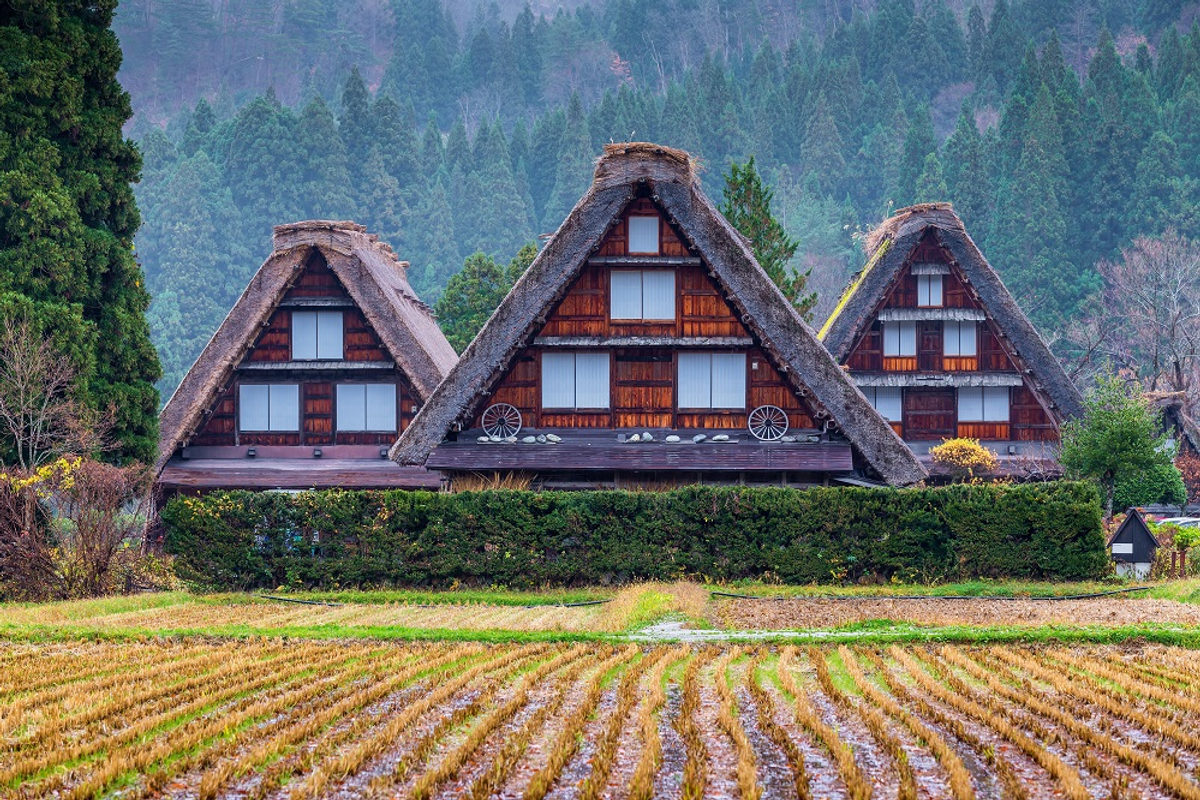
When should you go? An honest look at Takayama (Hida) in every season, covering temperatures, highlights, and the times we would avoid.
Contents
Takayama sits in a mountain basin at 570 m, with a wide temperature range. Winter snow tops a metre, and summer days pass 30C but with low humidity. The four seasons are sharply drawn, and each brings a different reason to come.
Temperatures and highlights by season
| Season | Typical temperatures | Highlights and cautions |
|---|---|---|
| Spring (Apr–May) | 2–20C | Cherry blossoms mid April. The spring Takayama Festival on April 14–15 is the year’s biggest event |
| Summer (Jun–Aug) | 17–30C | Hot by day, cool morning and night. Okuhida and Shinhotaka are summer retreats |
| Autumn (Sep–Nov) | 4–23C | Foliage late October to early November. The autumn Takayama Festival on October 9–10 |
| Winter (Dec–Mar) | -5–5C | About a metre of snow. The old town under snow, and the Shirakawa-go light-ups |
What to wear
Winter calls for serious cold-weather gear and waterproof boots. The old town is stone-paved and sealed, but it takes snow and ice. Spring and autumn mornings and evenings turn cold, so dress in layers. Summer days are hot, but the morning market hour (around 7:00) is cool enough that a light layer is welcome.
So when should you actually go?
Mid April (blossoms and the spring festival), early October to early November (the autumn festival and the leaves), and January–February (the snowbound old town and the Shirakawa-go light-ups). Rooms during the four festival days are extremely hard to get, so unless the festival is the point, shift your dates around it.
Events worth timing your trip around
- April 14–15: The spring Takayama Festival (Sanno Festival). UNESCO Intangible Cultural Heritage, with a lantern procession at night
- October 9–10: The autumn Takayama Festival (Hachiman Festival), with a different set of floats from the spring
- January–February: The Shirakawa-go light-ups (reservation required), reachable as a day trip from Takayama
- Every morning: The Miyagawa and Jinya-mae morning markets, running for 400 years
- Late October–early November: Hida foliage. Okuhida and Shinhotaka are the finest of it
Frequently asked questions
Is the Takayama Festival worth seeing?
Yes. It is UNESCO Intangible Cultural Heritage, and the ornate floats carrying karakuri marionettes are pulled through town. But it runs only four days, and lodging starts filling a year out. We handle arrangements for these dates every year.
Is winter worth it?
Yes. The old town under snow is quiet and beautiful, and the Shirakawa-go light-ups are a day trip away. Note that the light-ups are reservation-only and competition for places has become severe.
Let us handle the arrangements
If you already know when you want to travel, we can rebuild the schedule around the days when crowds and prices spike. Temperatures and crowd patterns shift a little every year, so contacting us 3–4 months before departure gives you the most options.
See Shirakawa-go & Takayama tours Free consultation
Planning essentials for Takayama (Hida)
Beyond the main topic of this article, here is a summary of everything you need to plan a trip to Takayama (Hida), with links to the full article on each subject.
A one-day route at a glance
7:00 Miyagawa morning market → 8:30 The old town (Sanmachi) → 10:00 Takayama Jinya → 11:30 Hida Folk Village → 13:00 Lunch → 14:30 Sakurayama Hachimangu and the Takayama Festival Floats Hall → 16:00 Sake brewery walk → 18:00 Hida beef for dinner
With half a day: morning market, then the old town, then Takayama Jinya. Those three are the heart of Takayama, and all are within walking distance.
Extending beyond day one
On day 2, go to Shirakawa-go (50 minutes by bus), or to the Okuhida onsen villages (the Shinhotaka Ropeway lifts you to 2,156 m) or Gero Onsen, one of Japan’s three great hot springs. On day 3, cross to Matsumoto via Kamikochi, or come out at Toyama and pick up the Hokuriku Shinkansen. Takayama connects to Nagoya, Matsumoto, Kanazawa, and Shirakawa-go alike, which makes it an easy hub for a Chubu circuit. For the full timed itinerary, see the Takayama (Hida) itinerary.
What to eat
- Hida beef: Kuroge wagyu raised in Gifu Prefecture. Steak, grilled on hoba leaves with miso, and as sushi (around ¥600 a piece)
- Hida beef sushi: The classic street food of the old town: seared Hida beef laid on a rice cracker
- Hoba miso: Miso with vegetables and mushrooms grilled on a magnolia leaf: the Hida home dish, and a breakfast standard
- Takayama ramen: Thin, crinkled noodles in a light soy broth. Locally it is called chuka soba
- Mitarashi dango: Takayama’s version is not sweet but soy-savoury. Around ¥100 a skewer
- Tsukemono steak: Pickled cabbage griddled with egg, a piece of Hida home cooking
- Local sake: Six breweries in the old town. Where a cedar ball hangs at the door, you can taste
Lunch ¥1,200–2,500; Hida beef steak ¥5,000–10,000. Hida beef sushi at around ¥1,000 for two pieces is fair value as street food. Dinner ¥4,000–8,000. Inn plans with two meals usually include Hida beef. For where to find each dish, see what to eat in Takayama (Hida).
Budget at a glance
A one-night, two-day trip runs ¥30,000–45,000 per person (roughly CA$300–450): one night with two meals ¥18,000, round trip from Nagoya ¥12,000, admissions ¥2,000, and ¥3,000 for lunch and street food. With a nationwide JR Pass, the ¥12,000 Hida round trip disappears.
Hotel rates by class and the cuts that actually save money are detailed in the Takayama (Hida) budget guide.
Getting there
The fastest way in is the Hida limited express from Nagoya, 2 hours 20 minutes. From Toyama the same train takes an hour and a half. From Matsumoto, buses connect via Kamikochi and Hirayu. Takayama is the junction that ties central Japan together.
| Route | Time | Notes |
|---|---|---|
| Nagoya → Takayama | approx. 2 hr 20 min | Hida limited express, ¥6,140. About 10 departures a day. Covered by the JR Pass |
| Toyama → Takayama | approx. 1 hr 30 min | Hida limited express, around ¥4,000. Covered by the JR Pass |
| Tokyo → Takayama | approx. 4 hr 30 min | Tokaido Shinkansen to Nagoya, transfer to the Hida |
| Shinjuku → Takayama | approx. 5 hr 30 min | Highway bus. Cheap at around ¥6,500, but slow |
| Takayama → Shirakawa-go | approx. 50 min | Nohi Bus, ¥2,600. Some services require reservations |
Local transport and the passes worth buying are covered in getting to Takayama (Hida).
Good to know before you go
- Winter snow and ice: Around a metre of snow. Iced stone paving is very slippery
- The old town is lived in: Behind those lattices are homes and shops. Do not enter private property
- Wooden buildings and fire: The streets are packed with timber houses. Smoke only in designated areas
- Photos at the morning market: Ask before photographing stallholders
- Shops close early: Old town shops shut around 17:00
- Shirakawa-go bus reservations: Some services are reservation-only, and same-day seats are not always available
- Bear country: The Hida mountains are Asian black bear habitat
Etiquette and emergency contacts are covered in what to know before visiting Takayama (Hida).
More frequently asked questions about Takayama (Hida)
How many days does Takayama need?
One day for the town itself. Two nights if you are adding Shirakawa-go and Okuhida. Basing in Takayama and day-tripping in each direction is the most efficient approach.
When is the Takayama Festival?
Twice a year: spring (April 14–15, the Sanno Festival) and autumn (October 9–10, the Hachiman Festival). It is on the UNESCO Intangible Cultural Heritage list, and the ornate floats are pulled through the streets. For those four days, rooms are booked a year ahead.
Is Hida beef expensive?
Steak runs ¥5,000–10,000. But the street sushi (around ¥1,000 for two pieces) or a hoba miso set meal (around ¥3,000) puts it within reach. It is often included in inn meals as well.
Is the morning market worth going to?
It has run for 400 years and still functions as part of daily life here. The value is less in shopping than in the chance to talk with local people. In winter it starts at 8:00 and is smaller.
Should I stay in both Takayama and Shirakawa-go?
Shirakawa-go has very few beds, and the gassho-zukuri minshuku fill a year ahead. Staying in Takayama and day-tripping to Shirakawa-go is the realistic plan, and it is what most travellers do.
Is it worth going out to the Okuhida onsen villages?
Yes. It is an hour and a half by bus from Takayama, the Shinhotaka Ropeway climbs to 2,156 m, and the open-air baths are first-rate. The Northern Alps views are nothing like the town below.
Do I need to reserve the Shirakawa-go bus?
Some Takayama–Shirakawa-go services are reservation-only. In the foliage season and during the winter light-ups they sell out, so we strongly recommend booking ahead.
Can I go from Takayama to Kanazawa?
Yes. A bus links Takayama, Shirakawa-go, and Kanazawa, and you can break the journey at Shirakawa-go. Takayama to Kanazawa takes about 2 hours 15 minutes.
Is getting around Takayama hard in winter?
The town is ploughed and easy to walk. But buses to Shirakawa-go can run late depending on road conditions, and light-up days are especially crowded.
Is English spoken?
Takayama is one of the most prepared provincial cities in Japan for foreign visitors. The tourist information office, the main inns, and many restaurants all handle English.

Plan this trip with IACE
Everything in this article is knowledge we use in real bookings every day. Tell us your dates, group size and interests, and we will turn it directly into your own itinerary.