What to know before visiting Himeji: local etiquette and pitfalls
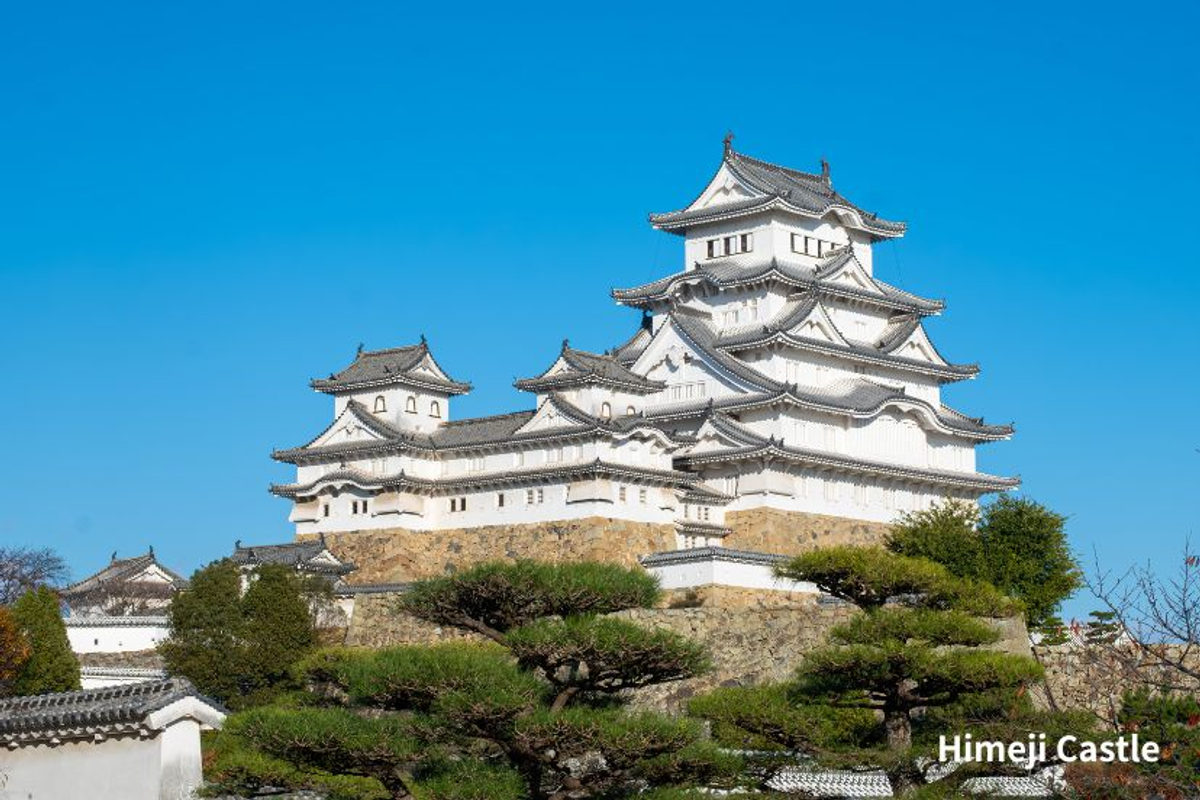
The things that catch North American travelers off guard in Himeji, laid out in advance. Less about danger, more about not losing time and money.
Contents
Himeji has no safety concerns. The cautions are all about the castle visit itself: steep stairs, numbered tickets in peak season, and the heat inside the keep in summer.
Things that catch visitors off guard
| Topic | How it really works |
|---|---|
| Steep keep stairs | You climb six floors. The pitch is steep, and the descent needs particular care |
| Shoes off inside | You remove your shoes in the keep and carry them with you in a plastic bag |
| Numbered tickets in peak season | During blossom season and long weekends, entry is capped and numbered tickets are issued |
| The keep in summer | No air conditioning, and it gets very hot. Take water up with you |
| Closing time | Admission ends at 4 PM (5 PM in summer). Arrive in the late afternoon and you will not get in |
| Large grounds | Covering the whole castle means walking 2–3 km |
| Illumination | From sunset to midnight. The castle at night is free to see |
How to handle yourself
Himeji Castle is a World Cultural Heritage site and a National Treasure. Inside the keep, observe the basics: do not put your hands on the pillars or walls, and do not run. It is a timber building, and the stairs are pitched exactly as they were in the Edo period. When busy, a one-way system is used, so follow the staff. Smoking is banned throughout the castle, and eating and drinking are limited to designated areas. In the Koko-en garden, do not step onto the moss or into the ponds.
If something goes wrong
Police 110, fire and ambulance 119. Himeji has a general hospital. People genuinely do fall ill inside the keep in summer. Do not push it. On a hot day, turning back partway is a legitimate decision. During typhoons, Himeji Castle sometimes closes for the day. Check whether it is open before you set out. Clients booked with us can reach their consultant in Japanese.
Frequently asked questions
Can I enjoy it without climbing the keep?
Yes. The view from the Sannomaru square and the Hyakken Roka corridor in the Nishinomaru alone convey the scale of Himeji Castle. If you skip the keep the admission is the same, but you avoid the stairs.
Is it accessible by wheelchair?
The Sannomaru square and parts of the grounds are, but the keep interior cannot be entered by wheelchair because of the steep stairs. The castle exterior and the Koko-en garden have good accessibility provision.
Let us handle the arrangements
If you book through us, you can reach your contact at our Toronto or Vancouver office whenever trouble comes up on the ground, and we take over any negotiation with hotels and transport providers in Japanese.
See Himeji Castle & Akashi Strait tours Free consultation
Planning essentials for Himeji
Beyond the main topic of this article, here is a summary of everything you need to plan a trip to Himeji, with links to the full article on each subject.
A one-day route at a glance
9:00 Himeji station → 9:20 Himeji Castle, Sannomaru square → 10:00 Himeji Castle keep → 12:00 Nishinomaru and the Hyakken Roka corridor → 13:00 Lunch → 14:00 Koko-en → 15:30 Engyoji on Mt. Shosha → 18:00 Back to Himeji station
With half a day, the castle alone is enough. The keep interior takes an hour and a half to two hours, longer when busy. Adding Koko-en makes it about three hours.
Extending beyond day one
Himeji is essentially a day trip, but if you stay a night, day 2 could be Akashi (the Akashi Kaikyo Bridge and akashiyaki), Ako (the setting of the 47 ronin story, and its salt fields), or a run north to Kinosaki Onsen (1 hour 40 minutes by limited express). Himeji is also a Sanyo Shinkansen stop, so calling in on the way toward Hiroshima is a natural move. Getting off for a few hours at Himeji on the day you travel from Osaka or Kyoto to Hiroshima is the most efficient way to use it. For the full timed itinerary, see the Himeji itinerary.
Seasons and temperatures
| Season | Typical temperatures | Highlights and cautions |
|---|---|---|
| Spring (Mar–May) | 9–25C | Blossoms early April. Castle and cherry blossom is one of the defining images of Japan |
| Summer (Jun–Aug) | 24–33C | Humid heat. The keep interior is timber with no air conditioning and gets extremely hot |
| Autumn (Sep–Nov) | 13–28C | October and November are best. Koko-en foliage in late November |
| Winter (Dec–Feb) | 3–11C | Mild, with rare snow. Clear air, and the season the white walls show best |
Early April (blossoms and castle) and October–November. Blossom season is extremely crowded, but the white castle against cherry blossom is one of the defining images of Japan. Summer (July–August) is punishing inside the keep, and in winter the clear air makes the white walls stand out sharply. Clothing guidance and seasonal events are covered in the best time to visit Himeji.
What to eat
- Himeji oden: Oden eaten with ginger soy sauce poured over it: the Himeji way, and only Himeji’s. ¥500–800 a plate
- Anago-meshi: Inland Sea conger eel. Grilled and laid over rice, a standard both as a station bento and in restaurants
- Ekisoba: The speciality of Himeji station: Chinese-style wheat noodles in a Japanese broth. Around ¥400
- Akashiyaki (tamagoyaki): Akashi is 20 minutes by train from Himeji. The ancestor of takoyaki, dipped in broth to eat
- Tai-meshi: Rice cooked with Inland Sea sea bream
- Shiomi manju: A restrained sweet made with Ako salt. The souvenir of the Banshu region
- Himeji sake: Banshu grows Yamada Nishiki, the sake rice that supplies the Nada breweries
Lunch ¥900–2,000, dinner ¥3,000–5,000. Prices in Himeji are gentle and tourist-priced places are limited. Ekisoba ¥400 and Himeji oden around ¥600 make it very affordable. For where to find each dish, see what to eat in Himeji.
Budget at a glance
A day trip from Osaka runs ¥7,000–11,000 per person (roughly CA$70–110): return fare ¥3,040, castle admission ¥1,050, lunch ¥1,500, souvenirs ¥2,000. Adding Engyoji puts about ¥2,000 on top. It is one of the best-value day trips in Kansai.
Hotel rates by class and the cuts that actually save money are detailed in the Himeji budget guide.
Getting there
Himeji is a stop on both the Sanyo Shinkansen and the JR Kobe line: an hour from Osaka by rapid train, 30 minutes by shinkansen. Its greatest strength is that it sits on the way to Hiroshima.
| Route | Time | Notes |
|---|---|---|
| Osaka → Himeji | approx. 60 min | JR Special Rapid Service, ¥1,520. By shinkansen, 30 minutes for around ¥4,000 |
| Kyoto → Himeji | approx. 90 min | JR Special Rapid Service, ¥2,310. By shinkansen, 45 minutes |
| Kobe (Sannomiya) → Himeji | approx. 40 min | JR Special Rapid Service, ¥1,110 |
| Himeji → Hiroshima | approx. 1 hr | Sanyo Shinkansen Nozomi, around ¥10,000. The Hikari takes 1 hour 20 minutes |
| Himeji station → Himeji Castle | approx. 15 min | On foot, straight down Otemae-dori. Or the castle-area bus, ¥100 |
Local transport and the passes worth buying are covered in getting to Himeji.
More frequently asked questions about Himeji
How long does Himeji Castle take?
An hour and a half to two hours for the keep interior alone. Three to four hours with the Nishinomaru and Koko-en added. In peak periods such as blossom season and long weekends, entry requires a numbered ticket and you will wait.
What makes it different from other castles?
It is one of the 12 castles with an original keep from before the end of the Edo period, and the largest of them. More than that, the connected structure of great keep, small keeps, and linking corridors survives intact. It has never burned and never been rebuilt, so it is the real thing.
Is blossom season crowded?
Extremely. On early-April weekends the wait to enter the keep can reach one to two hours. Numbered tickets are handed out, and the number of people admitted that day is sometimes capped.
Is the keep interior hot in summer?
Very. It is a timber building with no air conditioning, and you climb six floors. If you go in summer, aim for the 9 AM opening and carry water up with you.
What is Himeji oden?
It is the Himeji way of eating oden: ginger soy sauce poured over ingredients already simmered in broth. It is a practice almost unknown elsewhere in Japan.
Is ekisoba worth trying?
It has been sold on the Himeji station platform since 1949, and it is Chinese-style noodles in a Japanese broth. Around ¥400 and eaten in a few minutes. Locally it is the thing you do once when you come to Himeji.
Is there any point staying in Himeji?
Most people day-trip. But Himeji Castle illuminated at night belongs to those who stay, and it is lit from sunset to midnight. For anyone shooting photographs, that has value.
Can I combine it with other castles?
Pairing it with Matsumoto Castle (original keep, National Treasure), Hikone Castle (National Treasure), and Inuyama Castle (National Treasure) lets you see the lineage of Japanese castles. Himeji is on a different scale from all of them.
Shinkansen or rapid train?
From Osaka, the rapid train is fine (an hour, ¥1,520). The shinkansen takes 30 minutes but costs around ¥4,000. With a JR Pass the shinkansen is free, so take that.
Can I leave my luggage?
There are coin lockers at Himeji station, around ¥700 for a large one. If you are stopping on the way to Hiroshima, leaving your bags here and seeing only the castle is the efficient approach.

Plan this trip with IACE
Everything in this article is knowledge we use in real bookings every day. Tell us your dates, group size and interests, and we will turn it directly into your own itinerary.