What to know before visiting Furano & Biei: local etiquette and pitfalls
The things that catch North American travelers off guard in Furano & Biei, laid out in advance. Less about danger, more about not losing time and money.
Contents
This is one of the safest places in Japan, and one of the harshest natural environments in it. The things to watch are not crime but cold, wildlife, and one rule above all: the farmland is private property.
Things that catch visitors off guard
| Topic | How it really works |
|---|---|
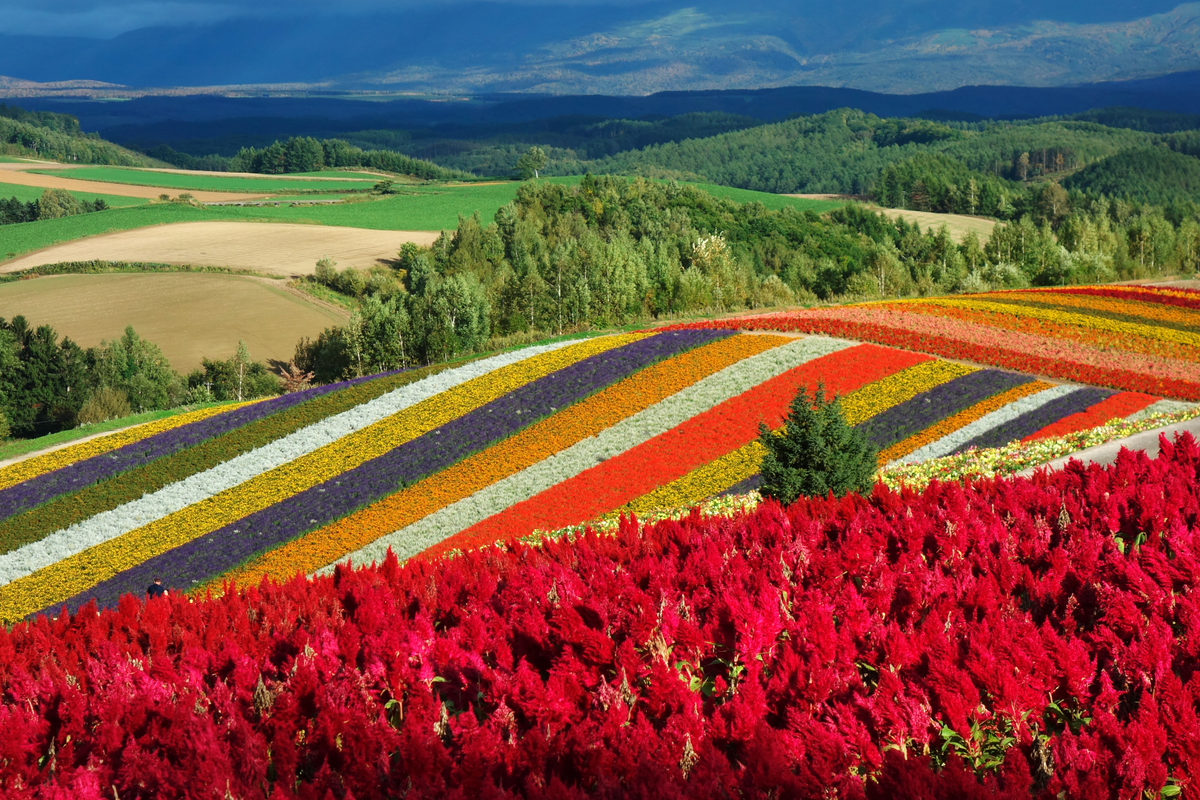
| Stay out of the fields | These scenic hills are working private farms. Tourists stepping into fields for photos has become a real problem, and trees have been cut down over it |
| No roadside parking | It blocks farm vehicles. Use the designated lots |
| Brown bear country | The Asahidake and Daisetsuzan ranges are brown bear habitat. Do not hike alone, and carry a bear bell |
| Extreme winter cold | Below -20°C, bare skin sticks to metal on contact |
| Cell dead zones | Parts of the hills and the mountains have no signal. Carry offline maps |
| Sparse gas stations | Many close at night and on Sundays. Refuel whenever you hit half a tank |
| Winter road closures | Sections toward the Blue Pond and elsewhere close depending on snow clearance |
How to handle yourself
Every named tree in Biei, the Ken & Mary Tree included, stands on a farmer’s private land. In the past, a farmer worn down by trespassing tourists cut down his own tree (the Philosophy Tree). Viewing from the road is the one correct way to see them. Drone flight is prohibited in many areas. In the flower fields, keep to the designated paths. Lavender is a crop harvested for three weeks a year: a farm product first, scenery second.
If something goes wrong
Police 110, fire and ambulance 119. Biei and Furano have clinics, but the full hospitals are in Asahikawa, and mountain rescues take time. If you climb Asahidake, file a climbing form at the ropeway station. In winter, ground blizzards can close roads without warning, and being stuck in your car for hours is a real scenario, so keep water and cold-weather gear in the vehicle whenever you drive in winter. Book a private car through us and a local driver makes the weather calls.
Frequently asked questions
Is this a good area with kids?
Yes. The hill circuit is mostly done by car, so it works fine with small children. But many roads have no sidewalks, so keep children close once you leave the parking lots.
Anything to know about photography?
Stopping on the road to shoot causes accidents, so always pull into a lot or turnout. And never enter a farmer’s field. Whether tourism in this region can continue depends on exactly that.
Let us handle the arrangements
If you book through us, you can reach your contact at our Toronto or Vancouver office whenever trouble comes up on the ground, and we take over any negotiation with hotels and transport providers in Japanese.
See Asahidake & Biei tours Free consultation
Planning essentials for Furano & Biei
Beyond the main topic of this article, here is a summary of everything you need to plan a trip to Furano & Biei, with links to the full article on each subject.
A one-day route at a glance
9:00 Biei Station → 9:30 Patchwork Road → 11:00 Shirogane Blue Pond → 12:00 Shirahige Falls → 13:00 Lunch at a hilltop cafe in Biei → 14:30 Drive to Furano → 15:00 Farm Tomita → 17:00 Furano town
With half a day: the Blue Pond and Shirahige Falls, plus one stop on Patchwork Road. Stretching to Furano eats the whole half day in transit.
Extending beyond day one
Day two: Asahidake. The ropeway lifts you to the Sugatami Pond area at 1,600 m in 15 minutes, and in late September you get the earliest fall foliage in Japan. Alternatively, Asahiyama Zoo in Asahikawa (famous for its behavioral exhibits) plus Asahikawa ramen. With a third day, add the columnar cliffs and gorges of Sounkyo (Obako and Kobako), or push north toward Wakkanai. In winter, ski Furano or ride Asahidake powder. This is a region that becomes an entirely different place between summer and winter. For the full timed itinerary, see the Furano & Biei itinerary.
Seasons and temperatures
| Season | Typical temperatures | Highlights and cautions |
|---|---|---|
| Spring (Apr–May) | 0–17°C | Thaw season. Green returns from mid-May. An in-between time for sightseeing |
| Summer (Jun–Aug) | 13–27°C | Lavender in mid-July; sunflowers and buckwheat in August. Warm days, cool mornings and evenings |
| Autumn (Sep–Oct) | 4–20°C | Asahidake turns in late September, the earliest fall color in Japan. The hills fade to post-harvest brown |
| Winter (Nov–Mar) | -15–-2°C | Days below -20°C happen. World-class powder snow. The hills turn solid white |
Mid-July (lavender), late September (Asahidake foliage), and February (powder snow and frost-covered trees): three different bests for three different trips. Avoid April and November, the in-between weeks with no snow, no flowers, and no foliage. Clothing guidance and seasonal events are covered in the best time to visit Furano & Biei.
What to eat
- Furano omu-curry: A local specialty with actual rules: Furano-grown rice and eggs plus local ingredients. Around ¥1,300
- Corn: Peaks in August. Varieties sweet enough to eat raw show up at farm stands
- Melon: Furano melon runs July–September. ¥2,000–5,000 for a whole one; some shops sell it by the slice
- Cheese and ice cream: Furano Cheese Factory: watch production, then taste it
- Potatoes and asparagus: Biei staples. June asparagus here is a different vegetable from what you get in Honshu
- Asahikawa ramen: Soy-sauce broth sealed with a layer of lard to hold its heat, a northern ramen built for the cold
Lunch ¥1,200–2,000, cafes ¥800–1,500. Evenings mostly mean dinner at your lodging. Farm-stand vegetables and fruit are astonishingly cheap. Grazing your way between stands as you drive is one of the real pleasures of this region. For where to find each dish, see what to eat in Furano & Biei.
Budget at a glance
A 2-day / 1-night trip from Sapporo runs ¥35,000–50,000 per person (roughly CA$350–500): rental car ¥18,000 for two days, one night’s lodging ¥15,000, food ¥10,000, fuel and admissions ¥6,000. Figure about ¥25,000 per person if two people share the car. A private car with driver runs ¥60,000–90,000 per day; for groups of four or more, the gap versus renting narrows.
Hotel rates by class and the cuts that actually save money are detailed in the Furano & Biei budget guide.
Getting there
The gateway to this region is Asahikawa. Asahikawa Airport (AKJ) sits 15 minutes by car from Biei and 45 from Furano, a far more convenient position than most people expect. A day trip from Sapporo is possible, but it is 2 to 2.5 hours each way.
| Route | Time | Notes |
|---|---|---|
| Haneda → Asahikawa Airport | About 1 hr 45 min | Nonstop flights. One way ¥13,000–30,000. For Biei and Furano, this airport is the closer one |
| Asahikawa Airport → Biei | About 15 min | Bus or taxi. This proximity is the region’s ace |
| Sapporo → Asahikawa | About 1 hr 25 min | Limited Express Kamui / Lilac, ¥5,220. One or two trains per hour |
| Asahikawa → Biei | About 35 min | Local train on the JR Furano Line, ¥640. Only one train every 1–2 hours |
| Asahikawa → Furano | About 1 hr 15 min | JR Furano Line, ¥1,290 |
Local transport and the passes worth buying are covered in getting to Furano & Biei.
More frequently asked questions about Furano & Biei
When can I see the lavender?
Mid-July is peak. It starts blooming in late June and is harvested by the end of July. That iconic “Furano = lavender” photo represents about three weeks of the year.
Is it worth visiting outside lavender season?
Yes. Sunflowers and buckwheat blossoms in August, Asahidake foliage in late September, snow-covered hills in winter. Outside July you get the same landscape with far fewer people, and the quiet suits it.
Can I see the Blue Pond in winter?
Yes. It is illuminated in winter, and under snow and ice it looks nothing like its summer self. Access depends on how well the road to the parking lot is plowed, though, so be cautious about going alone in a rental car.
Is the Asahidake foliage really in September?
Late September, yes. The ropeway takes you to 1,600 m, so the color arrives two months ahead of lowland Honshu. Note that the first snow can fall at the same time, so gear up as you would for an autumn mountain hike.
Is there anywhere to eat at night?
Furano town has a handful of places, but Biei’s options are very limited and mostly closed by 8 PM. Choosing lodging that serves dinner is the practical answer.
Can I take a melon home?
Carrying fresh fruit on international flights depends on your destination’s quarantine rules, and both Canada and the US restrict it. Enjoy it here, and take processed versions (jellies, sweets) home as gifts.
Can I get around without a rental car?
In summer (June–September), yes: Biei has a sightseeing bus (the Biyu Bus) and rental bicycles, and Furano runs seasonal trains and buses. The rest of the year, a rental car or private car is close to mandatory.
How many nights do I need?
One night covers the main sights; two if you add Asahidake or Sounkyo. A day trip from Sapporo is possible in theory, but 2.5 hours each way leaves you almost no time on the ground.
Should I use Asahikawa Airport or New Chitose?
If Furano and Biei are the main event, Asahikawa: 15 minutes by car to Biei versus 2.5 hours from New Chitose is no contest. New Chitose does have far more flights and generally cheaper fares, though.
Is there a bus to the Blue Pond?
In summer, a Dohoku Bus route runs from Biei Station. Service drops sharply in winter, when a taxi or private car is the realistic way in.

Plan this trip with IACE
Everything in this article is knowledge we use in real bookings every day. Tell us your dates, group size and interests, and we will turn it directly into your own itinerary.