What to know before visiting Nagoya: local etiquette and pitfalls
The things that catch North American travelers off guard in Nagoya, laid out in advance. Less about danger, more about not losing time and money.
Contents
For a large city, Nagoya is safe, and you are unlikely to feel at risk as a visitor. What to watch is the summer heat and touts in the nightlife districts of Sakae and Nishiki.
Things that catch visitors off guard
| Topic | How it really works |
|---|---|
| Extreme summer heat | Runs of days above 35C. Long stretches outdoors carry a real risk of heatstroke |
| Touts in Nishiki and Sakae | Do not follow anyone who approaches you on the street at night |
| Losing your bearings underground | The Nagoya station underground mall is among the largest in Japan and easy to get lost in. Note your exit number |
| Bicycles | Nagoya has heavy bicycle traffic. Stay alert even on the pavement |
| The Atsuta Shrine approach | It is gravel. Wear comfortable shoes |
| Ghibli Park reservations | Entirely reservation-based. There are no same-day tickets |
| Factory tour reservations | Toyota factory tours require advance booking, and there are periods when they pause |
How to handle yourself
Atsuta Shrine, which enshrines one of the three imperial regalia, is among the highest-ranking shrines in Japan. Photography is prohibited inside the main sanctuary, and restraint is expected along the approach as well. The Honmaru Palace at Nagoya Castle is a reconstructed timber building that you enter with your shoes off; do not touch the wall paintings. In Nagoya kissaten culture, occupying a seat for hours is understood to be poor form. The underground malls are commuter routes too, so avoid stopping in the flow at morning and evening peaks.
If something goes wrong
Police 110, fire and ambulance 119. Nagoya is a major city with strong medical facilities. Take summer heatstroke seriously: avoid outdoor sightseeing in the middle of the day and use the underground malls and indoor sights. During typhoons, the Tokaido Shinkansen sometimes suspends services in advance. Because Nagoya is a hinge in Japan’s transport network, being stranded here affects the whole itinerary. When a typhoon is approaching, talk to us about reworking the schedule.
Frequently asked questions
I have heard Nagoya is unsafe.
It is unremarkable by the standards of Japanese cities, and there is almost no situation in ordinary sightseeing where you would feel at risk. As long as you ignore the nightlife touts in Sakae and Nishiki, there is no problem.
How should I spend a summer visit?
Build the itinerary indoors: the Toyota Commemorative Museum, the Tokugawa Art Museum, the Port of Nagoya Public Aquarium, and the underground malls. Nagoya has enough indoor options to enjoy even in extreme heat.
Let us handle the arrangements
If you book through us, you can reach your contact at our Toronto or Vancouver office whenever trouble comes up on the ground, and we take over any negotiation with hotels and transport providers in Japanese.
See tours from Nagoya Free consultation
Planning essentials for Nagoya
Beyond the main topic of this article, here is a summary of everything you need to plan a trip to Nagoya, with links to the full article on each subject.
A one-day route at a glance
9:00 Nagoya Castle → 11:00 Tokugawa Art Museum and Tokugawaen → 12:30 Lunch in Osu → 14:30 Atsuta Shrine → 16:00 Noritake Garden and the Toyota Commemorative Museum → 18:00 Dinner in Sakae or Nishiki → 20:00 Oasis 21 and the Nagoya TV Tower
With half a day: Nagoya Castle (the Honmaru Palace), Atsuta Shrine, and a Nagoya-meshi lunch. Those three give you the shape of the city.
Extending beyond day one
On day 2, Ghibli Park (in Expo 2005 Aichi Commemorative Park, reservation required) or Inuyama, for the National Treasure Inuyama Castle and Meiji Mura. Or the Toyota Commemorative Museum plus the Toyota Kaikan (factory tours in Toyota City are by reservation). On day 3, head for Ise-Shima, Takayama, or Kanazawa. Nagoya is the transport pivot of central Japan: Hida, Hokuriku, Ise, and the Nakasendo are all 2–3 hours away. This is a city better used as a base than treated as a destination in itself. For the full timed itinerary, see the Nagoya itinerary.
Seasons and temperatures
| Season | Typical temperatures | Highlights and cautions |
|---|---|---|
| Spring (Mar–May) | 8–24C | Cherry blossoms late March to early April, at Nagoya Castle and Tsuruma Park. May is the most comfortable month |
| Summer (Jun–Aug) | 22–34C | Among the most humid heat in Japan. Keep outdoor sightseeing to morning and evening |
| Autumn (Sep–Nov) | 11–27C | It improves sharply from October. Foliage late November |
| Winter (Dec–Feb) | 2–11C | Mostly clear and dry. Snow is rare, but the Ibuki-oroshi wind is cold |
October–November and late March to May. July and August get hot enough that outdoor sightseeing is nearly impossible. That said, Nagoya is rich in indoor options, from museums and an aquarium to industrial museums and the underground malls, so there is a way to spend even the peak of summer. Clothing guidance and seasonal events are covered in the best time to visit Nagoya.
What to eat
- Hitsumabushi: Grilled eel chopped over rice, eaten three ways: plain, with condiments, then as a broth-poured chazuke. ¥4,000–7,000
- Miso katsu: Pork cutlet under a sweet-savoury bean miso sauce. The flagship of Nagoya-meshi
- Miso-nikomi udon: Firm noodles simmered in bean miso broth, served in a clay pot with the lid used as a plate
- Tebasaki: Chicken wings fried without batter, glazed sweet-savoury and dusted with pepper. Beer food by definition
- Taiwan ramen: A spicy ramen invented in Nagoya. It does not exist in Taiwan
- Ankake spaghetti: Thick noodles under a peppery, thickened sauce: Nagoya’s own take on Western food
- Morning service: Order coffee at a kissaten and toast and an egg come with it. Around ¥500
Breakfast (morning service) ¥500–900, lunch ¥1,000–2,000, hitsumabushi ¥4,000–7,000, dinner ¥3,000–6,000. Apart from hitsumabushi it is broadly cheap, and Nagoya offers unusually good value for eating out. For where to find each dish, see what to eat in Nagoya.
Budget at a glance
A one-night, two-day trip runs ¥25,000–35,000 per person (roughly CA$250–350): one night ¥12,000, two days of food ¥12,000, and ¥6,000 for transport and admissions. The Tokyo shinkansen round trip (around ¥22,000) is free with a nationwide JR Pass.
Hotel rates by class and the cuts that actually save money are detailed in the Nagoya budget guide.
Getting there
Nagoya is a principal Tokaido Shinkansen station: 1 hour 34 minutes from Tokyo, 36 minutes from Kyoto, 50 minutes from Osaka. It has its own international airport (Chubu Centrair), and the lines toward Hida, Hokuriku, Ise, and the Nakasendo all converge here.
| Route | Time | Notes |
|---|---|---|
| Tokyo → Nagoya | approx. 1 hr 34 min | Tokaido Shinkansen Nozomi, ¥11,300. The Hikari takes 1 hour 48 minutes and is covered by the JR Pass |
| Kyoto → Nagoya | approx. 36 min | Tokaido Shinkansen, ¥5,910 |
| Chubu Centrair Airport → Nagoya | approx. 28 min | Meitetsu Mu-Sky, ¥1,250 |
| Nagoya → Takayama | approx. 2 hr 20 min | Hida limited express, ¥6,140. Covered by the JR Pass |
| Nagoya → Ise-shi | approx. 1 hr 30 min | Kintetsu limited express, around ¥3,000 (not covered by the JR Pass), or the JR Mie rapid service |
Local transport and the passes worth buying are covered in getting to Nagoya.
More frequently asked questions about Nagoya
Is Nagoya worth visiting?
As a city to look at, it is modest. As a city to eat in, it is one of the best in Japan, and Nagoya-meshi is a food culture you will not find anywhere else. On top of that, it is an extremely convenient base for the rest of central Japan.
Can I go to Ghibli Park?
Entry is reservation-only, with tickets sold by lottery or first-come. Tickets are split by area, and demand is high enough that early arrangements are necessary. We are happy to advise.
Is Nagoya really that hot in summer?
It is one of the hottest cities in Japan. July and August bring runs of days above 35C with high humidity. If you go then, build the itinerary around indoor sights.
What about the Nabana no Sato illuminations?
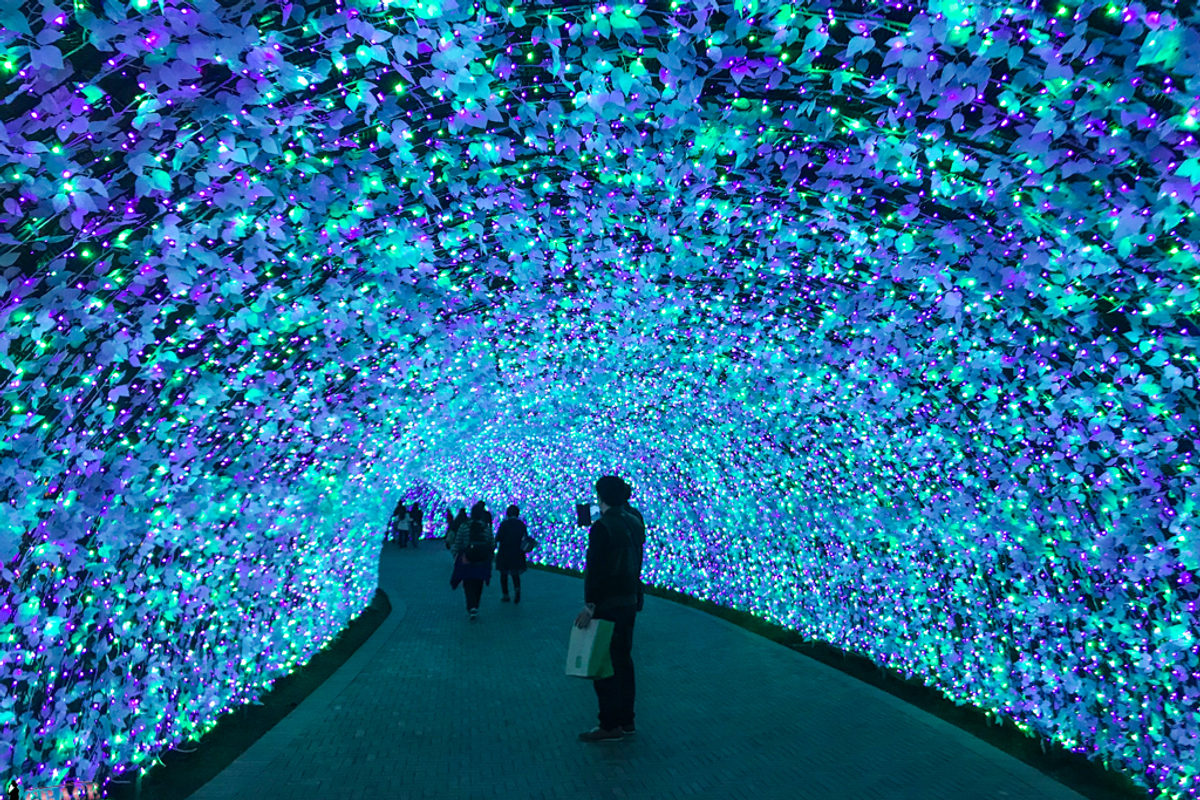
They run from late October through May of the following year and are among the largest illuminations in Japan, about an hour from Nagoya by car or bus. They feature in our tours as well.
Will I like Nagoya-meshi?
The flavours are strong, and the sweet-savoury bean miso is distinctive. Opinions divide, but hitsumabushi and tebasaki suit almost everyone. The firmness of miso-nikomi udon noodles can surprise a first-timer.
What is morning service?
A Nagoya custom: order a coffee (¥400–600) at a kissaten and toast and a boiled egg come free with it, roughly 7:00 to 11:00. Some places add chawanmushi or ogura toast.
Is there any point staying in Nagoya?
If you are touring central Japan, a great deal. Takayama, Ise, the Nakasendo, Kyoto, and Kanazawa are all 2–3 hours away, and rooms cost 30–40 percent less than Tokyo or Kyoto. As a base it is excellent.
How do I get Ghibli Park tickets?
Entry is reservation-only and tickets go on sale month by month. Demand is high and some areas sell out immediately after release. We can advise on fitting it into your itinerary.
How do I get from Nagoya to Ise?
The Kintetsu limited express is fastest and most comfortable (1 hour 20 minutes), but it is not covered by the JR Pass. With a pass, take the Mie rapid service, an hour and a half to Ise-shi station. The journey time is almost the same and there is no extra fare.
Can I ride the Nozomi?
With the nationwide JR Pass, the Nozomi and Mizuho require a supplementary ticket (around ¥4,000 for Tokyo–Nagoya). The Hikari costs nothing extra and takes only 14 minutes longer.

Plan this trip with IACE
Everything in this article is knowledge we use in real bookings every day. Tell us your dates, group size and interests, and we will turn it directly into your own itinerary.