Getting started with goshuin, the best souvenir you can bring home from Japan
Brush and vermilion seal, the name of that place on that day, written for you on the spot. For ¥300–500 you get something that outlasts any photograph.
Contents
What a goshuin is
A goshuin (御朱印) is a page inscribed for you at a shrine or temple you have visited: the name of the site, the name of its enshrined deity or principal Buddha, and the date, written with a brush and stamped with vermilion seals. Hand over the dedicated book and it is written before your eyes. It takes 3–5 minutes, and the fee is ¥300–500 as of August 2026.
The souvenirs foreign visitors usually carry home, such as keychains, matcha sweets and tenugui towels, are gone within a few years. A goshuin book is different. Visit twenty places and you have twenty pages, every one handwritten, no two alike. Open it ten years later and where you stood that day, and what you saw, comes straight back. Of everything you can bring home from a Japan trip, nothing returns more for the money. That is our honest opinion.
One thing needs saying first, though. A goshuin is proof that you worshipped, not a stamp-rally collectible. The word collecting has spread so widely that the point gets lost. For the person writing it, this is the act of inscribing the name of a kami or a buddha. Do not skip the prayer and head straight for the window. Keep that one rule, and everything else about it is relaxed.
Buying and choosing a goshuin book
First you need the book. A goshuincho (御朱印帳) is a small accordion-folded book of washi paper, typically ¥1,500–3,000; special bindings and famous-temple originals can run around ¥3,500. Where to buy one:
| Where | Typical price | Notes |
|---|---|---|
| Shrine and temple award offices | ¥1,500–3,000 | Designs unique to that site. Some write a goshuin on the first page for you |
| Stationery shops and bookstores | ¥1,200–2,500 | Plain covers and Japanese patterns. Reliable stock |
| Souvenir and general-goods shops | ¥1,500–3,000 | Design-forward. Common in Kyoto and Asakusa |
| Department-store Japanese-goods floors | ¥2,000–4,000 | Sturdy bindings. Good as gifts |
Practical points for choosing one:
- Two sizes. Large (about 12 × 18 cm) and small (about 11 × 16 cm). The large size gives the brushwork room to breathe, so if you are unsure, go large.
- Accordion folding is the standard. Thread-bound books exist, but an accordion book can be handed over lying open, which makes the writing easier.
- Paper thickness. Thin paper lets the ink bleed through. Many people use one side only, but choose thick paper and both sides work.
- A name slot on the cover exists on some books. It raises the odds a dropped book finds its way back to you.
- A vinyl cover protects against rain and the inside of a backpack.
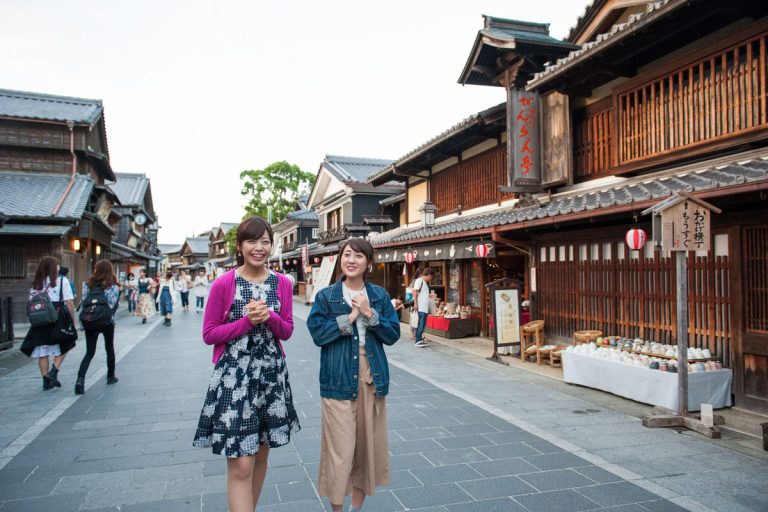
If you want your first book on day one of the trip: in Tokyo, Senso-ji; in Kyoto, the offices at Kiyomizu-dera or Yasaka Shrine are easy to find. Buying one from a washi shop in one of the towns from our article on preserved old streetscapes is a pleasure of its own.
How receiving one actually goes
- Worship first. This is the one and only real rule.
- Find the window marked 御朱印 (goshuin), 朱印所 (shuinsho), or 納経所 (nokyosho). It often doubles as the shrine or temple office.
- Open the book to the page you want written and offer it with both hands. Slipping the cover off first is a courtesy.
- Have the fee (¥300–500) ready, in exact change if at all possible. At some places you drop it into a box yourself.
- While it is being written, wait quietly. Do not lean in over the writing, and do not film it.
- Receive the book with both hands. Best not to close it for a few minutes until the ink dries.
The only Japanese you need at the window is goshuin o onegai shimasu (御朱印をお願いします), which means goshuin, please. Plain English plus gestures gets it done nearly everywhere.
What not to do
As goshuin have boomed, the people writing them have run into real trouble from visitors. Please avoid the following.
- Taking a goshuin without worshipping. It defeats the whole point. A few minutes at the altar first.
- Haggling, or asking the price and wincing. The fee is an offering, not a payment for goods.
- Refusing a pre-written sheet. On busy ritual days, or when the calligrapher is away, you may be handed a sheet written in advance (kakioki). It is a fully legitimate goshuin, and insisting on handwritten-only is considered rude. You paste it into your own book with glue or tape.
- Handing over a notebook or memo pad. Bring the dedicated book. Requests to write in travel journals or stamp albums are declined.
- Ordering a design. Requests such as bigger, please or in this color are not taken.
- Rushing in just before closing. Right before the gates shut, the office is already packing up.
- Reselling. It has become a genuine problem in recent years, and some temples have tightened their policies because of it.
Beyond that, you are essentially free. Keep any number of books, stop halfway, or fill the pages in no particular order.
Hours, and the days you will be turned away
Goshuin hours are normally shorter than the gate hours. Rough guide:
| Type | Typical hours | Watch for |
|---|---|---|
| Major shrines | 9:00–16:30 | Lines over the New Year holidays, when waits can reach an hour |
| Major temples | 8:30–16:00 | The window sometimes sits inside the paid admission area |
| Small shrines and temples | Irregular (sometimes unstaffed) | Intercom systems, or days with pre-written sheets only |
| Mountain temples | 9:00–15:30 | Count backward from the last bus down |
You will occasionally be refused: during services and rituals, when the sole calligrapher is out, or when bad weather closes the office. When that happens, take it as another time, then. Drop the idea that your itinerary requires one, and collecting goshuin becomes one of the calmest hobbies there is.
Separate books for shrines and temples?
The bottom line: you do not need to separate them. A mixed book is almost never refused. A few things are worth knowing, though.
- A very small number of temples (parts of the Nichiren school, among others) hold the position that they cannot write in a book containing pages from other schools or from shrines.
- Organized pilgrimages such as the Shikoku 88 temples and the Saigoku 33 normally use their own dedicated books (nokyocho). There are also formats stamped onto hanging scrolls or white pilgrim vests.
- Separate books mean more to carry, but some people love how tidy the collection looks when they page through it back home.
For a 2–3 week trip, one book is plenty. An accordion book holds roughly 20–24 faces, which at two sites a day is ten days’ worth. If you run out, buy another on the spot.
The cost, and what it is really worth
Run the numbers: a ¥2,000 book, plus twenty goshuin at ¥500 each, is ¥10,000, for about ¥12,000 all in. Twenty sites over a two-week trip is an entirely realistic count.
What that money buys is twenty pieces of handwritten calligraphy, tied to twenty days of your own memory. Unlike anything in a souvenir shop, it cannot be had without walking there yourself. That is the decisive difference. The handwriting changes from writer to writer, even at the same temple. Go back years later, put the two pages from the same place side by side, and you see it plainly.
One note for the trip home. Ink and vermilion dislike humidity, so keep the book in your carry-on. Crushed inside checked luggage, pages can rub and smear. The same goes for shipping bags between hotels. Send the rest ahead with luggage forwarding, but keep the goshuin book on you.
What to do with it back home
In Japan, the traditional place for a goshuin book is the household altar. North American homes do not have one, so a visible spot on a bookshelf, laid flat, is entirely sufficient. Kept out of direct sun and damp, it will last for decades.
If you want to display it: a pre-written goshuin sheet can be framed. The book itself stands open, so spreading a few accordion faces on a book stand turns it into something like a small exhibition. Showing the pages to people is fine; tearing the book apart to frame them separately is best avoided.
Frequently asked questions
Is there any point if I cannot read Japanese?
Yes. At many places, the writer will tell you the name of the site and its deity as they write or hand it back. English pamphlets are common, so jot the name beside the page and you can read it back later. And even unread, the sheer energy of the brushwork stands as a record on its own.
Can children receive one?
There is no age limit. A child offering the book and receiving it back tends to become one of the trip memories that sticks. The only requirement is waiting quietly, so judge by whether your child can manage that.
Can I get one later for a place I could not visit that day?
No. A goshuin is proof of worship, granted to the person who visited that place on that day. The date written is always the day itself.
Can I pay cashless?
As of August 2026, almost all offices are cash only. A handful of large sites have begun accepting electronic money, but they are the exception. Carry plenty of ¥100 and ¥500 coins.
Where is the best place to start?
Kyoto and Nara pack sites densely, so three to five in a day is workable. For itinerary help, see our Kyoto and Kansai tours or reach us via contact us. Articles on other themes are collected in the travel guide.

Plan this trip with IACE
Everything in this article is knowledge we use in real bookings every day. Tell us your dates, group size and interests, and we will turn it directly into your own itinerary.