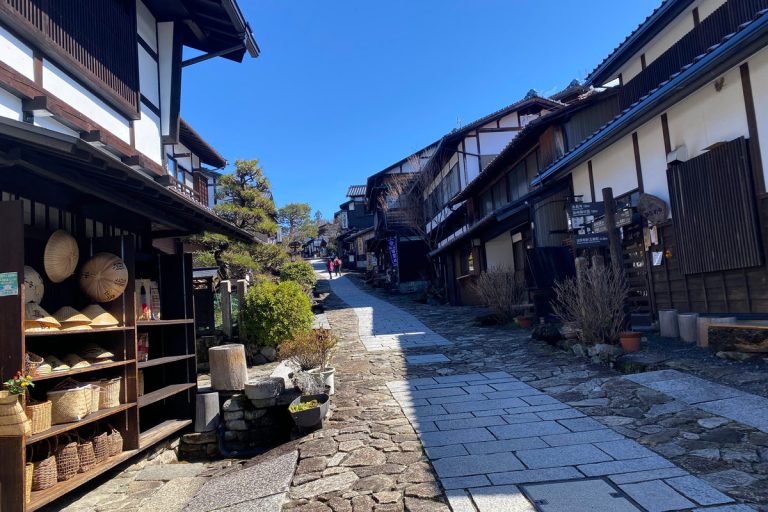
Pilgrimage and temple circuits: the Shikoku 88, the Saigoku 33 and the Kumano Kodo
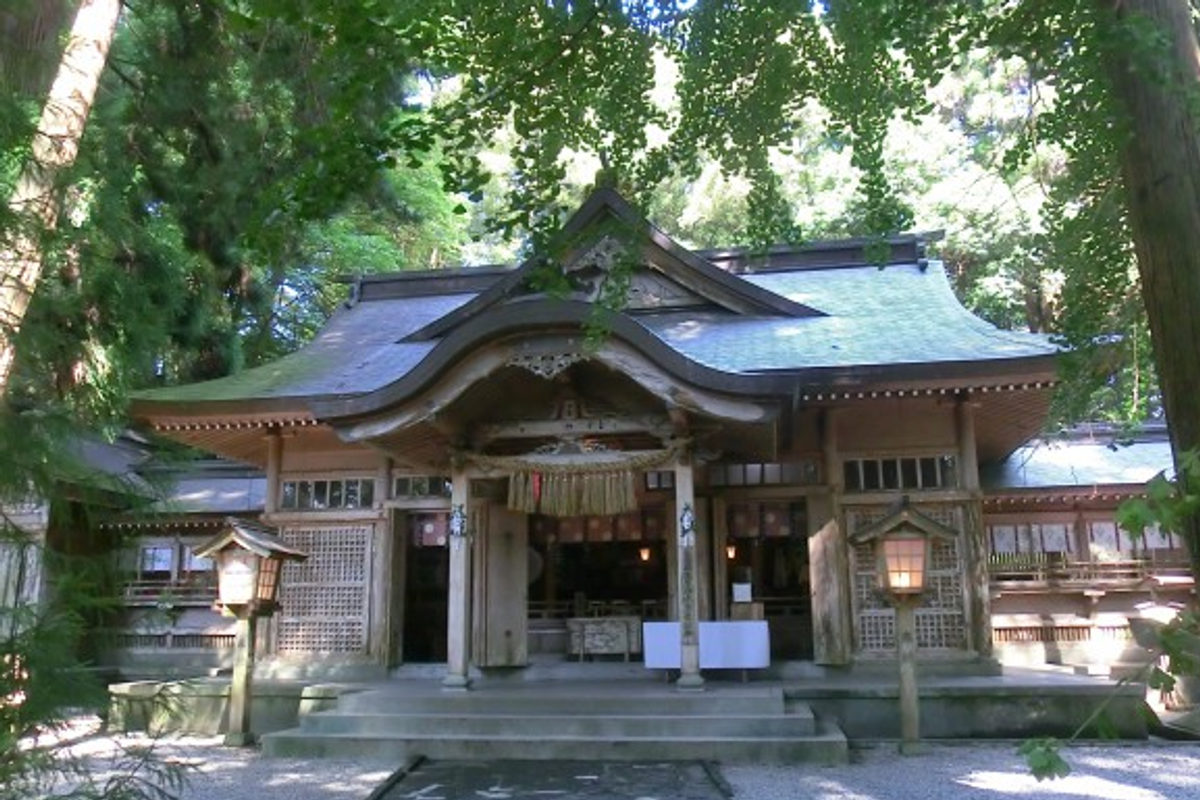
The Shikoku pilgrimage runs about 1,200 km and takes 40 to 60 days on foot. But doing it in segments, and doing it by bus, are both historically legitimate. From the meaning of the white robe, sedge hat and staff to a realistic way to experience it in a week.
Contents
- A pilgrimage is neither sightseeing nor hiking
- The Shikoku 88, at 1,200 km and 40 to 60 days
- The white robe, sedge hat and staff each mean something
- Ohenro without walking is legitimate too
- Circuits beyond Shikoku
- The Kumano Kodo, one of only two World Heritage pilgrimage routes
- Three realistic plans for a one-week trip
- Decide these before you set out
- Frequently asked questions
A pilgrimage is neither sightseeing nor hiking
North American travellers who have walked a Japanese pilgrimage route often tell us the same thing: I came expecting trekking, and it turned out to be something else entirely.
A temple circuit means visiting set temples in a set order, worshipping at each, and receiving a record of it. Walking scenic roads is not the point. Close to half of the Shikoku route is not mountain path at all but the sidewalk of a national highway. People still walk the full 1,200 km every year, because the meaning is placed in the act itself.
None of which means you have to be a believer to take part. Shikoku has a long tradition of not asking why you came. This article covers what Japan’s main pilgrimage routes are actually like, and how to have a meaningful experience within a one-week trip.
The Shikoku 88, at 1,200 km and 40 to 60 days
The Shikoku pilgrimage visits 88 temples scattered across the island’s four prefectures. It links temples associated with the 9th-century monk Kukai (Kobo Daishi, 774–835), and the route took its present form in the Edo period.
- Length is about 1,200 km, from temple 1, Ryozen-ji in Naruto, Tokushima, to temple 88, Okubo-ji in Kagawa
- Days on foot run 40 to 60, working out to 25–30 km a day
- The character of the four prefectures differs: Tokushima is the place of awakening (temples 1–23), Kochi the place of ascetic training (24–39), Ehime the place of enlightenment (40–65) and Kagawa the place of nirvana (66–88). Kochi has the longest gaps between temples, with stretches of over 80 km
- Budget for walking and staying in lodgings is ¥7,000 to ¥10,000 a day (accommodation, meals and temple-record fees). That comes to roughly ¥350,000 to ¥500,000 for the full circuit
Doing the whole circuit in one go is called toshi-uchi; doing it in several trips is kugiri-uchi, segment walking. Going in order from temple 1 is jun-uchi; going backwards from 88 is gyaku-uchi. Reverse walking is harder because the waymarkers face the other way, and tradition holds that doing it in a leap year earns greater merit.
And this matters: segment walking is a legitimate way to do it. Most Japanese pilgrims do exactly that, advancing a little at a time on weekends and holidays and reaching temple 88 after several years or more than a decade. A traveller who walks for one week and goes home is doing precisely the same thing.
The white robe, sedge hat and staff each mean something
You can worship at the temples without any of the pilgrim outfit. But knowing what each item means makes it easier to decide what to carry. A full set is sold in front of temple 1, Ryozen-ji, among other places, and comes to around ¥15,000 in total (approximate, as of August 2026).
| Item | Reading | Meaning | Typical price | How useful for travellers |
|---|---|---|---|---|
| White robe | byakue | White stands for purity. It is also said to carry the sense of a burial garment, a readiness to fall at any point on the road. A simplified sleeveless version, the oizuru, also exists | ¥2,000 and up | Wearing one means local people will speak to you. That in itself becomes part of the experience |
| Sedge hat | sugegasa | Sun and rain protection. Characters are written on its four sides, with a verse meaning that there is no east, west, south or north. It is said you may keep it on even inside a hall | ¥2,500 and up | Shikoku sun is strong in summer and the hat is genuinely practical. It is awkward to take home, though |
| Pilgrim staff | kongozue | Held to be Kobo Daishi himself. The phrase dogyo ninin, two travelling together, means the master is always with you | ¥2,000 and up | Real protection for your knees on descents. It cannot go in the cabin, though, and checked-baggage rules need confirming |
| Stole | wagesa | A simplified kesa worn around the neck. It counts as formal dress for worship | ¥2,000 and up | Light and compact. If you buy only one item, this is the easiest to handle |
| Pilgrim book | nokyocho | The book in which you receive calligraphy and a red seal at each temple. It has 88 marked spaces | ¥3,000 and up | The record that lasts best. The fee is around ¥300 per temple |
| Name slips | osamefuda | Paper slips left at each temple’s main hall and Daishi hall, with your name and the date. The colour changes with how many circuits you have done, starting with white for 1–4 | around ¥200 | Sold in packs of 100. You also use them to thank local people who offer you osettai |
There are rules about the staff. When you reach your lodging, wash and wipe the tip of the staff before you see to your own feet. And do not tap the staff on a bridge. The tradition comes from a legend that Kobo Daishi once spent a night under one, and you should not disturb his sleep.
The order of worship is: bow at the gate, purify hands and mouth at the water basin, recite sutras at the main hall, recite again at the Daishi hall, then receive your seal at the temple office. If you cannot recite, simply putting your hands together quietly is fine. Temple offices generally take requests from 7:00 to 17:00, and those hours set the shape of a walking pilgrim’s day.
Ohenro without walking is legitimate too
The idea that it does not count unless you walk does not match the historical record. Edo-period pilgrims used horses and palanquins, and today in Shikoku the large majority of pilgrims go by bus or private car.
- Bus tours. Several operators run them, either covering the full circuit in around ten nights or splitting it by prefecture over a few days at a time. A guide called a sendatsu travels with the group and teaches the forms of recitation. These are mostly conducted in Japanese
- Rental car. Reckon on 8 to 11 days for the full circuit, and you set your own pace across all 88 temples. Mountain temples (12 Shosan-ji, 20 Kakurin-ji, 21 Tairyu-ji, 60 Yokomine-ji and others) have narrow approach roads that take some confidence to drive. See also our guide to renting a car in Japan
- Taxi. Most practical for covering a handful of temples in one go
- Mixed. Travel by bus or car, then walk only the approach from the gate to the main hall. In practice this is the most common form of all
The people of Shikoku have a custom called osettai: giving pilgrims drinks, food and occasionally lodging free of charge, on the understanding that the offering reaches Kobo Daishi through the pilgrim. When you receive it, the form is to accept rather than decline, give thanks, and hand over a name slip. Walking pilgrims receive it most often, but if you are in pilgrim dress, nobody asks how you are travelling.
Circuits beyond Shikoku
Shikoku is not the only pilgrimage route in Japan. Circuits of temples dedicated to Kannon, the bodhisattva of compassion, exist all over the country.
| Route | Temples | Total distance | Area | First and last | Suitability for travellers |
|---|---|---|---|---|---|
| Shikoku 88 | 88 | about 1,200 km | Tokushima, Kochi, Ehime, Kagawa | 1 Ryozen-ji (Naruto) to 88 Okubo-ji (Sanuki) | The richest culture of dress and ritual, and the best introduction to pilgrimage |
| Saigoku 33 | 33 | about 1,000 km | The six prefectures of Kinki, plus Gifu | 1 Seiganto-ji (Nachi) to 33 Kegon-ji (Gifu) | Held to be the oldest pilgrimage route in Japan. Includes famous temples such as Kiyomizu-dera and Sanjusangen-do, so it overlaps neatly with a Kyoto trip |
| Bando 33 Kannon | 33 | about 1,300 km | Tokyo and the six Kanto prefectures | 1 Sugimoto-dera (Kamakura) to 33 Nago-ji (Tateyama) | Easy to do a few temples from a Tokyo base. Temples 1 to 3 in Kamakura connect on foot |
| Chichibu 34 Kannon | 34 | about 100 km | The Chichibu area of Saitama | 1 Shimabu-ji to 34 Suisen-ji | Short enough to complete in 4 or 5 days. Together with Saigoku and Bando it forms the Hyaku Kannon, the hundred Kannon |
If what you want is the satisfaction of having done a complete circuit in a short time, the Chichibu 34 is the realistic choice: about 100 km over four or five days, based in Chichibu, roughly 80 minutes from Tokyo by limited express.
The Kumano Kodo, one of only two World Heritage pilgrimage routes
Kumano Kodo is the collective name for the pilgrimage roads leading to the Kumano Sanzan, meaning Hongu Taisha, Hayatama Taisha and Nachi Taisha, on the Kii Peninsula. They were inscribed by UNESCO in 2004 as part of the Sacred Sites and Pilgrimage Routes in the Kii Mountain Range.
Only two pilgrimage routes on earth carry World Heritage status. One is the Kumano Kodo; the other is the Camino de Santiago de Compostela in Spain. The two are formally twinned, and there is a scheme that issues a joint certificate to people who have walked both.
The Kumano Kodo is not one road but a set of routes.
- Nakahechi, Tanabe to Hongu. The most walked route. About 38 km from Takijiri-oji to Kumano Hongu Taisha, over two to three days
- Kohechi, Koyasan to Hongu, about 70 km. Three passes of around 1,000 m, and the hardest of the routes
- Ohechi, a long coastal route toward Nachi
- Iseji, Ise Jingu to Kumano. Stone-paved passes survive along the way
- Koyasan Choishi-michi, Jison-in to the Danjo Garan at Koyasan, about 24 km, with a stone marker every cho (about 109 m)
For a first attempt, take the Nakahechi. Bus routes serve the individual sections, so you can walk only the stretch you want and take the bus back. Baggage transfer between lodgings is well established. Our Kumano Kodo article goes into more detail.
Three realistic plans for a one-week trip
Few travellers can give two weeks or more to a pilgrimage. If you have around seven days and want a meaningful experience, these three plans work.
Plan 1: walk temples 1 to 11 in Tokushima (3 days)
From temple 1, Ryozen-ji, to temple 11, Fujii-dera, about 40 km. It is almost entirely flat with short gaps between temples, which is why it is the standard introduction to the route. Cover three or four temples a day and you reach temple 11 on day three. Kansai International Airport to Tokushima takes about three hours by bus and boat, leaving four days for Kyoto or Osaka. It is enough time to assemble the outfit, carry a nokyocho and learn the forms of worship.
Note that the stretch on to temple 12, Shosan-ji, is known as henro korogashi, the pilgrim tumbler. It runs about 13 km with 700 m of climb, taking a full day. It is worth attempting if you are confident of your fitness, but it is not a section to start with.
Plan 2: walk the Nakahechi on the Kumano Kodo (4 days)
About 38 km from Takijiri-oji to Kumano Hongu Taisha over four days and three nights. There are lodgings at Takahara and Chikatsuyu along the way, and baggage transfer is available. After reaching Hongu, staying at Kawayu Onsen or Yunomine Onsen and finishing with a trip out to Nachi Falls makes an easy shape. You come away with the clear marker of having walked a World Heritage pilgrimage route. We can help arrange it through our walking and pilgrimage tours.
Plan 3: complete the Chichibu 34 (5 days)
About 100 km in five days, covering all 34 temples. Chichibu, 80 minutes from Tokyo by limited express, works as a base, so you can leave your luggage in Tokyo. It is close to the only pilgrimage route in Japan where you can get the satisfaction of a full circuit in a single trip.
Decide these before you set out
- Temple offices close at 17:00. Work backwards from that when planning each day. Arriving at 17:05 means no seal
- Book lodgings in advance. There are only so many along the Shikoku route, and same-day availability is not reliable
- Carry cash. Temple-record fees and many lodgings are still cash only
- Wear shoes you have broken in. Close to half the Shikoku route is paved, and some people find trail-running shoes suit it better than hiking boots
- Keep your pack minimal. Under 7 kg if you are walking. Anything you will not use can be sent ahead by takkyubin (luggage delivery)
- If you have tattoos, check onsen policies in advance. We cover this in our article on tattoos and onsen
Frequently asked questions
Can I take part if I am not a Buddhist?
Yes. Shikoku has a long tradition of not asking your motives, and people come to walk it from all over the world. Sutra recitation is not required either. All that is asked is respect for the fact that these are places of faith. Do not be loud, do not cut in front of someone praying, and that is enough.
Is there any point if I do not visit all 88?
There certainly is. Segment walking is the standard method for Japanese pilgrims too, and plenty of people take years or decades over it. Stop at 11 temples and those 11 count as formally visited. Your nokyocho picks up where you left off the next time you come.
Will people speak English?
At the temple offices, mostly Japanese only. The procedure is standardised, though, so handing over your nokyocho gets the message across. English signage along the pilgrim paths has increased, and English maps and guidebooks are commercially available. Lodgings vary in how much English they handle.
Can I take the pilgrim staff home on a plane?
Not in the cabin. Because of its length, checked baggage also requires checking the individual airline’s rules. If you want to bring one home, shipping it by international courier is the sure route. A sedge hat is similarly bulky.
What should I do if someone offers me osettai?
Accept it rather than decline, and give thanks. There is a view that refusing denies the giver their opportunity to earn merit. Custom is to hand over a name slip in return. You are not expected to give money back.
Which should I choose, Kumano Kodo or Shikoku?
They serve different purposes. The Kumano Kodo is about walking through forest and over passes, the scenery leaves the strongest impression, and there are sections that finish neatly in three or four days. Shikoku is about worship and ritual at the temples, and much of the road itself is paved. For scenery, Kumano Kodo; to experience pilgrimage as an act, Shikoku.

Plan this trip with IACE
Everything in this article is knowledge we use in real bookings every day. Tell us your dates, group size and interests, and we will turn it directly into your own itinerary.