Staying at a shukubo: a temple is not a hotel, and we are telling you now
Prayers at 5:30 AM, meals without meat or fish, doors locked at 9 PM. And still, for some travelers, one night on Koyasan becomes the best memory of the whole trip.
Contents
What a shukubo is
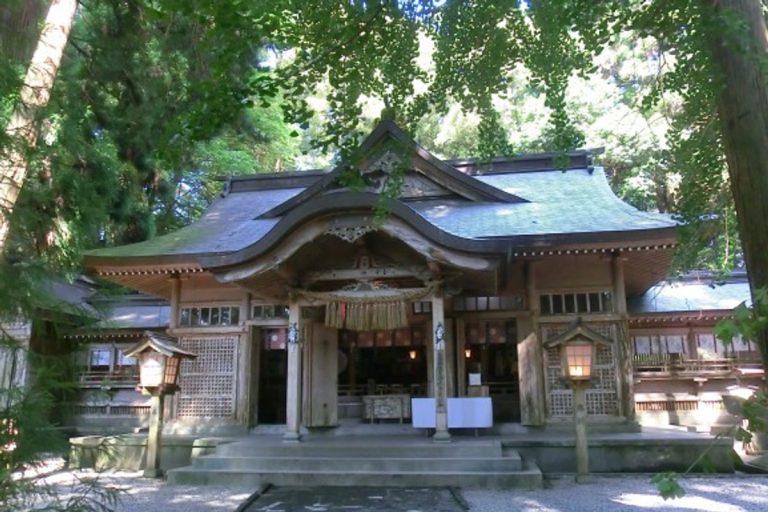
A shukubo (宿坊) is lodging that a Buddhist temple runs for worshippers. Originally these housed monks and pilgrims; opening them to ordinary travelers is a modern development. The temple itself is the operator, and the people at the front desk and carrying the meals are, in most cases, monks or temple staff.
Let us be blunt right away: a shukubo is not a hotel. Point your expectations the wrong way and disappointment is guaranteed. Rooms may not lock. Walls are a single sliding fusuma panel, and you will hear your neighbors. Baths are shared, with set hours. Dinner is served to everyone at around 6 PM, and after that nothing more comes. There is a curfew, so you cannot go out at night. No TV and no fridge is the norm.
We recommend it anyway, because none of these are defects. They follow from the fact that this is a place of daily life and religious practice. At 5:30 in the morning you walk into the main hall and sit while twenty monks chant. That experience stays with you longer than the finest ryokan breakfast ever will. Choose it as a place to feel time move differently rather than as a purchase of comfort, and a shukubo can be the single most valuable night of a Japan trip.
Why Koyasan
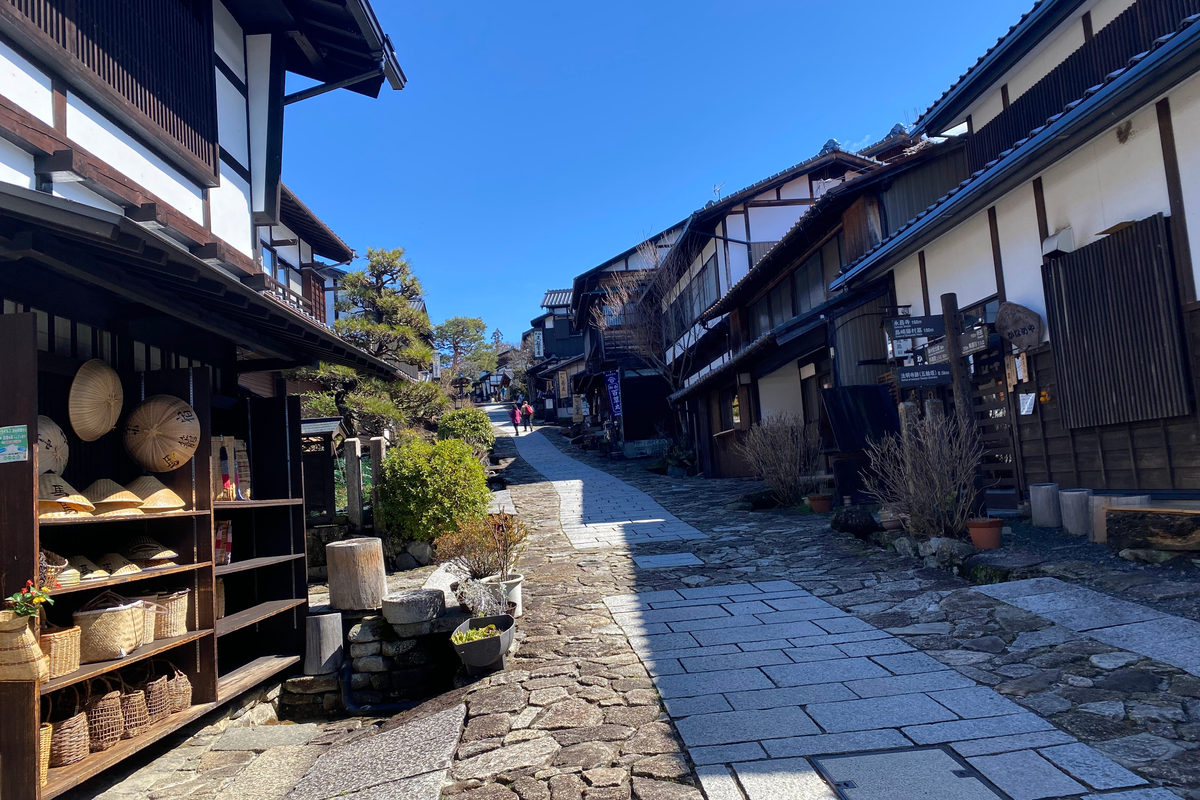
Shukubo exist all over Japan, but the most open to foreign travelers is Koyasan (高野山) in Wakayama. Three reasons.
- The numbers. In a basin at about 800 m elevation stand 117 temples, and about 50 of them run shukubo. This is the headquarters of Shingon esoteric Buddhism, founded 1,200 years ago by Kukai (Kobo Daishi). The whole town is a temple.
- The track record. Koyasan has hosted foreign pilgrims since the 1990s, so English information, online booking, and vegetarian-friendly food (the cuisine is meat-free to begin with) are all in place. Many shukubo can be booked directly through international reservation sites.
- The access is simple. From Namba in Osaka, about 1 hour 40 minutes on the Nankai Koya line, a 5-minute cable car ride from Gokurakubashi, then a bus into the town center. From Kyoto or Osaka it works best as an overnight rather than a day trip.
Koyasan was inscribed as a World Heritage site in 2004, together with the Kumano Kodo, as the Sacred Sites and Pilgrimage Routes in the Kii Mountain Range. A trail called the Kohechi links Koyasan with Kumano, and some travelers fold the stay into a walking journey, territory we cover in our walking and pilgrimage tours.
Prices, and what is included
Figures as of August 2026. Shukubo rates are per night with two meals (dinner and breakfast) as the base; many temples do not take room-only bookings at all.
| Category | Per person, one night, two meals | What you get |
|---|---|---|
| Standard shukubo | ¥12,000–18,000 | Tatami room, shared bath and toilet. Two temple-cuisine meals |
| Better-equipped shukubo | ¥18,000–25,000 | In-room toilet and sink. Garden-view rooms. More dishes at dinner |
| Special rooms | ¥25,000–40,000 | Guest halls facing museum-grade gardens. Very few exist |
| Sutra copying (add-on) | ¥1,000–2,000 | About an hour. Some temples take non-guests too |
| Ajikan meditation / zazen (add-on) | ¥1,000–2,000 | Reservation required. Held only on certain days |
| Okunoin night tour | Around ¥3,000 | English-speaking guide. Departs around 7 PM, about 2 hours |
Set beside an onsen ryokan at the same price, the facilities clearly lose. But what you are paying for at a shukubo is not the facilities. It is admission into that temple’s space and time. Seen that way, ¥15,000 is less fair than cheap. Two people per room is the standard; solo travelers pay a supplement, and some temples decline single bookings.
Shojin ryori: no meat, no fish, and no garlic either
The meals are shojin ryori (精進料理), Buddhist temple cuisine. Following the precept against taking life, there is no meat, fish, or egg. Beyond that, the five pungent vegetables (gokun), namely garlic, green onion, Chinese chives, rakkyo and chives, are also avoided; their strong smell was held to disturb religious practice.
What actually arrives: seasonal vegetables simmered together, sesame tofu, tempura, dressed vegetables, soup, pickles, rice. Koya-dofu (freeze-dried tofu) and goma-dofu (sesame tofu), both Koyasan specialties, were born here from preservation needs and temple technique. Expect seven to twelve dishes. The quantity is by no means small. Seasoning is gentle, with stock drawn from kombu and shiitake.
Honestly, opinions split. The best Japanese meal of my life and it wears thin by the second night both exist. For vegans it is close to ideal, but note that it is not strictly vegan by default: some temples use bonito in the stock, or cooking sake and mirin. If your restrictions are strict, say so when you book. Most temples will adapt.
Also, alcohol policy differs temple by temple. Some serve sake and beer under the old euphemism hannyato, wisdom water, while others serve none at all. Treat bringing your own as something to refrain from.
The morning service, sutra copying, and meditation
Attending the service is optional
The heart of a shukubo stay is the next morning’s service, the gongyo. It starts between 5:30 and 6:30 depending on the temple. You gather in the main hall and listen to the monks chant for 30–45 minutes, kneeling or seated on a chair. On Shingon Koyasan, some temples follow with the goma fire ritual. It is visually overwhelming, the hall filling with smoke and flame while drums and chanting build.
Attendance is not required. Sleep through it and nobody comes to wake you or holds it against you. But most of the reason to stay at a shukubo lives here, so we suggest going at least once. Nothing religious is asked of you, and sitting and listening is enough. If you are invited to offer incense, declining is fine, and copying what others do is fine too.
Everyday clothes are appropriate. Be warned, though: the hall is bitterly cold in winter. Koyasan sits at 800 m, and mornings from December through March fall below freezing. You will be seated in an unheated hall for 45 minutes, so warm layers are essential. Chairs are almost always available for those who cannot kneel, but asking in advance is reassuring.
After the service, breakfast comes around 7, with checkout between 8 and 9. That is the standard rhythm.
Sutra copying and meditation (add-on experiences)
Many shukubo offer extra experiences at ¥1,000–2,000.
Shakyo (写経), sutra copying, means tracing a faintly printed sutra text, usually the Heart Sutra at 276 characters, with a brush. It takes 45 minutes to an hour and a half. There is no requirement to write well, and no brush experience is needed. When you finish, you choose whether to dedicate the sheet to the temple or take it home. It works fine without reading Japanese, and some say that not knowing the meaning makes it easier to sink into the pure shapes of the characters.
Zazen is the seated meditation of the Zen schools (Soto and Rinzai). Koyasan is Shingon, so what it offers instead is ajikan (阿字観): a meditation facing a scroll of the Sanskrit letter A, settling the breath, for 20–40 minutes. If zazen itself is what you are after, look to the subtemples of Myoshin-ji and Kennin-ji in Kyoto, Eihei-ji in Fukui, or Engaku-ji in Kamakura.
Options beyond Koyasan
| Place | Character | Getting there |
|---|---|---|
| Koyasan (Wakayama) | About 50 temples. The most English-ready in Japan. Shingon school | About 2 hours from Namba, Osaka |
| Enryaku-ji, Mt. Hiei (Shiga/Kyoto) | Lodge-style accommodation. Head temple of the Tendai school. Morning service and sutra copying | About 1.5 hours from Kyoto Station |
| Eihei-ji (Fukui) | Head temple of Soto Zen. The sanro overnight retreat comes close to real monastic training | Local train and bus from Kanazawa or Fukui |
| Dewa Sanzan (Yamagata) | Lodges of the yamabushi mountain ascetics. The retreat house on Mt. Haguro. The world of Shugendo | Bus from Shonai Airport or Tsuruoka |
| Kuon-ji, Mt. Minobu (Yamanashi) | Head temple of Nichiren Buddhism. A handful of shukubo along the approach | About 3 hours from Shinjuku by limited express and the Minobu line |
| Shikoku 88 temples | Pilgrimage-temple shukubo, used as bases by walking pilgrims | From Tokushima, Takamatsu, and other cities |
Choose by English support and ease of booking and the answer is Koyasan; choose by intensity of practice and it is Eihei-ji or Dewa Sanzan. That is the honest shorthand. Note that the Eihei-ji retreat means rising at 3:30 AM under rules such as no idle talk; do not approach it as an extension of sightseeing. These stays can be combined with Chubu and the Alps itineraries or a walking journey.
Booking, and what to know on the day
- Book 3–6 months ahead. Cherry blossom (April), autumn foliage (late October–November), and New Year fill up half a year out. In the quiet months (January–February, June) last-minute rooms do appear.
- Curfew is around 9 PM as standard, and 8 PM at some temples. If you want an evening out, the realistic option is a temple-led event such as the Okunoin night tour.
- Bath hours run roughly 4 PM to 9 PM. Shared bathing rooms, separated by gender. Outside those hours they are closed.
- Tattoos. Shukubo baths are less strict than commercial onsen, but policy differs temple by temple. If concerned, ask when booking. The background is laid out in our tattoos and onsen article.
- Wi-Fi depends on the temple. Many now offer it in the guest hall, though it may not reach the rooms. Mobile signal is generally fine in the town of Koyasan.
- Heating and cooling. Expect a heater in the room but none in the corridors or the main hall. Summer on Koyasan is cool, and many days need no air conditioning at all.
- Some temples are still cash only. Card acceptance is spreading, but confirm in advance.
- Luggage. Big suitcases fight with staircases in old buildings. Bring one night of essentials and send the rest ahead to your next hotel. See our luggage forwarding article.
Who it suits, and who it does not
Suited: people who love quiet, do not mind early mornings, are comfortable with tatami and futon, are curious about the texture of Japanese daily life, or are vegetarian.
Not suited: night owls who want to go out after dinner, travelers who prize privacy, people who can only sleep in a bed, families whose small children cannot stay quiet, and anyone for whom a meal without meat is not a meal.
If you are torn, put exactly one night into the itinerary. String two or more together and the sameness of the meals and the timetable starts to wear on some people. With one night, nearly everyone comes away saying it was worth it.
Frequently asked questions
Can I stay if I am not Buddhist?
Yes. Nobody asks about your faith, and nobody tries to convert you. Attending the morning service is optional. The one premise you are asked to share is that this is a place of practice and daily life.
Will English work?
Most Koyasan shukubo have written guidance in English and monks who can manage simple English; some explain the morning service in English as well. Outside Koyasan, shukubo are Japanese-only as a rule.
Can we bring children?
Many temples welcome them, though some set age limits. The walls are thin and evenings and early mornings must be kept quiet, so if you have preschool-age children, consult the temple in advance.
Can Koyasan be done as a day trip?
It is possible, at about 2 hours each way from Osaka. But the Okunoin approach (about 2 km, giant cedars, more than 200,000 grave markers) plus the Danjo Garan complex takes half a day on its own. And the essence of Koyasan lives in the evening after the day-trippers leave, and in the morning service. We strongly recommend the overnight.
Can you arrange it for us?
Yes, we arrange itineraries that include shukubo bookings. Facilities and policies differ temple by temple, so we ask about dietary limits, tattoos, and room needs, then propose a fit. Reach us via contact us. If you want to pair it with a walking journey, our walking and pilgrimage page is a good reference.

Plan this trip with IACE
Everything in this article is knowledge we use in real bookings every day. Tell us your dates, group size and interests, and we will turn it directly into your own itinerary.