What to know before visiting Kobe: local etiquette and pitfalls
The things that catch North American travelers off guard in Kobe, laid out in advance. Less about danger, more about not losing time and money.
Contents
Kobe is a safe city. The cautions amount to the slopes, the summer heat, and the temperature gap on the mountains. It is also the site of the 1995 Great Hanshin earthquake, and memory of that day is present throughout the city.
Things that catch visitors off guard
| Topic | How it really works |
|---|---|
| The Kitano slopes | The ijinkan district is steep. Comfortable shoes are essential |
| Temperature on the summits | Mt. Maya and Mt. Rokko run 5–7 degrees C below the city. Dress warmly for the night view |
| Ropeway operation | Suspended in strong wind and bad weather. Check the day’s operating status |
| Memory of the earthquake | A damaged quay is preserved in Meriken Park. It is a place of mourning |
| Crowding in Nankinmachi | Weekend middays are very busy. Eat at the edge of the walkway |
| Summer humidity | About the same as Osaka. Hemmed between mountains and sea, the air does not move |
| Kobe beef misrepresentation | Some restaurants advertising Kobe beef are not certified. Look for the certification display |
How to handle yourself
The earthquake memorial at Meriken Park preserves a damaged quay exactly as it was. It records a disaster that killed more than 6,400 people, and it should be visited quietly, as a place of mourning. Some of the Kitano ijinkan buildings are still lived in; do not enter grounds other than the houses open to the public. Eating while walking is normal in Nankinmachi, but avoid stopping in the middle of the walkway. At a Kobe beef restaurant, checking for the displayed certificate is the reliable move.
If something goes wrong
Police 110, fire and ambulance 119. Kobe has strong medical facilities. Since 1995, disaster awareness in the city has been extremely high. Check your hotel’s evacuation route. The Mt. Maya and Mt. Rokko ropeways stop in strong wind, so on the day you plan to go up for the night view, check operations first. During typhoons, JR West suspends services in advance.
Frequently asked questions
Is it all right to bring up the earthquake?
People in Kobe place real value on passing on what they went through. The earthquake memorial at Meriken Park and the Disaster Reduction and Human Renovation Institution are places where visitors are welcomed.
How do I tell a genuine Kobe beef restaurant?
Restaurants certified by the Kobe Beef Marketing and Distribution Promotion Association display a certificate and a bronze statuette bearing the Kobe beef mark. The official website lists certified restaurants.
Let us handle the arrangements
If you book through us, you can reach your contact at our Toronto or Vancouver office whenever trouble comes up on the ground, and we take over any negotiation with hotels and transport providers in Japanese.
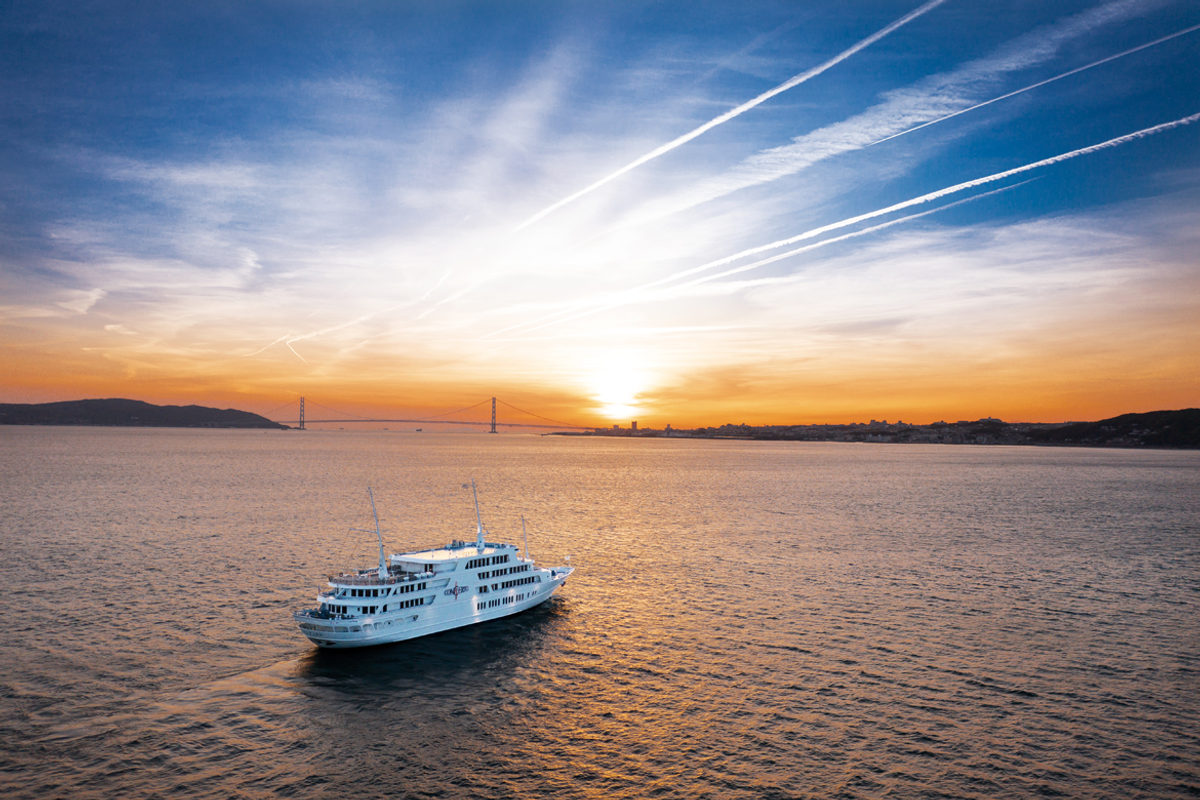
See the Kobe twilight cruise Free consultation
Planning essentials for Kobe
Beyond the main topic of this article, here is a summary of everything you need to plan a trip to Kobe, with links to the full article on each subject.
A one-day route at a glance
9:30 Sannomiya station → 10:00 Kitano ijinkan district → 11:30 Ikuta Shrine → 12:30 Nankinmachi (Chinatown) → 14:00 The former foreign settlement → 15:00 Meriken Park and Kobe harbour → 17:00 Kikuseidai on Mt. Maya → 19:30 Kobe beef for dinner
With half a day: the Kitano houses, Nankinmachi, Meriken Park. Or arrive in the late afternoon and do nothing but the night view and Kobe beef, which is a very Kobe way to use the city.
Extending beyond day one
Day 2 is Arima Onsen (30 minutes by bus from Sannomiya), one of the three oldest hot springs in Japan, with an iron-red kinsen water and a clear ginsen. Or Mt. Rokko (the farm, the alpine botanical garden, Rokko Garden Terrace), or the Nada sake breweries, in the largest sake-producing district in Japan. Day 3: Himeji Castle (40 minutes by rapid train) or Awaji Island. Kobe is close enough to Osaka that all of this also works as a day trip from an Osaka base. For the full timed itinerary, see the Kobe itinerary.
Seasons and temperatures
| Season | Typical temperatures | Highlights and cautions |
|---|---|---|
| Spring (Mar–May) | 9–25C | Blossoms late March to early April, on the slopes of the ijinkan district and in Oji Park |
| Summer (Jun–Aug) | 24–33C | Humid heat. Mt. Rokko and Mt. Maya are the cool retreats |
| Autumn (Sep–Nov) | 13–28C | Comfortable from October. Foliage late November, and the Luminarie in December |
| Winter (Dec–Feb) | 4–11C | Mild, with rare snow. The clearest air and the finest night views of the year |
October–November and late March to May. If the night view is the point, December to February, when the air is clearest, is the best of all. The December Luminarie, held in memory of the 1995 Great Hanshin earthquake, has become the marker of winter in Kobe. Clothing guidance and seasonal events are covered in the best time to visit Kobe.
What to eat
- Kobe beef: Tajima cattle that meet a strict set of standards. Teppanyaki ¥15,000–30,000, or from ¥6,000 at lunch
- Kobe pastry: Cakes and chocolate at the highest standard in Japan. Morozoff, Goncharoff, and Juchheim all started here
- Bread: Kobe households are among the biggest bread buyers in Japan, and the density of bakeries is high
- Nankinmachi pork buns and xiaolongbao: Chinatown grazing. Pork buns around ¥100 each
- Sobameshi: Fried noodles and rice griddled together, the local comfort food of Nagata in Kobe
- Akashiyaki (tamagoyaki): The ancestor of takoyaki, dipped in broth to eat. Akashi is 20 minutes by train from Kobe
- Nada sake: The largest sake-producing district in Japan. The breweries offer tours and tastings
Lunch ¥1,000–2,500 (Kobe beef at lunch from ¥6,000), dinner ¥3,500–8,000 (Kobe beef ¥15,000–30,000). Apart from the beef, prices match Osaka, and the standard of pastry and bread is remarkably high. For where to find each dish, see what to eat in Kobe.
Budget at a glance
A day trip from Osaka runs ¥12,000–25,000 per person (roughly CA$120–250): return fare ¥840, lunch ¥2,000, the ropeway for the night view ¥1,600, and a Kobe beef dinner at ¥8,000–15,000. Taking the Kobe beef as a lunch course instead drops the total by around ¥10,000.
Hotel rates by class and the cuts that actually save money are detailed in the Kobe budget guide.
Getting there
Kobe is 21 minutes from Osaka by rapid train and 50 minutes from Kyoto. Sannomiya is the central station, where JR, Hankyu, Hanshin, and the subway meet. From Kansai International Airport there is also a high-speed ferry, the Bay Shuttle.
| Route | Time | Notes |
|---|---|---|
| Osaka → Sannomiya | approx. 21 min | JR Special Rapid Service, ¥420. Every 15 minutes. Hankyu and Hanshin are slightly cheaper |
| Kyoto → Sannomiya | approx. 50 min | JR Special Rapid Service, ¥1,110 |
| Kansai Airport → Kobe | approx. 30 min | Bay Shuttle (high-speed ferry) plus bus, ¥1,880. Or 1 hour 15 minutes by train |
| Shin-Kobe → Sannomiya | approx. 2 min | Subway, ¥210. The shinkansen stops at Shin-Kobe station |
| Sannomiya → Arima Onsen | approx. 30 min | Bus, ¥780. Or 50 minutes on the Kobe Electric Railway |
Local transport and the passes worth buying are covered in getting to Kobe.
More frequently asked questions about Kobe
Can Kobe be done as a day trip?
Yes. It is 21 minutes from Osaka, 50 from Kyoto, and the main sights are within walking distance of Sannomiya. That said, if you want the night view and Kobe beef, arriving late in the day and staying a night is a good option.
Is Arima Onsen worth going to?
Yes. It is 30 minutes by bus from Sannomiya and is one of the three oldest hot springs in Japan. The kinsen, clouded red with iron, is water you will not find elsewhere. Day bathing is available.
What is the Luminarie?
A corridor of light begun in memory of those killed in the 1995 Great Hanshin earthquake and in hope of the city’s recovery. It runs about ten days in early December. It is not simply an illumination; it continues as an act of mourning.
Where is the best place to see the night view?
Kikuseidai on Mt. Maya is the best known (ropeway to 700 m). Mt. Rokko works too. Winter, when the air is clear, is best, and the magic hour just after sunset is the most beautiful window.
Is Kobe beef not too expensive?
The evening teppanyaki course is ¥15,000–30,000. But the same restaurant at lunch is ¥6,000–10,000. Some places serve Kobe beef as a steak bowl or a hamburg steak for around ¥3,000.
What is the difference between Kobe beef and Tajima beef?
Only Tajima cattle meeting strict standards of meat grade, carcass weight and more may be called Kobe beef. The number certified each year is limited, and that is what the price reflects.
Is staying at Arima Onsen worth it?
Yes. It is 30 minutes by bus from Sannomiya, on the edge of the city, and it is one of the three oldest hot springs in Japan. The red kinsen water is not found elsewhere. The location makes it easy to combine with sightseeing in Kobe.
Where should I eat Kobe beef?
A teppanyaki counter is the clearest form. Specialists cluster in Sannomiya and Kitano. A lunch course is ¥6,000–10,000, less than half the evening price. We can arrange a restaurant to your budget.
Are Shin-Kobe and Sannomiya different stations?
Yes. The shinkansen stops at Shin-Kobe; the city centre is Sannomiya. They are two minutes and ¥210 apart by subway, so it is not a serious problem, but do not confuse them when booking.
How do I get to Kobe from Kansai Airport?
The Bay Shuttle high-speed ferry to Kobe Airport in 30 minutes, then the Port Liner to Sannomiya in 18 (¥1,880 in total). Faster than the train, and enjoyable as a boat ride.

Plan this trip with IACE
Everything in this article is knowledge we use in real bookings every day. Tell us your dates, group size and interests, and we will turn it directly into your own itinerary.